Mechanism Showdown: Two Fundamentally Different Grinding Logics
Traditional Rubber Wheel: “Elastic Rubbing” Limitations
Rubber wheels rely on their elasticity. Abrasives such as silicon carbide or alumina are embedded in a rubber bond, and through elastic deformation, they rub and polish the yarn surface. The benefit of this process lies in its softness — it minimizes yarn breakage and provides gentle polishing.
However, its limitations are equally significant: the elastic contact causes the grinding force to be dispersed and weak, capable only of flattening or combing surface fuzz without fully removing it. The rubber bond wears out quickly, shape stability is poor, and precision deteriorates with use. Frequent dressing or wheel replacement is required, greatly reducing productivity.

Electroplated Diamond Wheel: “Rigid Etching” Breakthrough
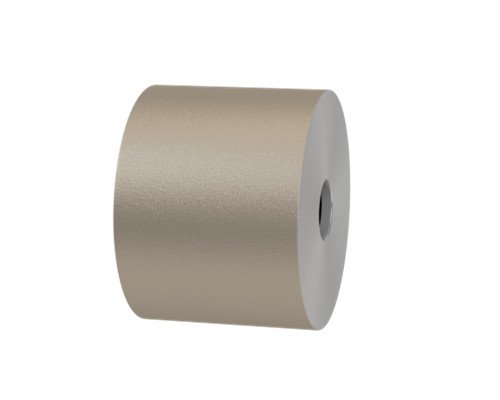
The electroplated diamond grinding wheel operates on an entirely different principle. Diamond abrasives are firmly held on the wheel surface by a nickel or nickel–cobalt alloy coating, forming a dense “micro-cutting tool array.” During grinding, these sharp diamond particles don’t rub the yarn but rather perform precise micro-cutting and etching, directly removing fuzz and irregular fibers.
This rigid cutting mechanism provides a decisive advantage — focused and controllable grinding force, enabling efficient removal of surface defects while maintaining yarn integrity.
Replacement Advantages: Upgrading Efficiency, Quality, and Cost
1️⃣ Efficiency Boost: Rigid Cutting Outperforms Elastic Rubbing
The hardness of diamond is far higher than that of conventional abrasives like silicon carbide, resulting in dramatically higher micro-cutting efficiency. Tests show that electroplated diamond grinding wheels can be 3–5 times more efficient than rubber wheels — a game-changer for large-scale continuous production.
2️⃣ Quality Leap: Precision Control and Stable Performance
The ability to control fuzz removal is a key breakthrough. Rubber wheels tend to press fuzz flat instead of cutting it off, whereas rigid diamond cutting removes short fibers completely — achieving over 40% higher fuzz removal efficiency.
Meanwhile, the diamond cutting action produces a smoother and more uniform yarn surface, avoiding the fiber entanglement caused by elastic rubbing.
Consistency is another major advantage. The profile of an electroplated diamond wheel remains almost unchanged throughout its life, ensuring stable grinding parameters. In contrast, the performance of rubber wheels begins to decline after just two hours of use, leading to a 10–15% difference in product qualification rate.
3️⃣ Cost Optimization: Long Lifespan Reduces Total Cost
The lifespan of a diamond grinding wheel is typically 20–50 times longer than that of a rubber wheel — and in some cases, up to 100 times longer. For a factory producing 10 tons of yarn per day, rubber wheels may need to be replaced five times daily, while diamond wheels require only one replacement per month. This reduces downtime by over 90% and cuts annual consumable costs by more than 60%, easily offsetting the higher initial investment.
Implementation Essentials: Tackling Two Core Challenges
1️⃣ Preventing Yarn Breakage: The Importance of Parameter Matching
Because diamond abrasives are extremely sharp, excessive cutting force can break the yarn. Solutions include:
- Using fine-grit diamonds (400# or finer) to reduce cutting impact;
- Controlling abrasive protrusion height to leave chip space and prevent clogging;
- Optimizing wheel speed and yarn tension to achieve gentle high-speed cutting that balances safety and efficiency.
2️⃣ Managing Heat: Gentle Cooling to Avoid Thermal Damage
High-speed cutting generates heat that can scorch synthetic fibers. The recommended solution is aerosol or mist cooling, which removes heat without contaminating the yarn, ensuring surface integrity.
It’s advisable to start with small-batch trial runs, adjusting wheel parameters, line speed, and tension according to yarn material. Once the process stabilizes, mass production can proceed confidently.
Conclusion
The transition from elastic polishing to rigid micro-cutting represents a fundamental upgrade — shifting yarn grinding from an experience-based process to a precision-controlled technology. For manufacturers pursuing high quality and large-scale consistency, this transformation is not merely an option — it’s an inevitable step toward enhanced core competitiveness.
Have you encountered any technical challenges in this transition?