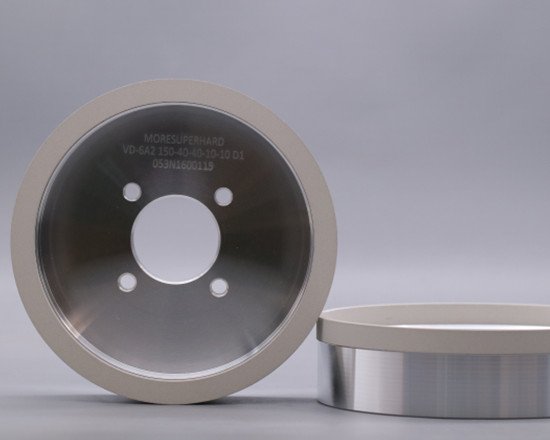
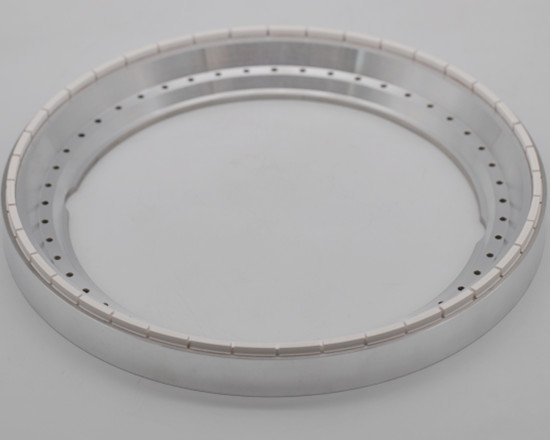
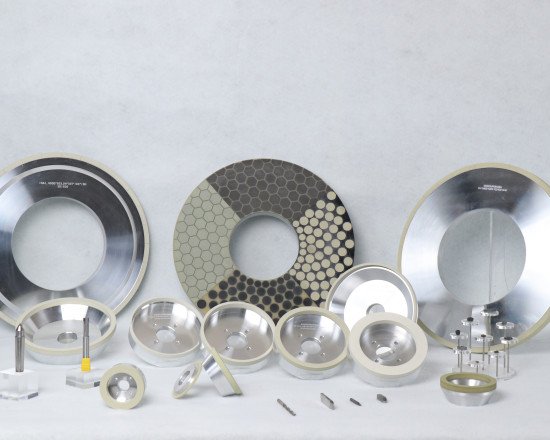
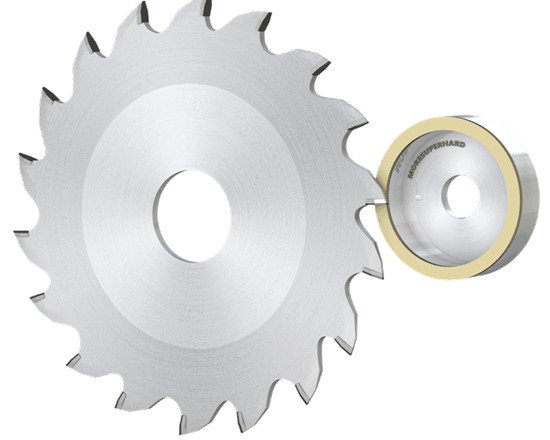
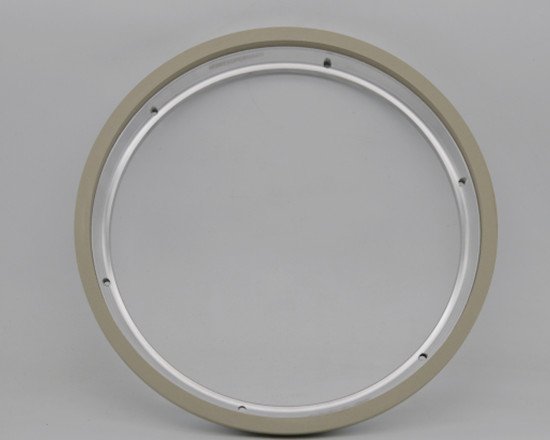
1.1 Definition of Ceramic-Bonded Diamond Wheels
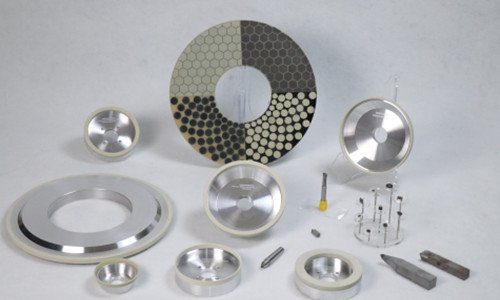
1.2 Why Ceramic Bonds Are Gaining Favor in Precision Grinding
As manufacturing shifts toward higher precision, automation and throughput, grinding tools must meet stricter performance demands. Compared with resin bonds (limited heat resistance) and metal bonds (lower cutting efficiency / harder to dress), ceramic bonds offer an ideal balance of stability, efficiency and durability for modern precision applications.
1.3 Core Performance Advantages
- High grinding efficiency: Porous bond structure aids chip evacuation and reduces clogging.
- Excellent shape retention: Minimal deformation during use maintains wheel profiles longer.
- Superior thermal stability: Withstands higher grinding temperatures without bond softening.
- Long service life: Lower abrasive shedding and improved wear resistance.
- Automation compatibility: Stable wear behavior reduces the need for frequent adjustments.
II. Applications in Carbide Tool Manufacturing
2.1 Slot Grinding of Carbide End Mills
Ceramic-bonded diamond wheels offer high material removal rates and precise profile control for multi-flute end mills. They are well matched to CNC tool grinders (e.g., Walter, ANCA, Rollomatic), delivering consistent helix, groove depth and tooth geometry across batches.
2.2 Peripheral Grinding of Carbide Inserts
For insert peripheral grinding requiring ±0.002 mm tolerances, ceramic bonds deliver stable accuracy and slower wear than resin alternatives — reducing dressing frequency and improving mass-production throughput.
III. Applications in PCD / PCBN Tool Machining
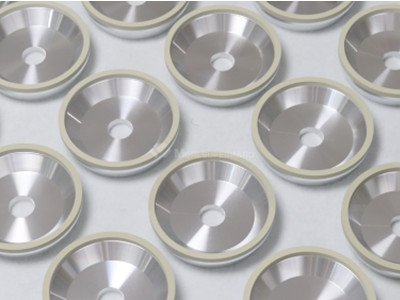
3.1 Machining of PCD and PCBN Turning Inserts
Ceramic-bonded diamond wheels enable precision edge preparation (chamfering, micro-radius) with tolerances often within ±0.005 mm, ensuring repeatable cutting geometry for superhard tool materials.
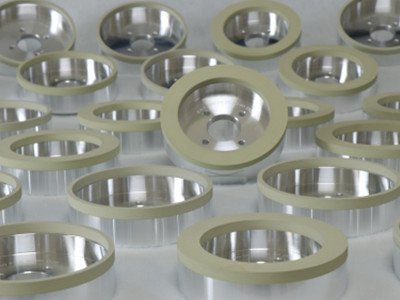
3.2 Form Grinding of PCD End Mills and Reamers
Tight contour tolerances (≤ ±0.003 mm) and controlled heat generation reduce cracking/chipping risks. Single-pass multi-edge form grinding improves productivity and consistency.
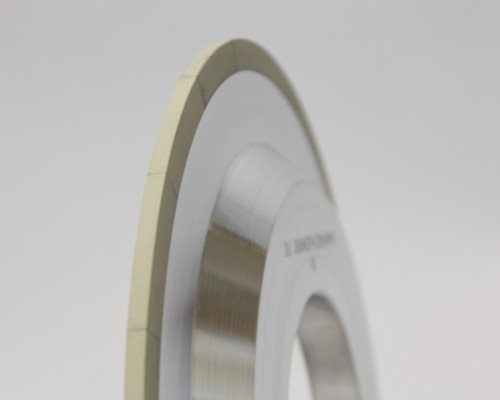
3.3 PCD Saw Blade Dressing and Sharpening
Ceramic wheels produce uniform, sharp edges for large-diameter PCD saws and significantly shorten sharpening cycles — crucial for stone, wood and specialty cutting blades.
IV. Applications in Advanced Ceramic Manufacturing
4.1 Grinding of Alumina (Al₂O₃)
Ceramic-bonded diamond wheels control edge chipping and provide dimensional consistency for alumina components such as bushings and bearings (chipping control within ~0.01 mm).
4.2 Grinding of SiC and Zirconia
Used for parts requiring extreme flatness and parallelism: flatness errors can be controlled to ~0.001 mm/100 mm with optimized wheel parameters and process control.
4.3 Structural / Engineering Ceramics
Ensures high dimensional accuracy (e.g., ±0.003 mm) and consistent quality in mass production of high-stress ceramic components.
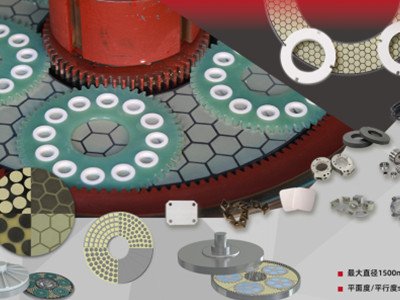
V. Applications in Glass and Optical Materials
5.1 Optical Glass Components
Ceramic wheels are ideal for fine grinding prior to polishing — reaching low surface roughness (e.g., Ra ≤ 0.1 μm) and shortening fine grinding times by large margins.
5.2 Sapphire, Quartz & Hard Glass
Improve throughput for LED substrates, camera glass and medical glass by lowering processing time and minimizing thermal damage.
5.3 Edge Grinding of LCD / Display Glass
Extended wheel life and consistent edge quality reduce defects and increase yield on large panel lines.
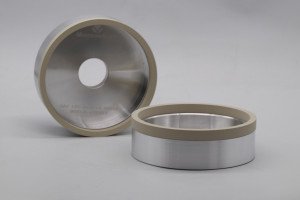
VI. Applications in Carbide Dies & Wear-Resistant Parts
6.1 Carbide Wire Drawing Dies & Stamping Dies
Mirror-like finishes (Ra ≤ 0.02 μm) reduce friction and wear, improving die life and product consistency. Precise inner-hole control ensures uniform wire drawing diameters.
6.2 Wear Parts (Mining, Textile, Automotive)
Accurate shaping of carbide cutting tips, rollers and valve seats increases efficiency and service life for wear-critical components.
VII. Applications in Semiconductor & Electronics Industries
7.1 Ceramic Packaging & Substrate Grinding
Achieves thickness tolerances of ±0.001 mm and flatness control for high-reliability packaging and thermal interfaces.
7.2 Zirconia Components for Mobile Devices
High volume production demands tight process control and shape retention — ceramic wheels offer the repeatability and throughput required for mobile-electronics components.
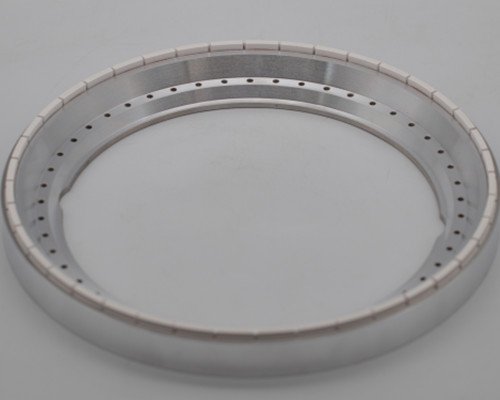
VIII. Core Advantages of Ceramic Bonds
8.1 Stronger Mechanical Bonding
High-temperature sintering creates superior abrasive retention and reduces abrasive pull-out under load.
8.2 Superior Heat Resistance
Ceramic bonds withstand much higher temperatures than resin bonds, minimizing deformation and heat-related defects.
8.3 Higher Cutting Speeds vs. Metal Bonds
Porous structure and increased abrasive exposure enable cutting speeds ~30%–50% faster than metal-bond wheels in many applications.
8.4 Adaptability to High-Speed, Heavy-Duty Conditions
Suitable for linear speeds up to the machine and safety limits (commonly used in high-speed grinding environments).
8.5 High Customization Capability
Shape, grit, concentration, porosity and bond hardness can be tuned to match specific process needs.
IX. How to Choose the Right Ceramic-Bonded Diamond Wheel
9.1 Based on Workpiece Material
- Superhard (carbide, PCD): medium-fine grit, higher concentration.
- Brittle ceramics & glass: higher porosity, medium concentration to avoid chipping.
- Semiconductor components: fine grit, high bond hardness for surface finish.
9.2 Based on Machine Type
Match wheel geometry and balance to machine (CNC tool grinders, double-sided grinders, surface grinders, high-speed grinders).
9.3 Based on Grinding Method
- Profile/groove grinding → profile disc / cup wheels with strong shape retention.
- Peripheral grinding → wheels with low runout and high dimensional accuracy.
- Surface grinding → parallel wheels or wheel sets for uniformity.
9.4 Key Parameters (Grit / Concentration / Hardness / Porosity)
Typical grit guidance: 80–120# (rough), 240–400# (semi-finished), 600–2000# (finishing). Concentration and bond hardness should be tuned for material removal rate and thermal control.
9.5 Dressing Tools & Parameters
- Diamond rollers for rough dressing; diamond pencils for fine dressing.
- Dressing speed: commonly 1/5 to 1/10 of wheel linear speed.
- Dressing depth: typically 0.001–0.005 mm per cycle — avoid over-dressing.
X. Conclusions & Call to Action
10.1 Summary of Application Value
Ceramic-bonded diamond wheels combine efficiency, thermal stability and exceptional shape retention, enabling precision grinding across carbide tools, PCD/PCBN tooling, advanced ceramics, glass/optics and semiconductor components.
10.2 Why They Are Becoming the Industry Standard
Their performance advantages align with manufacturing trends toward automation, higher precision and reduced operating cost — driving broad adoption in modern production environments.
10.3 Invitation to Customized Solutions
Grinding challenges vary by application. We provide tailored ceramic-bonded diamond wheel solutions: OEM/ODM support, application engineering, sample testing and dressing parameter optimization.