16
Dec
Titanium alloys, known for their high strength (1.5 times that of steel), outstanding corrosion resistance, excellent high-temperature stability (long-term service temperature up to 500°C), and superior biocompatibility, have become irreplaceable materials in aerospace, medical implants, and high-end marine applications.
However, their unique physical and chemical properties pose four major machining challenges that directly limit machining efficiency and dimensional accuracy.
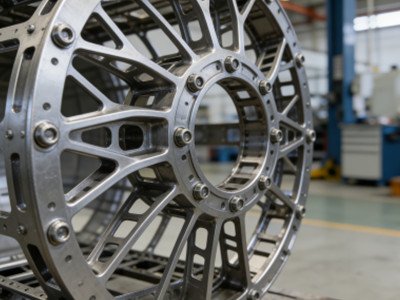
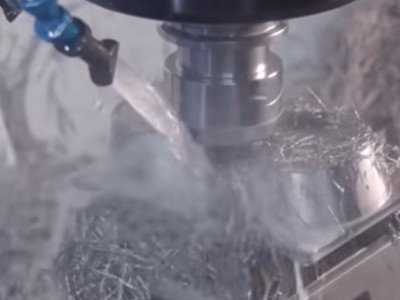
Titanium alloys exhibit extremely low thermal conductivity—only 1/7 that of carbon steel and 1/16 that of aluminum alloys. During cutting, temperatures in the cutting zone can rise rapidly to 1000–1200°C, creating an extreme temperature gradient of up to 500°C/mm. This leads to tool softening, diffusion wear, and even severe thermal damage commonly referred to as “tool burning.”
During machining, a hardened surface layer with a thickness of 0.05–0.15 mm forms rapidly, increasing surface hardness by 40–60 HV. As a result, cutting forces in subsequent passes increase by more than 30%, while tool life may be reduced by up to 50%.
At elevated temperatures, titanium readily reacts with tool materials such as tungsten carbide and cobalt, causing adhesion layers and built-up edges. Additionally, reactions with chlorine- or sulfur-containing additives in lubricants may form corrosive layers, increasing the risk of intergranular corrosion.
Titanium alloys have an elastic modulus of only about 50% that of steel. Elastic recovery during cutting can reach 0.1–0.3 mm. For thin-walled components (wall thickness < 3 mm), deformation rates can exceed 15%, making dimensional control of high-precision parts particularly challenging.
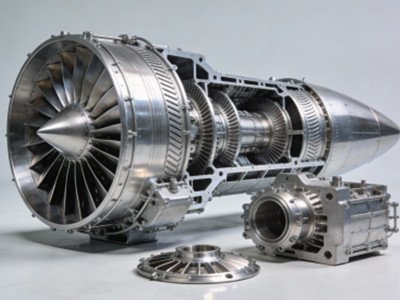
Based on the challenges above and combined with the latest industry technologies and engineering practices, a comprehensive solution is proposed, covering cutting parameters, tooling systems, cooling and lubrication, fixturing, and process monitoring.
The core principle is low temperature, low wear, and stable cutting, with parameters dynamically adjusted according to machining operations.
Continuous cutting is recommended to suppress excessive work hardening.
Key Strategy: Rough machining adopts a “large depth of cut + medium feed” approach for rapid material removal, while finishing switches to “small depth of cut + higher feed,” combined with symmetrical machining to balance residual stresses.
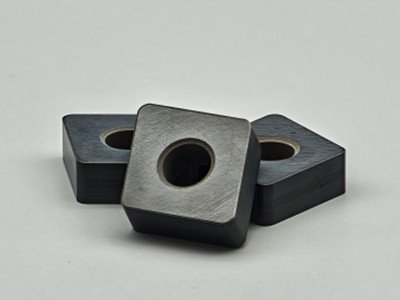
Tool selection plays a decisive role in efficiency and cost control, requiring a balance between wear resistance, anti-adhesion performance, and thermal stability.
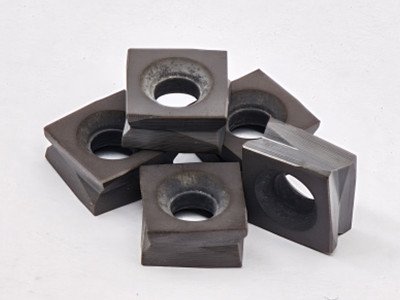
The objective is precise temperature reduction, chemical stability, and avoidance of secondary damage.
A combined strategy of flexible clamping, stress distribution, and dynamic compensation is applied.
Net Additive Manufacturing Processing (NAMP) eliminates micro-porosity and coarse microstructures in 3D-printed titanium parts, achieving record-level fatigue strength and enabling critical aerospace applications such as engine blades and landing gear.