17
Dec
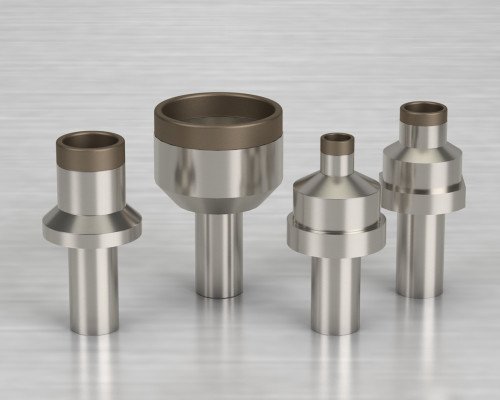
Metal milling wheels are superhard tools that integrate both milling and grinding functions. Compared with conventional grinding wheels, they demonstrate clear advantages in three core aspects: high material removal efficiency, precise control of form and position accuracy, and long-term processing stability.
Owing to their strong abrasive retention capability and high structural rigidity, metal milling wheels are widely applied in the precision machining of hard and brittle materials, especially in optical glass processing where tool stability and contour accuracy are critical.
Based on processing requirements, metal milling wheels used for optical glass machining can generally be classified into the following categories:
In terms of parameter selection, abrasive grit sizes typically range from 60# to 180#, depending on surface quality requirements. Diamond concentration usually falls between 50% and 100%, enabling coverage from rough milling to semi-finish milling stages.
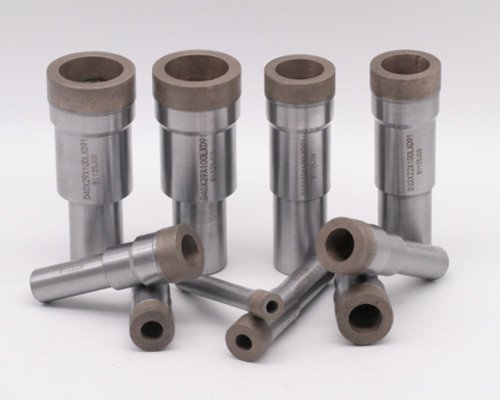
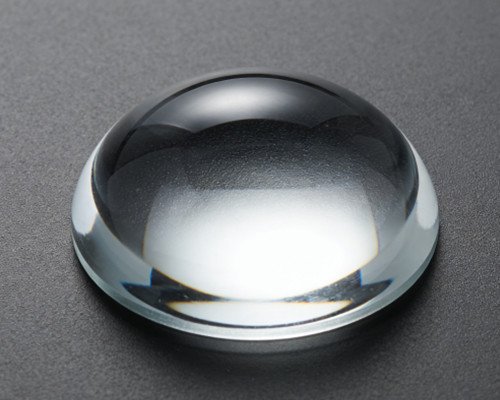
BK7 optical glass is a widely used high-quality optical material commonly applied in lenses, prisms, laser systems, and precision optical components. Its material characteristics directly influence machining behavior and process difficulty.
During actual milling and grinding processes, typical issues include inadequate surface roughness, edge chipping, profile accuracy deviation, deep scratch formation, and low overall machining efficiency.
From a process perspective, these problems are closely associated with abrasive grit size selection, wheel concentricity accuracy, binder performance (including abrasive holding strength and self-sharpening behavior), and overall tool durability.
Effective process optimization therefore focuses on three fundamental aspects:

In response to the hard and brittle nature of BK7 optical glass, metal-bonded grinding wheels offer distinct technical advantages through their material structure and process adaptability.
The strong bonding force between the metal binder and diamond abrasives significantly reduces abrasive pull-out during machining. Compared with resin-bond wheels, metal-bond wheels exhibit lower wear rates while maintaining higher material removal efficiency, particularly in rough and semi-finish milling stages.
Metal binders provide higher thermal conductivity, allowing grinding heat to dissipate more effectively from the cutting zone. This reduces localized heat accumulation and lowers the risk of thermal cracks, surface burns, and refractive index instability in BK7 optical glass.
The high rigidity of metal-bond structures minimizes wheel deformation under elevated cutting forces. As a result, profile accuracy can be maintained over extended machining cycles, which is especially beneficial for aspherical surfaces and complex optical contours.
In applications involving high cutting loads or large material removal volumes, metal-bond grinding wheels maintain stable cutting behavior with reduced vibration sensitivity. This stability supports consistent machining quality in continuous or large-batch optical glass production.
Although resin-bond wheels are traditionally associated with smoother surface finishes, metal-bond grinding wheels can achieve comparable or even superior surface quality through optimized process control.
By combining appropriate abrasive grit size gradients, optimized chip evacuation structures, and precise control of spindle speed and feed rate, metal-bond wheels are capable of supporting semi-finish milling while reducing the workload of subsequent grinding and polishing operations.
This integrated process approach helps shorten the overall manufacturing cycle and improves production efficiency for BK7 optical components.
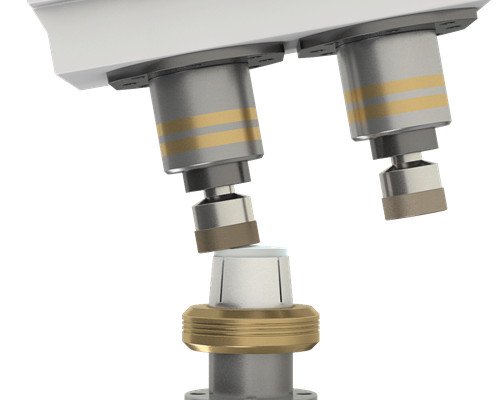
Customer Pain Point: Machining φ30mm aspherical BK7 lenses, the original resin-bonded grinding wheel process resulted in surface profile accuracy drift (PV value exceeding ±5μm), poor consistency in mass production, and a scrap rate of 8%;
Solution: Customized 60mm diameter, 100# grit metal-bonded aspherical grinding wheel, ensuring grinding wheel concentricity ≤0.002mm, coupled with an adaptive feed control system;
Implementation Results: Surface profile accuracy PV value controlled within ±2μm, mass production consistency qualified rate reached 99.2%, scrap rate reduced to 1.2%, meeting the high-precision requirements of optical components for high-end laser equipment;