30
Jan
In metal processing, 3Cr13 martensitic stainless steel is definitely a “practical player” — it has moderate hardness and basic rust resistance, and is widely used in knives, molds, hardware accessories and other fields. However, many craftsmen will encounter troubles during grinding: it is easy to chip, clog the grinding wheel, and if not careful, workpiece burning and deformation may occur, which will affect the product accuracy and service life.
In fact, as long as you grasp the “easy chipping and heat-sensitive” characteristics of 3Cr13, choose the right tools and methods, you can easily avoid these problems and grind smooth and flat workpieces. Today, we have sorted out an easy-to-understand and directly implementable 3Cr13 grinding operation guide for you, which even beginners can quickly get started with.
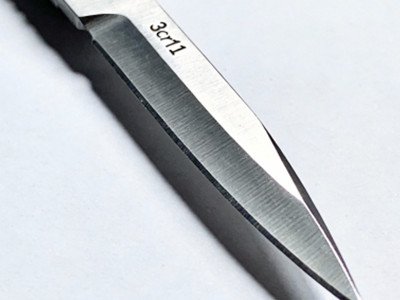
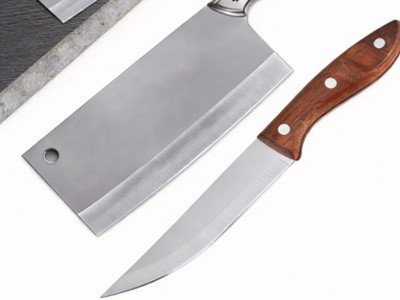
For grinding 3Cr13, the choice of grinding wheel directly determines success or failure — if you choose the wrong one, no matter how skilled your technique is, it will be in vain. Core principle: Prioritize grinding wheels that are “sharp, easy to shed, and not easy to clog with chips”. The specific breakdown is as follows:
The biggest taboo in grinding 3Cr13 is “chipping”, and the abrasive material is the key to solving this problem:
– First choice: Single Crystal Corundum (SA): It has strong toughness and high hardness. During grinding, it can achieve “continuous cutting” instead of simple frictional heating, which fundamentally reduces the risks of workpiece chipping, grinding wheel clogging and burning. It is the best choice for 3Cr13 grinding.
– Pitfall reminder: Try not to choose ordinary White Aluminum Oxide (WA), which has insufficient cutting force and is prone to frictional heating; Brown Aluminum Oxide (A) is more suitable for low-carbon steel, and using it for 3Cr13 will aggravate chipping problems.

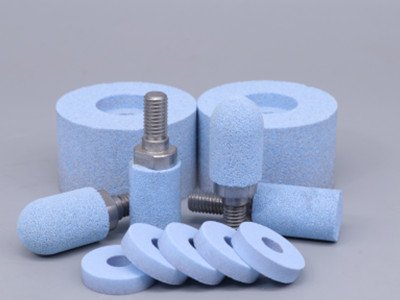
The grit size of the grinding wheel is like the “thickness of teeth”. Different grinding needs correspond to different grit sizes, so there is no need to blindly pursue too fine or too coarse:
– Rough grinding to remove thick material: Choose F46-F60 (similar to a coarse-tooth saw), which has fast cutting speed and is suitable for quickly removing excess material and correcting the workpiece shape.
– Regular grinding/edge grinding: Choose F60-F80 (the most commonly used, similar to a medium-tooth saw), which balances cutting efficiency and surface flatness, and is suitable for the grinding needs of most 3Cr13 workpieces.
– Fine polishing: Choose F80-F120 or finer (similar to a fine-tooth file). After grinding, the surface is smooth, which is suitable for workpieces with high requirements on precision and finish (such as tool edges, precision mold accessories).
The hardness (grade) of the grinding wheel is the key to avoiding burning. Remember: For grinding 3Cr13, you must choose a “soft or medium-soft” grinding wheel:
– Recommended grade: H, J, K (mainly medium-soft, J/K is the most commonly used).
– Core advantage: When the abrasive grains of the soft grinding wheel are worn and dull, they will fall off automatically, revealing the new sharp abrasive grains underneath — it is equivalent to having a “self-renewal” function, which always maintains sharp cutting and avoids frictional heating and workpiece burning caused by dull abrasive grains.
The density of the grinding wheel structure directly affects the heat dissipation and chip removal effect. For 3Cr13 grinding, it is necessary to prioritize a “moderately loose” structure:
– Recommended structure number: 7-9 (moderate looseness).
– Core function: The loose structure can leave sufficient space for the metal chips generated during grinding to avoid clogging the grinding wheel; at the same time, it facilitates the penetration of cutting fluid to quickly take away heat and further reduce the risk of burning.
💡 Popular Summary: The ideal grinding wheel for 3Cr13 grinding is [Single Crystal Corundum (SA) + Medium-Soft Hardness (J/K) + Grit Size F60/F80 + Loose Structure (7-9)]. It is usually marked on the grinding wheel label as: SA / F60 / J / V / 8. You can purchase it according to this label without stepping on pits!
Many craftsmen ignore cutting fluid during grinding. Little do they know that for 3Cr13 which is “heat-sensitive”, cutting fluid is the “lifeline” to avoid burning and must be used in sufficient quantity throughout the process:
– Recommended cutting fluid: Special metalworking fluid, emulsified fluid diluent (suitable for stainless steel processing, with dual functions of rust prevention and temperature reduction).
– Core function: It can not only quickly take away the heat generated during grinding to avoid workpiece heating, burning and deformation; but also lubricate the contact surface between the grinding wheel and the workpiece to reduce friction and chipping; at the same time, it washes away surface chips to prevent chip clogging from affecting grinding accuracy.
– Precautions: Dry grinding is strictly prohibited! Even for small-scale fine grinding, it is necessary to supplement cutting fluid in small amounts and multiple times to eliminate workpiece burning and grinding wheel damage caused by dry grinding.
After choosing the right grinding wheel and preparing the cutting fluid, the correct grinding technique can further improve efficiency and protect the workpiece. The core is “gentleness, uniformity and frequent cleaning”. Specifically, do the following 3 points:
Avoid grinding too deep at one time (a big taboo!). Adopt the method of “small feed rate and fast feed”: control the grinding depth at 0.01-0.03mm each time. It is better to make multiple passes than to pursue “one step in place” — this can not only reduce frictional heating, but also avoid workpiece deformation and chipping, and the grinding surface will be flatter.
During grinding, the grinding wheel must keep moving. It is strictly prohibited to stay in the same point of the workpiece for a long time — long-term local contact will cause heat accumulation, directly causing workpiece burning and discoloration, and affecting material performance.
During the grinding process, regularly “dress” the surface of the grinding wheel with a grinding wheel dresser (similar to “shaving off” dull abrasive grains and clogged chips), so that the grinding wheel always maintains a sharp state and a uniform shape — this can not only improve grinding efficiency, but also avoid workpiece precision deviation and burning caused by uneven grinding wheels.
As a “practical” martensitic stainless steel, the core of 3Cr13 grinding is to “comply with its characteristics” — it is heat-sensitive and easy to chip. We use “sharp, easy-to-renew and good heat-dissipating” grinding wheels, sufficient cutting fluid, and then grind with gentle and uniform techniques, so that all problems can be easily avoided.
Finally, let’s highlight the key points for easy memory:
– What to grind with? — Priority is given to Single Crystal Corundum (SA), medium-soft hardness (J/K), loose structure (7-9), and grit size selected on demand from F46-F120.
– How to grind? — Use sufficient cutting fluid throughout the process, with small grinding depth, fast feed rate, no stay, and regular grinding wheel dressing.
As long as you master the above methods, both beginners and experienced craftsmen can successfully grind 3Cr13, allowing the workpiece to show the best hardness and surface precision, reducing losses and improving efficiency~ If you encounter other problems during grinding, welcome to leave a message in the comment area to communicate!