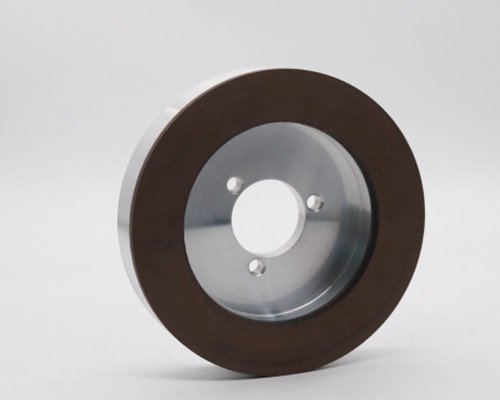
13
May
A precision electronic component manufacturer specializing in the R&D and production of micro magnetic connectors serves industries such as smart wearables, medical devices, and IoT sensors. The core structure of these connectors consists of a three-layer composite material system: glass + stainless steel housing + N52 neodymium magnetic pins.
Thanks to their miniaturization, magnetic self-alignment, and safe disconnect features, these connectors have become key components in high-end precision electronic devices. However, simultaneously grinding three materials with completely different characteristics became the biggest technical bottleneck in production.
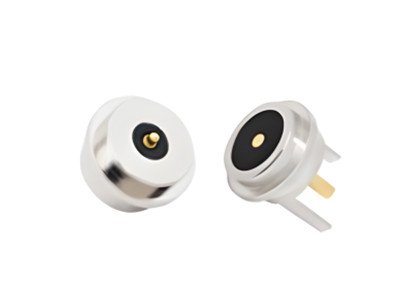
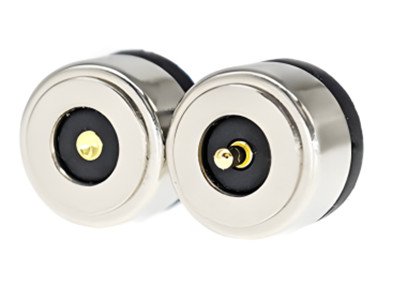
N52 neodymium magnetic pins:
Hard, brittle, and highly magnetic. During grinding, edge chipping, particle shedding, and cracking can easily occur. Even tiny defects may lead to magnetic failure and unstable signal transmission.
Stainless steel housing:
High toughness and strong adhesion tendency. Conventional grinding tools often cause wheel loading, surface scratching, and burr formation, making it difficult to achieve the required surface finish of Ra < 0.4μm.
Glass:
Extremely hard and brittle with poor impact resistance. Slightly excessive grinding force can result in chipping and cracks. Grinding debris can also clog the wheel and affect machining accuracy.
The customer initially used either diamond grinding discs or CBN grinding discs alone. However:
Wheels optimized for brittle materials caused stainless steel loading and scratching, while magnetic pins still chipped.
Wheels designed for metal grinding led to glass edge breakage and magnetic pin cracking.
Additional issues included excessive grinding heat, workpiece burning, and frequent wheel clogging. As a result:
Production efficiency remained low
Scrap rate reached as high as 25%
Multiple-step machining processes were required
Delivery schedules could not be guaranteed
Manufacturing costs remained extremely high
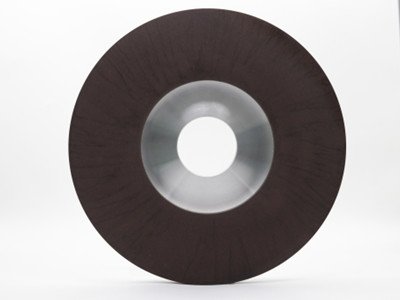
To solve the customer’s composite material grinding challenges, we recommended a specially formulated resin bond diamond + CBN hybrid abrasive ultra-sharp grinding disc.
Leveraging extensive experience in superhard material development and grinding technology, the solution was specifically engineered to match the machining characteristics of all three materials and provide a one-stop grinding solution.
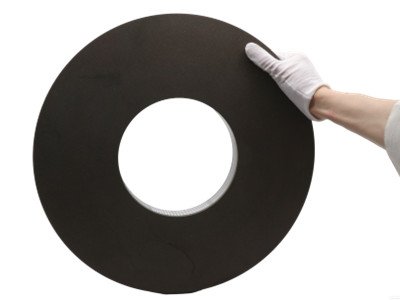
Hybrid Abrasive Synergy for Full-Material Compatibility
The grinding disc uses a premium diamond + high-quality CBN hybrid abrasive formula:
Diamond abrasives provide efficient cutting for hard and brittle materials such as glass and N52 neodymium magnets, offering excellent sharpness and wear resistance while minimizing edge chipping.
CBN abrasives are optimized for high-toughness metals like stainless steel, featuring excellent chemical stability, anti-loading performance, and prevention of surface scratching.
The scientifically balanced abrasive ratio enables one wheel to effectively process both hard and soft materials simultaneously.
The grinding disc adopts a modified heat-resistant phenolic resin bond combined with a large-porosity structure design.
Key Benefits:
The resin bond provides excellent elasticity and self-sharpening properties, cushioning grinding impact and protecting glass and magnetic pins from chipping.
Dull abrasive grains automatically release during grinding, continuously exposing fresh sharp cutting edges for long-term grinding sharpness.
The large pore structure quickly removes stainless steel chips, preventing loading and clogging.
The pores also create micro cooling channels, significantly reducing grinding heat and preventing workpiece burning or magnet demagnetization.
Ultra-Sharp Specialized Formula Balances Precision and Efficiency
The grinding disc features high-concentration, fine-grit abrasive distribution combined with precision forming technology, increasing cutting edge sharpness by 40%.
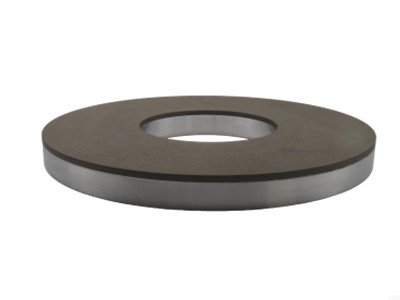
For the simultaneous grinding requirements of glass + stainless steel + N52 neodymium composite materials used in micro magnetic connectors, the resin bond diamond + CBN hybrid abrasive ultra-sharp grinding disc successfully solved all major challenges of multi-material grinding through three core advantages:
Hybrid abrasive synergy
Large-porosity cooling and chip removal
Ultra-sharp self-sharpening performance
This solution achieved integrated machining with high precision, high efficiency, high quality, and low cost. It not only helped the customer improve product competitiveness, but also established a benchmark solution for composite material grinding in the precision micro-electronics industry.
We remain committed to innovation in superhard material grinding technology, providing customized grinding tools and machining solutions for difficult-to-machine and composite materials, helping customers overcome manufacturing bottlenecks while achieving cost reduction and efficiency improvement.