20
May
Known as the “industrial universal tool”, thermal spraying technology coats workpiece surfaces with high-performance materials such as ceramics and alloys, endowing parts with superior properties including high temperature resistance, wear resistance and corrosion resistance. However, these high-hardness sprayed coatings pose great challenges to subsequent finishing processes. Featuring unique flexible grinding performance, diamond abrasive belts have become the core solution to overcome the post-processing bottlenecks of thermal spraying.
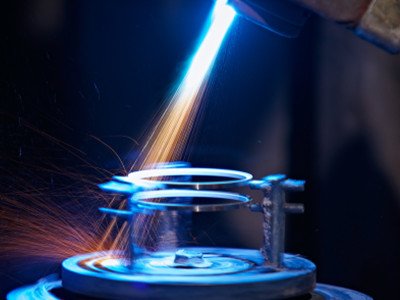
Thermal sprayed coatings (ceramics, WC-Co alloys, etc.) generally reach a hardness of HV 800 or above, with some exceeding HV 1000. Characterized by thin thickness and residual internal stress, these coatings are extremely difficult to machine. Traditional corundum and silicon carbide abrasive belts suffer from rapid grain passivation, low cutting efficiency, and easy workpiece overheating and coating burning. Uneven stress during conventional grinding frequently causes coating chipping and peeling. In addition, high-end components for petroleum and aerospace industries require strict dimensional tolerance and surface roughness (Ra ≤ 0.8μm). Traditional rigid grinding wheels feature high power consumption, frequent dressing and easy workpiece damage, failing to meet high-precision processing requirements.
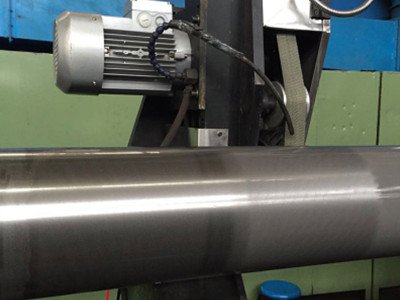
Diamond abrasive belts stand out as the preferred choice for the thermal spraying industry thanks to their perfect combination of high rigidity and flexibility:
As the hardest natural material, diamond can easily cut into high-hardness coatings such as tungsten carbide and chromium oxide. It delivers far stronger cutting performance and higher processing efficiency than traditional abrasive belts.
Adopting electroplating and resin bonding processes, diamond belts feature high grain protrusion and large chip space. They perform scratching cutting instead of extrusion grinding. Combined with water or air cooling, the workpiece temperature rise is effectively controlled, avoiding high-temperature oxidation and peeling of coatings and solving the core pain point of thermal processing.
With flexible cloth or film substrates, diamond belts can perfectly fit long shaft workpieces and complex curved surfaces. They achieve uniform material removal and eliminate coating fragmentation and partial over-grinding caused by rigid grinding impact.
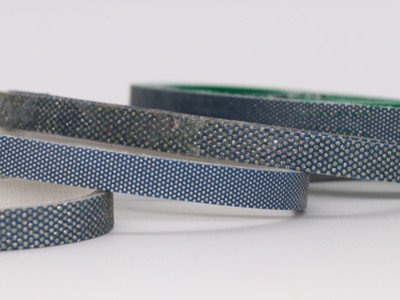
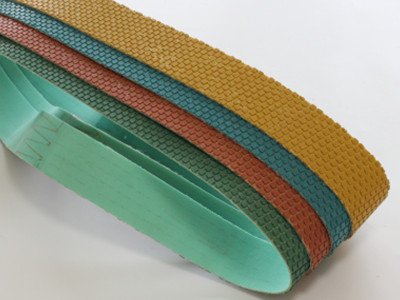
Diamond abrasive belts cover the entire processing workflow before and after thermal spraying, forming a complete process loop from pretreatment to mirror polishing:
1. Substrate Roughening before Spraying: 40–100 mesh abrasive belts are used for substrate roughening to form a standard anchor pattern, controlling the surface roughness at Ra 3.2–6.3μm and greatly improving the bonding force between the coating and the substrate.
2. Coarse Grinding for Coating Margin Removal: 60–200 mesh diamond abrasive belts efficiently remove spatter and unmelted particles after spraying and complete dimensional finishing. They drastically shorten the construction cycle — for example, the processing time for 15-meter ceramic piston rods is reduced from one month to 90 hours.
3. Precision Polishing & Sealing: Fine-grain diamond belts of 400–3000 mesh polish workpieces to a surface roughness below Ra 0.3μm, achieving a mirror finish. Combined with sealants, they form a dense anti-corrosion protective layer.
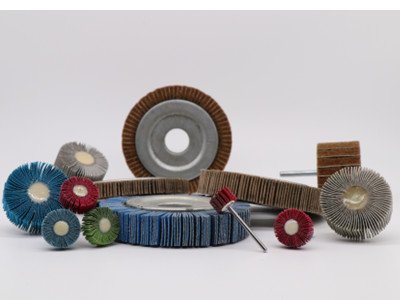
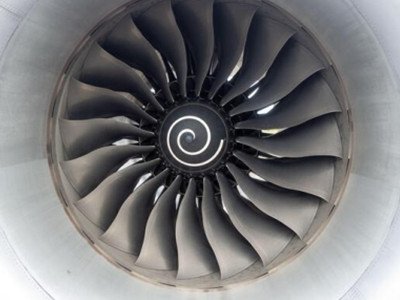
Diamond abrasive belts are widely used in the finishing of high-value components across multiple industries. In petroleum machinery, they polish alloy-coated sucker rods to ensure reliable sealing and wear resistance during reciprocating operation. In the metallurgical industry, they grind WC-Co coated tension rollers to prevent steel strip slipping and surface scratching. In aerospace, they flexibly polish thermal barrier coatings on engine blades to achieve precise profile finishing without damaging the substrate.
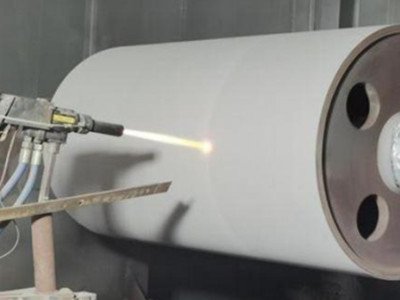
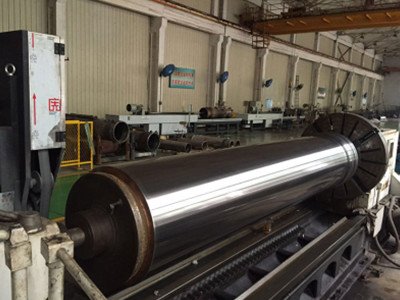
As thermal spraying technology advances toward high performance and ultra-precision, the industry is transitioning from manual grinding to CNC automatic belt grinding. In the future, diamond abrasive belts will evolve from simple consumables to the core of integrated precision grinding solutions. By optimizing abrasive arrangement, substrate strength and grain gradation, and cooperating with automated equipment, precise control of grinding force, temperature and surface integrity will be realized to upgrade the quality of thermal sprayed parts. For thermal spraying enterprises, selecting matched diamond abrasive belts serves as the final and critical guarantee to maximize coating performance and product quality.