26
Jun
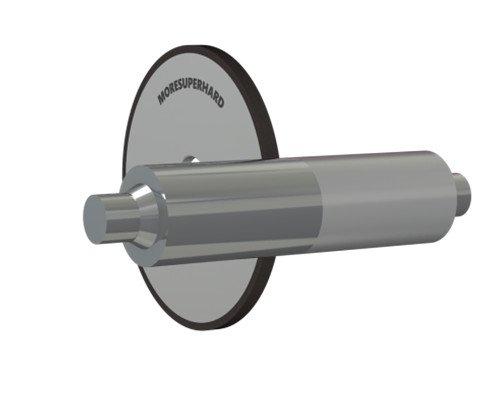
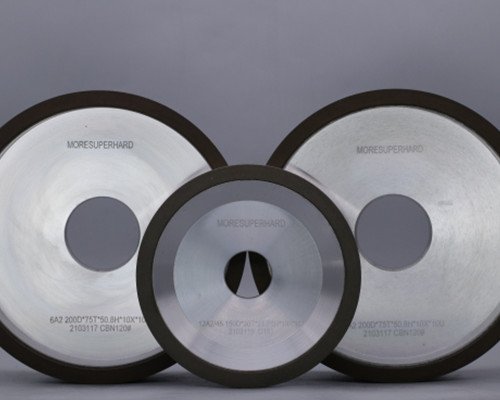
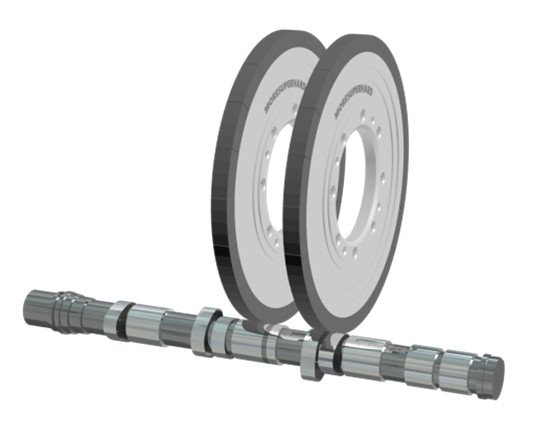
CBN (Cubic Boron Nitride) grinding wheels are professional superabrasive tools dedicated to the precision grinding of high-hardness ferrous metals. They are mainly used to replace all types of conventional aluminum oxide grinding wheels, including brown aluminum oxide, white aluminum oxide, and chrome aluminum oxide wheels, while they have no substitution relationship with silicon carbide grinding wheels. Compared with traditional ordinary grinding wheels, CBN wheels present comprehensive superiorities in wear resistance, hard material processing performance, thermal stability, dimensional accuracy, production efficiency, full-life-cycle cost, and equipment protection. They are widely applied in mass grinding processes for bearings, crankshafts, camshafts, high-speed steel cutters, and precision hardened shaft parts.
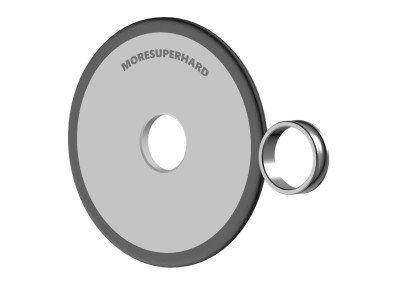
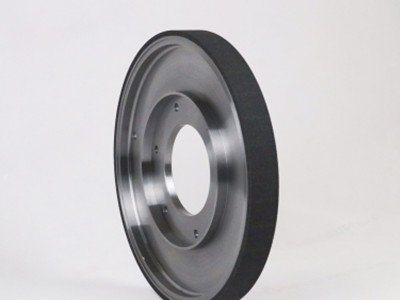
CBN abrasives feature a microhardness of approximately 4000 HV, with wear resistance 50–100 times higher than that of conventional aluminum oxide wheels. Its grinding ratio can reach thousands, while traditional ordinary grinding wheels only achieve a grinding ratio of several tens.
Conventional grinding wheels suffer from rapid abrasive passivation and profile deformation after processing dozens of workpieces, requiring frequent machine shutdowns for dressing and replacement. In contrast, CBN wheels can continuously process hundreds to thousands of workpieces in a single clamping setup, greatly extending dressing intervals, reducing machine downtime, and perfectly adapting to automated mass production lines.
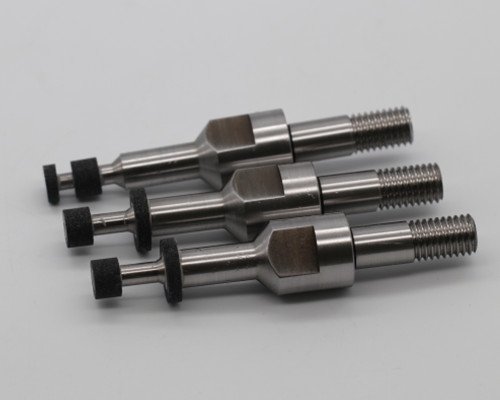
Traditional aluminum oxide wheels are only suitable for processing steel below HRC 55. When grinding hardened steel, high-speed steel, and nickel-based superalloys with a hardness of HRC 50–70, they are prone to slipping, chip accumulation and excessive grinding heat. Silicon carbide wheels are also unfit for precision grinding of hard steel, as they will undergo chemical reactions with iron at high temperatures and cause extreme abrasive loss.
CBN exhibits excellent chemical inertness to ferrous materials. It will not bond or react with steel under high-temperature grinding conditions, and the cutting edges of CBN grains remain sharp persistently. It is specially customized for the precision grinding of high-hardness ferrous metals, serving as the core irreplaceable advantage of CBN wheels over conventional ordinary grinding wheels.
CBN has a thermal conductivity dozens of times higher than aluminum oxide abrasives, which can quickly dissipate grinding heat from the contact area. It maintains stable hardness at a maximum thermal stability temperature of 1300°C. Conventional grinding wheels have poor self-sharpening performance, resulting in concentrated heat accumulation on the workpiece surface. This easily causes grinding burns, surface micro-cracks and dimensional deformation, greatly increasing the scrap rate of precision parts. CBN wheels realize low-temperature grinding, effectively guaranteeing workpiece surface integrity and reducing rework losses.
Conventional wheels wear continuously during operation, leading to constant deviations in wheel diameter and profile, which require frequent dimensional compensation. CBN wheels have an extremely low wear rate and maintain their original profile for long-term processing. They stably achieve micron-level dimensional tolerances with a surface roughness of Ra 0.02–0.2 μm, eliminating the need for polishing procedures in most working conditions and simplifying the machining process.
The safe linear speed of traditional aluminum oxide and silicon carbide grinding wheels is only 30–50 m/s, which limits feed rate and cutting depth. Resin and vitrified bond CBN wheels support a linear speed of 80–240 m/s, enabling high-efficiency grinding with high speed, large feed and deep cut. Under the same material removal volume, CBN wheels reduce machining time by 30%–60% compared with ordinary aluminum oxide wheels, improving production capacity without additional equipment investment.
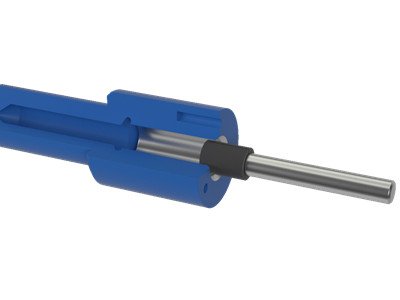
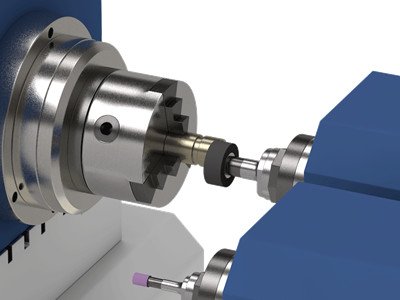
Although the unit purchase cost of CBN wheels is higher than that of ordinary aluminum oxide wheels, the comprehensive production cost is significantly reduced in batch manufacturing:
CBN grinding produces lower cutting resistance than ordinary aluminum oxide wheels. Long-term application effectively reduces wear on grinding machine spindles, guide rails and ball screws, extending equipment service life and lowering maintenance costs. Meanwhile, CBN grinding generates less dust and debris, creating a cleaner and safer workshop working environment.

For the precision and batch grinding of hardened steel, high-speed steel, nickel-based superalloys and other high-hardness ferrous metals, CBN grinding wheels serve as the optimal upgraded alternative to traditional ordinary aluminum oxide grinding wheels. With long service life, stable machining quality, high grinding efficiency, low comprehensive cost and equipment-friendly performance, they are widely matched with CNC grinding machines and automated production lines, helping manufacturing enterprises achieve quality improvement, efficiency enhancement and cost reduction.