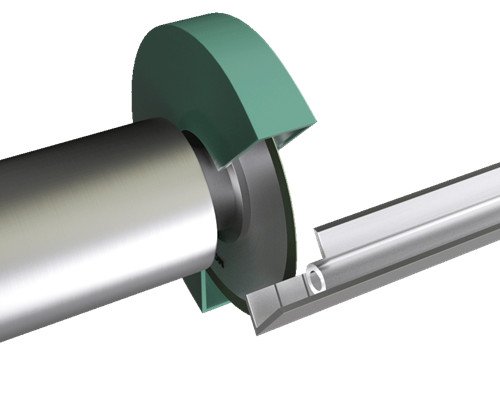
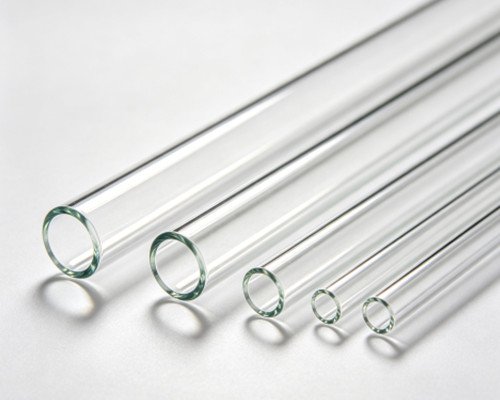
Borosilicate glass contains 12%~15% boron trioxide, featuring high temperature resistance, excellent chemical corrosion resistance and ultra-low thermal expansion coefficient. It is widely applied in laboratory utensils, optical components, semiconductor substrates, photovoltaic industry, medical devices, capillary glass tubes and quartz glass tubes. However, as a typical hard and brittle material, it is prone to chipping, micro-cracks, rapid tool wear and poor dimensional accuracy when cut by ordinary grinding wheels.
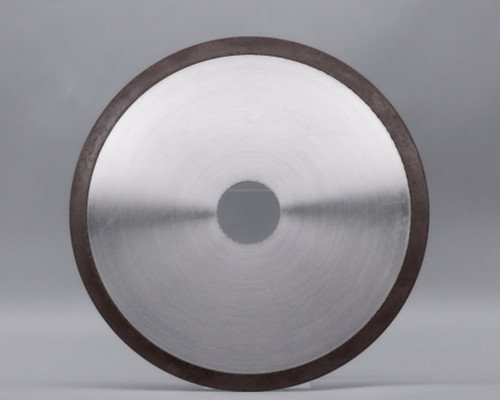
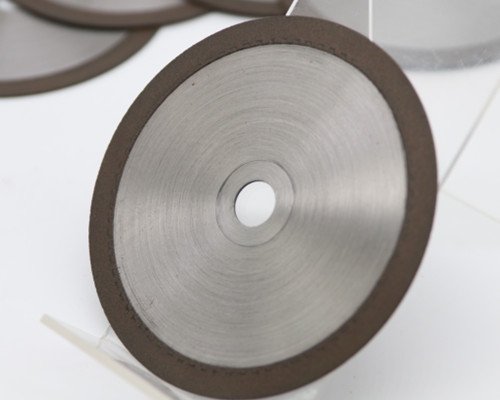
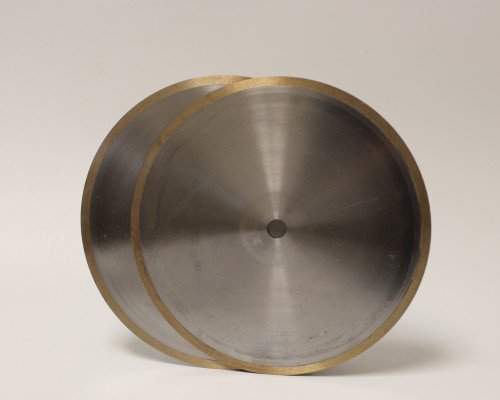
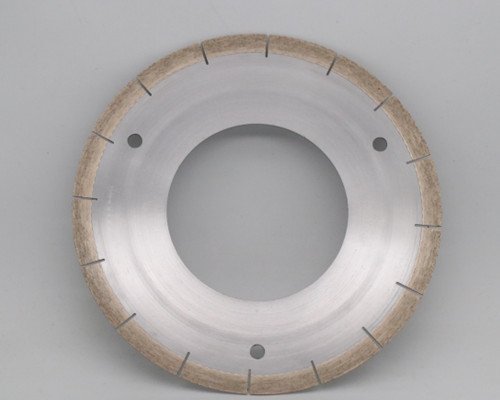
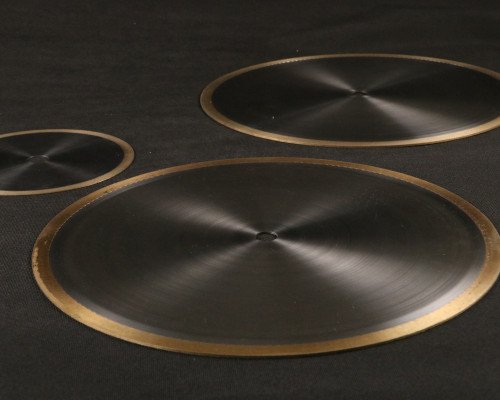
Moresuperhard has developed two series of professional cutting tools for borosilicate glass, quartz glass tubes and capillary glass tubes: resin-bonded diamond cutting blades and metal sintered diamond cutting blades. They are suitable for cutting and grooving thin plates, thick plates and tubular glass, balancing cutting accuracy, edge finish and service life, effectively reducing edge chipping defects and improving the utilization rate of raw materials.
| Item | Specification Details |
| Product Name | Resin Bonded Diamond Cutting Blade |
| Applicable Materials | Borosilicate glass plate, capillary glass tube, fine quartz tube, optical glass, ultra-thin glass |
| Outer Diameter Range | 50mm~400mm |
| Blade Thickness | 0.2mm~2.5mm (ultra-thin type starting from 0.3mm, narrow kerf for material saving) |
| Diamond Grain Size | Standard 100#, customized full range of D20-D107 available |
| Inner Hole Size | 10mm~127mm, non-standard customization supported |
| Bond Hardness | Grade N, excellent flexibility |
| Appearance Color | Customizable as required |
1. Top-grade Edge Quality: Low cutting stress, no edge chipping and few micro-cracks during cutting, reducing subsequent edging and polishing procedures;
2. Low Thermal Damage: Low heat generation during cutting, effectively avoiding thermal cracking and thermal deformation of borosilicate glass;
3. Ultra-thin & Narrow Kerf: The ultra-thin blade greatly reduces the loss of high-value glass raw materials and improves the finished product rate;
4. Excellent Flexibility: Suitable for fine cutting of straight and curved glass without blade chipping;
5. Stable High Precision: Strict form and position tolerance control ensures high consistency of cutting dimensions;
6. Strong Versatility: Available for single-piece use and multi-tool combined cutting, applicable for both grooving and cutting off.
Ultra-thin borosilicate glass, optical lenses, thin-walled laboratory glassware, fine capillary glass tubes, and all precision processing scenarios requiring ultra-high edge finish.
Integrated structure with outer-ring diamond working layer and high-rigidity steel core substrate, also known as outer-ring substrate cutting blade. The blade thickness ranges from 0.4mm to 2.0mm, featuring high rigidity and no deformation, supporting deep cutting and heavy-load continuous processing.
1. Strong Abrasive Retention: No grain falling off during long-term high-speed cutting, with much higher wear resistance than resin blades;
2. Ultra-long Service Life: Reduce tool replacement frequency, improve equipment utilization rate and lower comprehensive processing costs;
3. High Rigidity & No Deformation: Stable kerf width and controllable dimensional accuracy;
4. Heavy-load Processing Adaptability: Ideal for mass continuous cutting of thick-walled borosilicate glass and large-diameter quartz glass tubes.
Thick borosilicate glass plates, large-diameter quartz glass tubes and industrial assembly line mass cutting.
Blade Thickness: 0.2-0.8mm thin blades for ultra-thin glass/fine tubes; 1.0-2.5mm thick blades for thick plates and large-diameter tube heavy-load cutting;
Diamond Grain Size
– Fine grain D20-D50: For ultra-smooth cutting surfaces and high-end optical parts;
– Medium-coarse grain D76-D107: For general thick glass cutting, balancing efficiency and surface finish;
Cooling Requirements: Water-based cooling liquid is mandatory; dry cutting is strictly prohibited to avoid high-temperature glass cracking;
Processing Parameters: Follow the manufacturer’s recommended spindle speed and feed rate; excessive feeding speed will cause edge chipping and overheating.
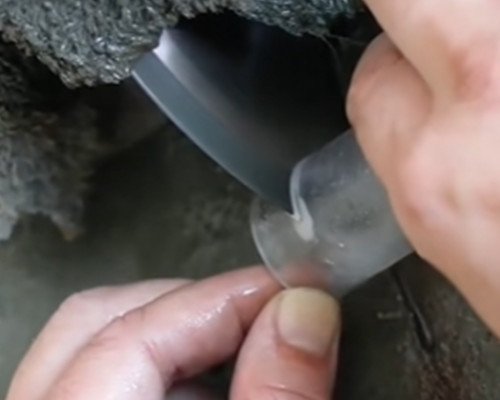
Borosilicate glass is a high-value hard and brittle material. Low-cost ordinary cutting blades will easily cause batch scrapping due to chipping, frequent tool replacement and production downtime, resulting in higher comprehensive costs.
– For smooth cutting surfaces, precision small tubes and ultra-thin glass: Prioritize resin-bonded diamond cutting blades;
– For long-term continuous mass production, thick glass/large-diameter tubes and low tool replacement cost: Choose metal sintered diamond cutting blades.
We support non-standard customization of outer diameter, thickness, inner hole, diamond grain size and bond formula. Sample testing is available. Welcome to contact us for quotation and professional processing solutions.