Home > Industry Solutions > Advantages of resin-bonded grinding wheels in titanium-based alloy grinding

13

Mar

Advantages of resin-bonded grinding wheels in titanium-based alloy grinding

1
Share:

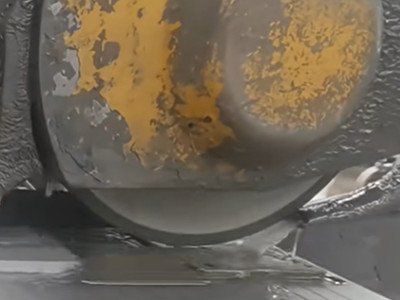
Resin bond grinding wheels especially those with CBN (cubic boron nitride) or diamond abrasives, offer significant technical and application advantages when grinding difficult-to-machine titanium-based materials (e.g., Ti-6Al-4V, Ti-Cu alloys, and γ-TiAl intermetallics). Resin bonds (typically phenolic resin) provide elasticity, good self-sharpening, low heat generation, and excellent surface finish—making them superior to conventional SiC wheels and often better balanced than metal or vitrified bonds for these heat-sensitive, reactive alloys.
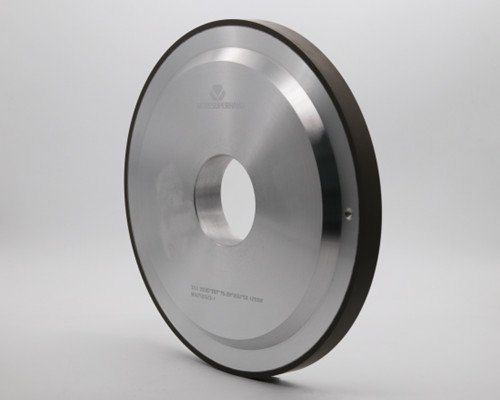
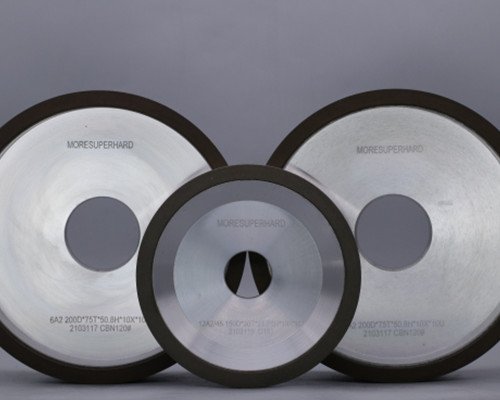
3A1 resin cbn grinding wheel resin cbn cup wheel

Core Technical Advantages of Resin Bond Wheels (for Titanium Family Alloys)

  • Low Grinding Temperature & Burn Prevention — Resin bonds generate less heat (10–30% lower than metal/vitrified bonds) due to moderate thermal conductivity and elastic buffering, greatly reducing workpiece burn, residual tensile stress, microcracks, and altered layers—critical for low-thermal-conductivity titanium alloys.
  • Superior Surface Quality — Excellent self-sharpening (grains shed timely), lower grinding forces (30–45% lower than SiC wheels), minimal plowing/friction → Ra as low as 0.2–0.6 μm (or better), high surface integrity (ideal for aerospace/medical precision parts).
  • Good Self-Sharpening & Anti-Loading — Elastic matrix promotes timely grain fracture/release, reducing adhesion (a major issue with titanium’s high reactivity), wheel clogging, and dulling; suitable for dry, MQL, or minimal lubrication grinding.
  • Flexibility & Shock Absorption — Absorbs impacts/vibrations well, reducing edge chipping/delamination in brittle γ-TiAl and work hardening in ductile Ti-6Al-4V.
  • Easy Dressing & Versatility — Simple to true/dress (diamond pencil or CBN dresser), works wet or dry, adaptable to surface, creep-feed, tool, and cylindrical grinding.
  • Balanced Cost-Performance — Longer life than single-layer electroplated wheels, sharper/more “aggressive” than metal bonds, high overall efficiency and value.

grinding Titanium alloy

Specific Application Advantages by Alloy Type

Alloy Type Key Advantages of Resin Bond Wheel Recommended Abrasive Practical Benefits Example Typical Applications
Titanium Alloy Ti-6Al-4V (Titanium Alloy) Grinding forces reduced 30–45% (normal force ↓38%, tangential ↓42%), lower heat/burn risk, superior Ra vs. SiC wheels; minimizes adhesion & work hardening / Lower forces 30–45%, cooler, better Ra than SiC, less adhesion & work hardening Resin CBN (preferred) or Resin Diamond / Resin CBN (preferred) or Resin Diamond Surface crack density reduced ~40%, subsurface damage layer >35% thinner; force ratio Fn/Ft drops to 1.8–2.2 (higher efficiency) vs. SiC / Crack density -40%, subsurface damage -35%; force ratio to 1.8–2.2 Aero engine disks/blades, medical implants precision grinding / Aero engine disks/blades, medical implants
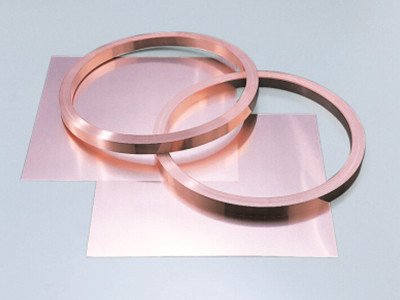
Titanium-Copper Alloy Ti-Cu (Ti-Cu Alloys) Builds on Cu-improved grindability; further reduces heat/force, enhances finish; supports higher speeds with less adhesion / Builds on Cu-improved grindability, further reduces heat/force, better finish; suits higher speeds Resin CBN or SiC (CBN better) / Resin CBN or SiC (CBN better) At high speeds, lower adhesion, higher removal rates; surface quality superior to standard titanium grinding / Less adhesion at high speed, higher removal; better finish than standard Ti High-temp wear-resistant parts (engine components), medical wear-resistant items / High-temp wear parts, medical wear-resistant
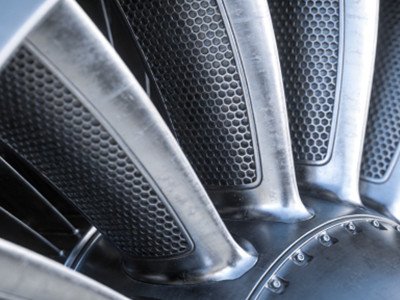
γ-Titanium-Aluminum Alloy γ-TiAl (γ-TiAl Intermetallics) Elastic buffering minimizes brittle cracks/delamination, excellent temperature control, reduced altered layer; enhanced with ultrasonic/ELID assistance / Elastic buffer reduces brittle cracks/delamination, good temp control, less altered layer; enhanced with ultrasonic/ELID Resin Diamond (preferred) or Resin CBN / Resin Diamond (preferred) or Resin CBN In creep-feed grinding, lower crack risk, Ra <0.5 μm; significantly reduced force/heat load / Lower crack risk in creep-feed, Ra <0.5 μm; reduced force/heat Aero high-temperature blades, turbine components precision/damage-free grinding / Aero high-temp blades, turbine components precision/damage-free

Titanium-Copper Alloys Titanium-Aluminum Alloys

Recommendations

  • Preferred Choice: Resin CBN Wheels — Best overall for titanium family alloys due to CBN’s high hardness, superior thermal conductivity (better heat dissipation), non-reactivity with titanium, and combined with resin’s elasticity for a “sharp yet cool” performance.
  • Comparison with Other Bonds — Metal bonds offer longer life but higher heat (risk of burn); vitrified bonds provide rigidity but less shock absorption (worse for brittle γ-TiAl); resin bonds excel in precision grinding of heat-sensitive/reactive materials.
  • Optimization Tips — Pair with high-pressure/MQL/cryogenic cooling, wheel speed Vs 30–60 m/s, depth of cut ae 0.005–0.05 mm (finish), to maximize benefits.
  • Limitations — Resin has moderate heat resistance (<300–400°C long-term); for heavy roughing, consider porous designs or hybrid bonds.

If you need specific parameters, case studies, or recommendations for a particular grade/machine/application, let me know!

También podría ser de su interés
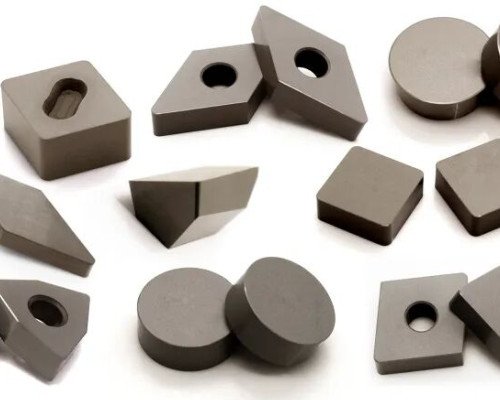
solid cbn inserts

CBN Inserts for TiC Alloy

CBN (Cubic Boron Nitride) inserts are designed for high-performance machining of TiC (Titanium Carbide) alloys. Known for their superior hardness, wear resistance, and heat stability, CBN inserts are the ideal solution for cutting hard and abrasive materials like TiC alloys. They offer long tool life, high cutting efficiency, and consistent performance, making them perfect for demanding industrial applications.
ceramic milling cutter for superalloys

Ceramic Milling Tools For High-temperature Alloys

Ceramic Milling Cutters are designed specifically for high-temperature alloys such as superalloy GH4169. These tools offer superior performance in machining high-performance materials that require extreme cutting conditions, such as in aircraft engines.
cutting tools for high temp alloys

Cutting Tools for Superalloys

Discover high-performance cutting tools for high-temperature alloys like Inconel, titanium, and Hastelloy. Carbide, ceramic, and CBN solutions available.
sialon ceramic inserts

Sialon Ceramic Tools-Ideal for Nickel-Based Superalloys & Cast Iron

Sialon ceramic inserts (Si₃N₄-Al₂O₃ solid solution) offer ultra-high hardness, high-temperature resistance and no adhesive wear, ideal for high-speed dry machining of nickel-based superalloys and cast iron with 5-8 times longer tool life than cemented carbide.
tech@moresuperhard.com
008617700605088