05
Mar
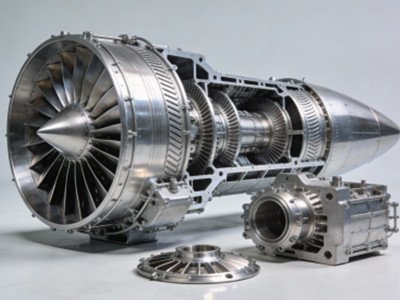
Titanium alloys (especially α+β and near-β types like Ti-6Al-4V and Ti-55531) are widely used in key aerospace components (aero-engine blades, landing gear, fuselage structural parts) for their high specific strength and excellent corrosion resistance. However, they present three critical challenges in grinding:
Core Solution Principles: Grinding schemes for titanium alloys must follow heat control, anti-adhesion and yielding reduction. Stable, efficient and high-quality processing is achievable only by selecting suitable abrasives & binders and matching precise process parameters.
To address titanium alloy grinding pain points, we conduct systematic design from 5 dimensions: abrasive, binder, concentration, hardness and pore structure.
| Index | Corundum/Silicon Carbide | CBN | Selection Basis |
| Hardness | 2000~2500 HV | 4500~5000 HV | Higher hardness ensures cutting performance and reduces extrusion friction heat |
| Thermal Stability | ≥1200℃ | ≥1400℃ | Resists high grinding temperature and maintains abrasive sharpness |
| Chemical Inertia | Reactive with titanium | Inert to Fe/Ti groups | Eliminates diffusion and bonding fundamentally to prevent wheel clogging |
Recommended Grit Size:


| Binder Type | Characteristics | Applicability for Titanium Alloys |
| Resin | Good elasticity, poor heat resistance | Not suitable (easy softening/ablation at high temperature) |
| Metal | High strength, long service life | Not ideal (easy clogging, difficult dressing) |
| Ceramic | High temperature resistance, good rigidity, designable pores | Optimal (facilitates chip removal and heat dissipation) |
| Parameter | Recommended Range | Design Basis |
| Concentration | 100%~125% | High concentration provides sufficient effective abrasives, distributes grinding load and reduces single abrasive stress |
| Hardness | JL Grade (medium-soft to medium) | Proper self-sharpening enables blunt abrasives to fall off timely and expose fresh cutting edges |
Grinding wheel performance relies on precise matching with machine tools, workpieces and cooling conditions. Below is the recommended parameter system for aerospace titanium alloy structural parts (typical material: Ti-6Al-4V).
| Parameter | Rough Grinding | Finish Grinding | Setting Basis |
| Wheel linear speed | 25~35 m/s | 30~40 m/s | <45 m/s to avoid heat accumulation; higher than corundum schemes |
| Workpiece feed speed | 300~600 mm/min | 200~400 mm/min | Prioritize removal rate; control surface quality |
| Grinding depth | 0.02~0.05 mm | 0.005~0.015 mm | Small cutting depth to avoid excessive thermal load |
| Single dressing amount | 0.02~0.03 mm | 0.01~0.02 mm | Maintain sharpness and control consumption |
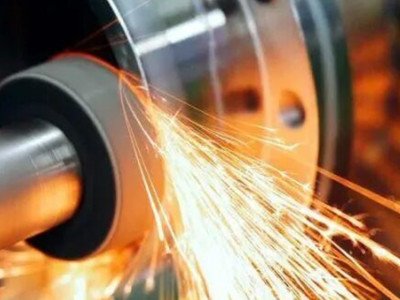
Cooling effect directly determines grinding success for titanium alloys.
| Cooling Element | Recommended Configuration | Technical Value |
| Coolant Type | EP emulsion / synthetic ester-based coolant | EP additives form lubricating film to reduce friction |
| Concentration | 5%~8% (emulsion) | Balances lubricity and cooling performance |
| Flow Rate | ≥80 L/min (per 100mm wheel width) | Ensures sufficient heat exchange capacity |
| Pressure | 8~12 bar | Penetrates air gap to reach grinding arc |
| Nozzle Design | Fan-shaped narrow slot (aligned with grinding arc) | Precise liquid supply, no cooling waste |
| Filtration Accuracy | ≤20 μm | Prevents impurities from scratching workpiece |
Special Suggestion: For deep groove and complex profile grinding, adopt high-pressure internal cooling wheels (coolant delivered through internal matrix channels) for direct cooling at grinding points and better performance.
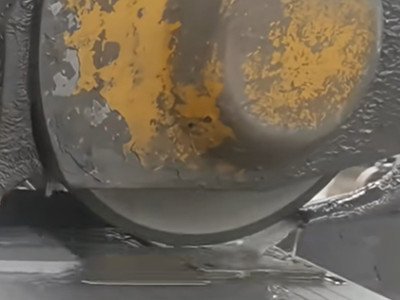
| Dressing Tool | Dressing Parameters | Frequency |
| Diamond roller | Feed rate: 0.5~1 μm/r | Every 20~30 workpieces (per grinding load) |
| Single-point diamond pen | Speed ratio: +0.2~+0.5 | Light dressing (2~3 non-feed passes) after rough dressing |
Dressing Principle: Maintain wheel sharpness and avoid excessive dressing waste. Determine the optimal dressing time by monitoring grinding power/current.
| Process | Grinding Wheel Selection | Key Parameters | Control Targets |
| Rough grinding & grooving | Ceramic CBN, B76, 125% concentration | v_s=28 m/s, a_p=0.04 mm, v_w=500 mm/min | Rapid allowance removal; 0.05~0.08 mm finish grinding stock reserved |
| Semi-finish grinding | Ceramic CBN, B64, 100% concentration | v_s=32 m/s, a_p=0.02 mm, v_w=350 mm/min | Improve shape accuracy; 0.015~0.025 mm finish grinding stock reserved |
| Finish grinding | Ceramic CBN, B46, 100% concentration | v_s=35 m/s, a_p=0.008 mm, v_w=250 mm/min | Achieve final dimensions; Ra≤0.4 μm |
| Spark-out grinding (optional) | Same as finish grinding wheel | a_p=0, 2~3 reciprocations | Eliminate elastic recovery; optimize surface stress state |