28
Apr
Brake drums are mainly used in the braking systems of commercial vehicles, engineering vehicles, and some passenger cars. The common materials for brake drums are gray cast iron (HT250 / GG25) and ductile cast iron (QT450 / GGG50). These materials generally have a high carbon content and contain a large amount of graphite structure in their microstructure.
The graphite structure gives the material a certain degree of self – lubrication, but it also brings obvious abrasive wear characteristics. In the actual machining process, the hardness of the material usually ranges from 180 – 300HB. Due to the influence of the casting process, there may be problems such as pores, sand inclusions, or uneven microstructure on the workpiece surface.
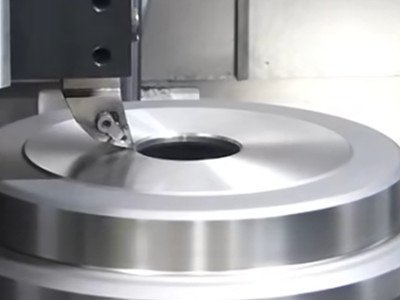
These material properties determine that the machining of brake drums is not a simple conventional turning, but a typical working condition with strong wear, obvious interrupted cutting, and high stability requirements.
In the actual turning process, customers generally face the following problems:
Rapid tool wear:
– Graphite particles cause strong abrasive wear.
– The service life of ordinary carbide inserts is short, and tool changes are frequent.
Interrupted cutting impact:
– The structure of the brake drum (reinforcing ribs, holes) leads to non – continuous cutting.
– Inserts are prone to chipping.
Unstable surface quality:
– Under the traditional tool solution, vibration occurs, resulting in fluctuations in surface roughness.
– It affects the consistency of braking performance.
Contradiction between efficiency and cost:
– Increasing the cutting speed can increase productivity, but it will cause the tool to fail faster.
– Decreasing the cutting speed helps to extend the tool life, but it will reduce the productivity.
CBN is a super – hard material with a hardness second only to diamond, and it has obvious advantages in the field of cast iron and hardened steel machining. In response to the machining characteristics of brake drums, CBN inserts can provide a more stable and efficient solution.
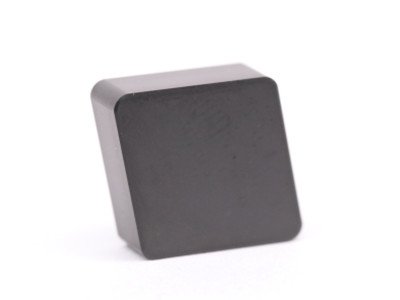
The core advantages of CBN inserts in brake drum applications are as follows:
Extremely high wear resistance:
– In the machining of gray cast iron and ductile cast iron, its wear resistance is far superior to traditional carbide.
– The tool life can be increased by 5 – 10 times.
High – temperature stability:
– It can perform stable cutting at 800 – 1000°C.
– It is suitable for high – speed dry cutting.
Optimized impact resistance (for interrupted cutting):
– Low – content CBN combined with a ceramic binder can ensure wear resistance while improving the chipping resistance, which is more suitable for the interrupted working conditions of brake drums.
Improved machining efficiency:
– The cutting speed can reach 300 – 800 m/min, significantly improving the overall machining efficiency, which is particularly crucial in mass production.
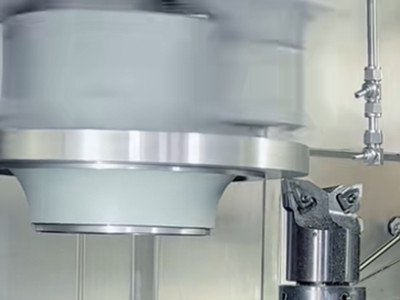
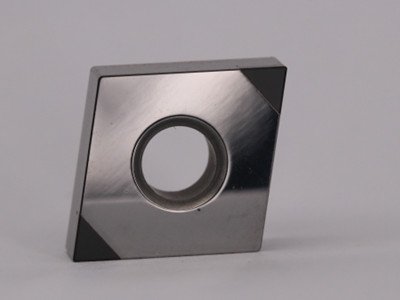
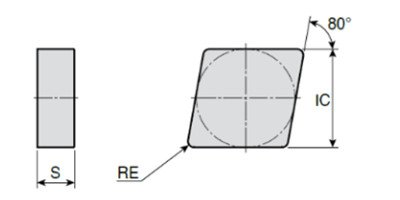
In the machining of brake drums, CNGN120712 is a common standard insert model.
This model adopts a negative rake angle design, with high edge strength, and can adapt to relatively harsh machining environments.
| Working Condition | Recommended CBN Grade |
| Continuous cutting | High – content CBN (wear resistance first) |
| Light interrupted cutting | |
| Severe interrupted cutting (common in brake drums) | Low content CBN + ceramic bond |
It should be emphasized that the performance of CBN inserts does not simply depend on the content level but on whether it matches the actual machining conditions.
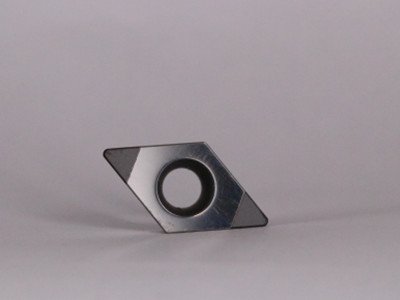
Customer background: A mass – production enterprise of brake drums in East India.
Original process:
– Tool: Carbide inserts.
– Tool life: Approximately 80 – 120 pieces/edge.
– Cutting speed: 180 m/min.
– Problems: Frequent tool changes, unstable surface roughness, and limited production rhythm.
Optimized solution:
– Tool: CNGN120712 solid CBN inserts.
– Type: Low – content CBN (suitable for interrupted cutting).
Results:
– Tool life increased to 600 – 800 pieces/edge.
– Cutting speed increased to 450 m/min.
– Surface roughness stably controlled at Ra 1.6 – 3.2 μm.
– Single – piece cost decreased by more than 30%.
In the mass – machining scenario of brake drums, CBN inserts are not only a replacement for traditional carbide but also an upgrade of the overall machining ability. By extending the tool life, the frequency of tool changes can be reduced, and manual intervention can be decreased; by increasing the cutting speed, the equipment utilization rate can be significantly improved to increase productivity; by stabilizing the machining quality, rework can be reduced, and product consistency can be improved. From the perspective of comprehensive cost, although the unit price of CBN inserts is relatively high, with high efficiency and long service life, the overall machining cost is often more competitive.
If you are machining gray cast iron or ductile cast iron brake drums and hope to improve the tool life and machining efficiency, CBN inserts will be a solution worth verifying. We can provide standard models, different CBN grades to match different working conditions, sample testing, and application support. Welcome to contact us for an optimized solution tailored to your working conditions.