31
Mar
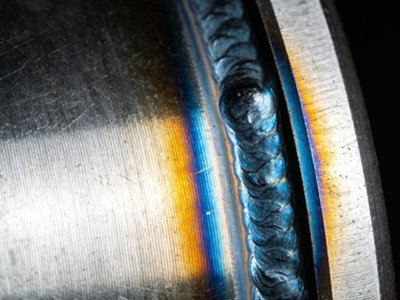
In the field of machining HRC58–62 high-hardness bearing steel, CBN (Cubic Boron Nitride) tools have been widely used to replace traditional grinding processes due to their ultra-high hardness and heat resistance, enabling efficient finish machining. However, in practical production applications, problems such as surface bluing, yellowing, unstable surface finish, and local “burning” occur frequently, which not only affect the surface quality and service performance of workpieces but also may lead to product scrapping, becoming a key bottleneck restricting machining efficiency and quality.
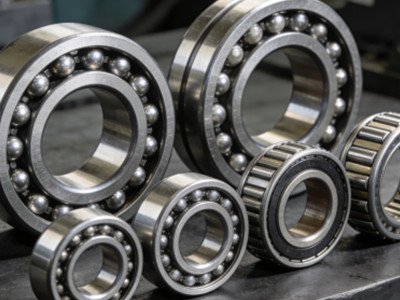
Bearing steels such as GCr15 (AISI 52100), SUJ2, and 100Cr6 offer excellent wear resistance after heat treatment but are extremely difficult to machine using conventional carbide tools. PCBN inserts maintain high hardness and thermal stability at elevated cutting temperatures, making them the preferred choice for hard turning applications.
Compared with carbide inserts, PCBN tools provide:
Longer tool life when machining HRC58–62 hardened steel
Higher dimensional consistency
Better surface finish
Reduced machining time by replacing grinding in many finishing operations
Lower overall production costs in mass production
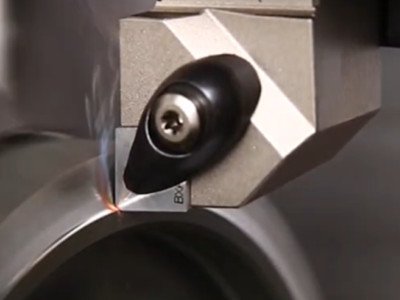
The heat generated during the cutting process is mainly dissipated through three paths: part is absorbed by the tool, part is discharged with the chips, and the other part is conducted to the workpiece. Under normal machining conditions, the heat distribution among the three is balanced, and the surface temperature of the workpiece will not exceed the critical value; however, when the machining parameters are unreasonable, the heat dissipation path is blocked, a lot of heat accumulates on the workpiece surface and cannot be discharged in time, eventually leading to tempering of the surface structure and burning.
Combined with a production scenario of finish turning of a bearing outer ring, the causes and solution process of the burning problem are specifically analyzed to provide reference for practical production.
– Machining Material: GCr15 bearing steel (hardness HRC60 after quenching)
– Machining Process: Finish turning of outer circle (finish machining process, which has extremely high requirements on surface quality)
– Machining Parameters: Cutting speed vc=180 m/min, feed rate f=0.05 mm/rev, depth of cut ap=0.1 mm
Local bluing occurred on the outer circle of the workpiece, and the surface roughness Ra value fluctuated greatly (failed to stably meet the machining requirements). After inspection, it was confirmed to be a typical surface burning caused by heat accumulation.
– Too small feed rate (f=0.05 mm/rev): The cutting thickness is too thin, the proportion of “friction” in the cutting process is much larger than that of “cutting removal”, the interface between the workpiece and the tool edge enters the “sliding friction dominant zone”, the friction is intense, and the heat cannot be effectively discharged with the chips, leading to heat accumulation.
– Too high cutting speed (vc=180 m/min): Too high cutting speed will significantly increase the heat generation. However, CBN tools cannot conduct or discharge the heat in time, which further aggravates the accumulation of heat on the workpiece surface and eventually causes burning.
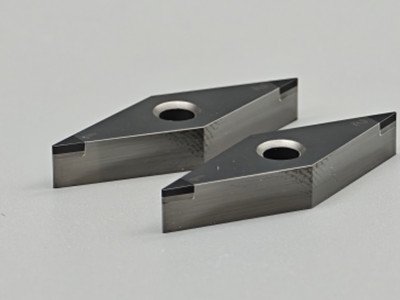
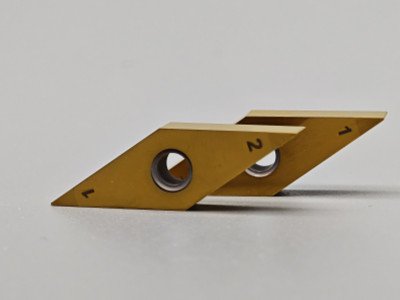
The optimal cutting parameters depend on machine rigidity, workpiece geometry, insert grade, and coolant conditions. Typical finishing parameters include:
| Parameter | Recommended Range |
|---|---|
| Workpiece Hardness | HRC58–62 |
| Cutting Speed (Vc) | 120–180 m/min |
| Feed Rate (f) | 0.05–0.15 mm/rev |
| Depth of Cut (ap) | 0.10–0.30 mm |
| Cooling | Dry cutting or minimum quantity lubrication (MQL) depending on application |
For interrupted cuts or unstable machining conditions, reducing cutting speed while selecting a tougher PCBN grade generally improves tool life.
In production environments, stable machining depends not only on insert quality but also on the combination of machine rigidity, insert geometry, and cutting parameters.
For continuous turning of hardened bearing rings around HRC60, maintaining moderate cutting speeds and replacing inserts before excessive flank wear develops helps achieve consistent surface quality and extends tool life. Stable process control is often more important than simply increasing cutting speed.
For many bearing components, hard turning offers several advantages over conventional grinding:
Grinding remains the preferred option for extremely high-precision or mirror-finish requirements, while PCBN hard turning is an excellent solution for many finish machining applications.
CBN turning has become a proven solution for machining HRC58–62 bearing steel efficiently and economically. Selecting the appropriate PCBN grade, optimizing cutting parameters, and maintaining a stable machining process can significantly improve tool life, surface quality, and overall productivity.
With extensive experience in superhard cutting tools and precision machining solutions, Moresuperhard provides customized PCBN inserts for various hardened steel applications, helping manufacturers improve machining efficiency while reducing production costs.