21
Oct
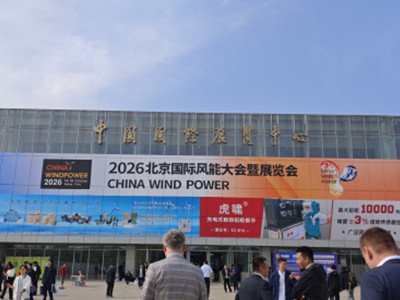
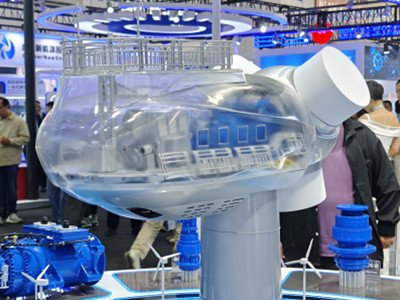
The 2026 China Wind Power Exhibition (CWP2026) covers the full industrial chain of wind power, including turbines, bearings, gearboxes, blades, fasteners and transmission systems. One trend stands out clearly after touring the show: wind power equipment keeps growing larger.
Wind turbine components are continuously increasing in size, while the material systems of workpieces are becoming more complex.
Instead of focusing on complete machines, equipment or turnkey solutions, this article centers on the raw materials of core wind power parts observed at the exhibition. Based on material properties, we discuss application opportunities and selection principles for diamond and CBN superabrasive grinding wheels in wind component machining, brought to you by Moresuperhard.
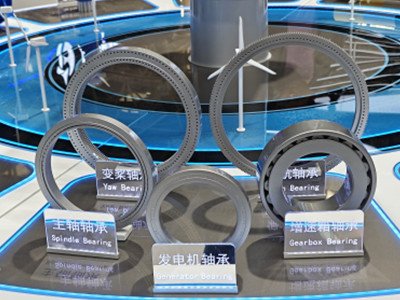
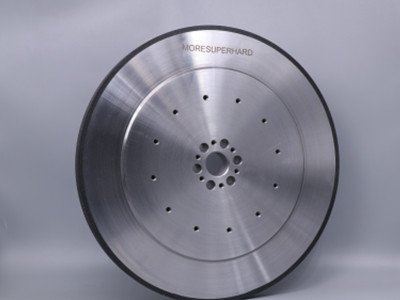
Main shaft bearings, yaw bearings and pitch bearings were widely displayed at the exhibition. These bearings are mostly made of G20Cr2Ni4A electroslag remelting carburized steel. After carburizing and quenching, the surface hardness reaches HRC 58–65. This combination delivers high surface hardness together with core toughness to withstand heavy loads and impact loads in wind turbines.
Wind bearings are huge and high-value parts. Hardened steel causes rapid wear of conventional abrasive wheels, leading to loss of profile accuracy. Precision curved grinding on raceways, ribs and inner bores carries high risk of grinding burn and microcracks, which can scrap the entire expensive workpiece.
CBN abrasives feature excellent chemical stability with ferrous steel and resist high-temperature reaction with steel, making them the top choice for hardened bearing steel grinding.
Most large-size wind bearings are non-standard parts. CBN wheels require custom development according to workpiece dimensions and grinding sequences.
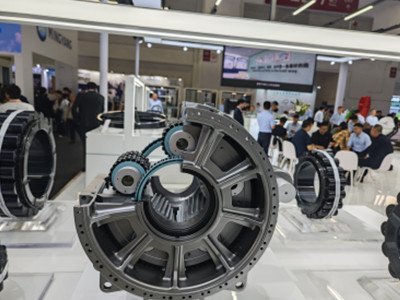
Gearboxes serve as the power core of wind turbines. Sun gears, planet gears and ring gears were heavily featured in the transmission zone. Typical materials are 18CrNiMo7-6 and 20CrMnTiH carburized gear steel. After carburizing and quenching, tooth surface hardness reaches HRC 58–62. Heat treatment induces gear distortion, which must be corrected by gear grinding to restore tooth profile accuracy.
Wind gears have large modules with high stock removal and heavy grinding loads, accelerating wheel wear. Tooth roots are stress-concentrated zones where grinding burn is strictly prohibited. Form grinding requires the wheel to replicate the full tooth gap profile; any profile degradation directly results in out-of-tolerance gears.
Vitrified bond CBN form gear grinding wheels are designed for large-modulus wind gear grinding. Strong profile retention enables stable performance under heavy stock removal, cuts dressing cycles, maintains stable tooth profile and lead accuracy, and lowers the risk of root burn.
Large-modulus wind gears represent a special niche application requiring custom large-size, high-precision form wheels.
Resin CBN wheels are also used for hob grinding.
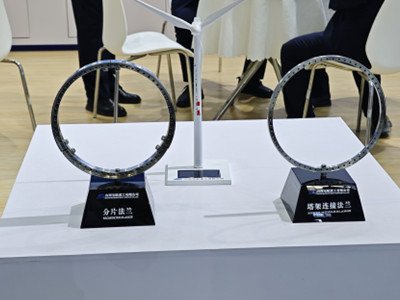
Numerous large main shafts, motor shafts and annular tower flange forgings were on display. Common materials include 42CrMo QT steel and Q345. Main shafts are extra-long, some with deep holes. Tower flanges are multi-meter-scale annular forgings processed on end faces, inner bores and outer diameters.
QT steel has high strength, and some workpieces undergo finish grinding after quenching. These oversized parts have relatively weak rigidity, which easily triggers chatter during grinding and compromises dimensional accuracy and surface roughness.
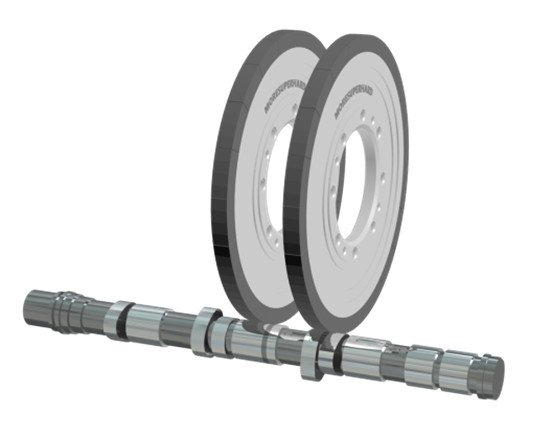
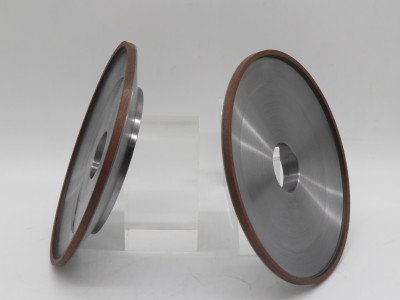
Vitrified CBN external grinding wheels are suitable for finish OD grinding of hardened main shafts and motor shafts. Compared with conventional corundum wheels, they deliver much longer service life and consistent surface finish, perfect for high-efficiency precision grinding of large shaft parts.
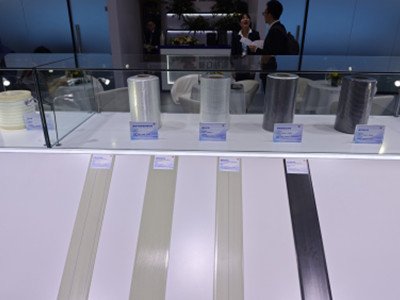
The composite blade area showcased abundant GFRP (glass fiber reinforced plastic), CFRP (carbon fiber reinforced plastic) and hybrid carbon-glass composites. Modern offshore blades can reach 80–150 meters in length. Composites consist of resin matrix reinforced by high-strength fibers, with material behavior completely different from metal components.
Glass and carbon fibers are highly abrasive and wear standard wheels rapidly. Trimming and edge finishing frequently cause defects such as fiber pull-out, delamination and fraying.
Important note: CBN is NOT suitable for these non-metallic composite materials.
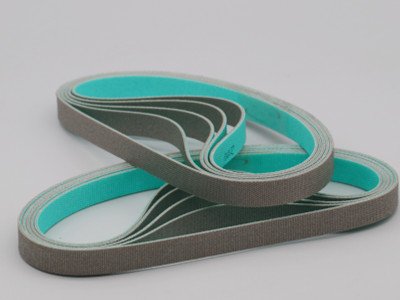
Diamond abrasives have extreme hardness and outstanding resistance to fiber abrasion, making them the first choice for composite machining. Diamond grinding wheels and diamond-coated tools are used for blade edge trimming, slotting and sanding. They slow down tool wear, improve surface quality and reduce delamination and edge fraying.
Key distinction: CBN is for ferrous hardened steels. Diamond works for composites, cemented carbide, ceramics and other non-ferrous materials. Diamond reacts chemically and degrades when grinding hot steel, so the two cannot be swapped.
Wind bolts in the fastener zone are commonly made of 35CrMoA, 40Cr and 27MnCrV. After quenching and tempering, they reach Class 10.9 or 12.9 ultra-high strength. Typical processes include OD turning, face machining and thread forming.
Grinding heat can easily damage the surface of high-strength alloy steel. The abrasive tool must balance sharp cutting ability and heat dissipation.
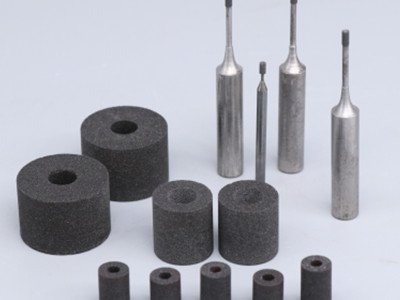
As mentioned above, superabrasive wheels need regular dressing to sustain profile accuracy over long production runs. Single-point diamond dressers are sufficient for conventional wheels. However, processes like form gear grinding for wind gears and bearing raceway grinding demand full profile replication. Single-point dressing suffers from low efficiency and accumulated errors — this is where diamond rollers come in.
Diamond grits are bonded to a steel substrate via electroplating or powder metallurgy sintering to create a forming roller matching the target profile. Mounted on the grinder dressing unit, it dresses the wheel by plunge or reciprocating motion, transferring the precise profile onto the grinding wheel surface.
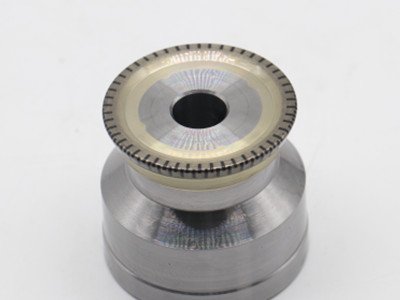
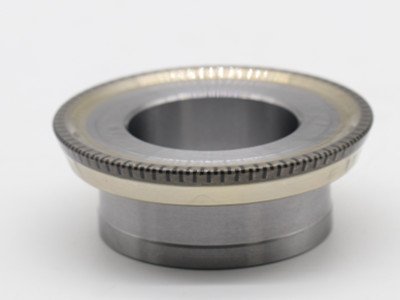
A frequently overlooked detail: When dressing CBN wheels with diamond rollers, the two abrasives have comparable hardness. Dressing works mechanically by micro-fracturing CBN grains and controlled binder removal to restore sharpness. Dressing speed ratio and feed rate directly affect wheel topography, grinding forces and final workpiece quality. Dressing parameters must be matched together with the grinding process.
Grinding wheels and dressing tools form one integrated solution. Stable profile accuracy of superabrasive wheels relies on properly matched diamond rollers.
CWP2026 clearly confirms the trend toward larger wind power components. Different workpiece materials create distinct machining challenges. The comparison table below summarizes materials and superabrasive wheel selection collected on site.
| Workpiece | Main Material | Hardness / Strength | Recommended Superabrasive | Bond & Application |
|---|---|---|---|---|
| Main shaft / yaw / pitch bearings | G20Cr2Ni4A carburized steel | Surface HRC 58–65 | CBN | Vitrified (raceway / ID / OD grinding); Resin (rib / finish grinding) |
| Gearbox gears (sun / planet / ring gear) | 18CrNiMo7-6, 20CrMnTiH | Tooth surface HRC 58–62 | CBN | Vitrified (form gear grinding) |
| Main shafts, motor shafts | 42CrMo QT steel | Quenched & tempered, partially hardened | CBN | Vitrified (OD grinding) |
| Tower flanges, large rings | 42CrMo, Q345 | Quenched & tempered | CBN (for hardened parts) | Face / ID / OD machining |
| Wind-specific bolts | 35CrMoA, 40Cr, 27MnCrV | Class 10.9 / 12.9 | — | OD / face / thread (sharp cutting + heat dissipation) |
| Wind blades | GFRP, CFRP, hybrid carbon-glass | — | Diamond | Diamond wheels / coated tools (trimming / slotting / sanding) |
Table: Wind Power Workpiece Materials & Superabrasive Wheel Selection Guide (Field Summary)
For hardened bearings, gears, main shafts and other ferrous metal parts: CBN superabrasive wheels are preferred, with vitrified bond offering the best overall performance.
For GFRP / CFRP composite blades: Diamond tools are the first choice.
For CBN form wheels (gear grinding, raceway grinding): Pair with diamond rollers for form dressing to guarantee profile accuracy and batch consistency.
Diamond and CBN wheels carry a higher upfront cost than conventional wheels. Nevertheless, exceptional wear resistance and profile retention cut wheel changeovers and dressing downtime, stabilize yield and reduce the total machining cost of these large, high-value wind components.
There is no universal superabrasive wheel for wind power parts. Abrasive type, bond system and wheel structure must be customized according to workpiece material, heat treatment condition, stock removal and grinder model to unlock the full advantages of superabrasive grinding.