31
Mar
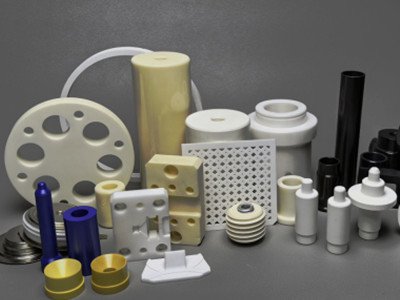
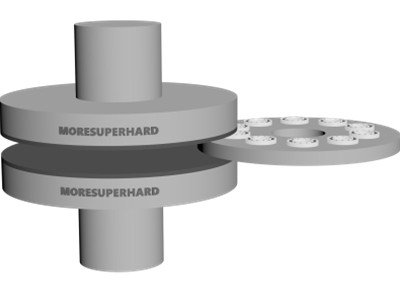
Double disc grinding utilizes two parallel diamondgrinding wheels rotating synchronously to remove material from both top and bottom surfaces of a ceramic workpiece at the same time.
Core Working Principle
Symmetrical material removal balances grinding pressure on both sides, avoiding unilateral stress accumulation common in single-side processing. Uniform force distribution suppresses crack expansion and residual deformation on brittle ceramic substrates.
Typical Applicable Advanced Ceramic Workpieces
Zirconia electronic packaging substrates
High-flatness alumina ceramic plates
Silicon nitride bearing structural parts
Semiconductor SiC ceramic wafers
Solid oxide fuel cell (SOFC) ceramic components
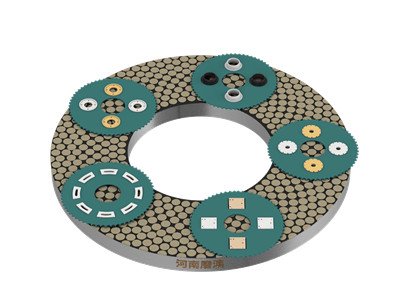
The biggest advantage of double disc grinding lies in stable dimensional control, directly solving the out-of-tolerance problem of single-side grinding. The performance comparison data is as follows:
| Parameter | Single-Side Grinding | Double Disc Grinding |
|---|---|---|
| Flatness | ~20 μm | ≤ 5 μm |
| Thickness tolerance | ±10 μm | ±2 μm |
Case: Zirconia ceramic substrates processed via double disc grinding maintain flatness ≤5 μm for mass production, fully matching the precision demand of electronic chip packaging and miniature sensor components.
Simultaneous double-side material removal cuts processing cycle significantly and supports 24-hour automated production.
Practical Production Case: Silicon Nitride Bearing Parts
Traditional single-side grinding: 15 minutes per piece
Double disc grinding process: 6 minutes per piece
Efficiency improvement: up to 60%
Meanwhile, optimized grinding parameters can achieve mirror surface roughness Ra 0.05 μm, ideal for high-volume automotive and aerospace ceramic mass production.
Unbalanced unilateral grinding leaves uneven residual stress and microcracks inside ceramics; double disc grinding evenly distributes compressive stress to strengthen mechanical properties.
Performance test data on alumina ceramics:
Residual compressive stress after grinding: >300 MPa
Bending strength upgraded from 350 MPa to 480 MPa
Fracture toughness increased by 25%
Mechanism: Balanced grinding force reduces microcrack initiation and inhibits crack propagation, greatly lifting component reliability and service lifespan under high-temperature, high-load working conditions.
Precision double disc grinding for advanced ceramics relies on professional and standardized process configurations, with ceramic-bonded diamond double disc grinding wheels as the core processing tool. Different from ordinary resin and metal bond grinding tools, this dedicated grinding disc features high rigidity, low thermal deformation and stable flatness, perfectly adapting to the high hardness and brittleness of alumina, zirconia, SiC and silicon nitride ceramics for low-damage, high-precision machining.
With the advancement of Industry 4.0, double disc grinding is evolving toward:
These innovations are essential for future applications such as:


Q1: Why is double disc grinding better than single-side grinding for brittle ceramics?
A1: Single-side grinding creates one-way stress, leading to warpage and microcracks. Double-sided simultaneous machining balances grinding force, minimizes residual stress, and improves flatness, dimensional tolerance and mechanical strength at the same time.
Q2: What ceramic materials can be processed with double disc grinding?
A2: Alumina, zirconia, silicon nitride, silicon carbide ceramic substrates, bearing parts, semiconductor wafers and electronic sensor ceramic components.
Q3: What surface roughness can double disc grinding reach on ceramics?
A3: With fine-grain resin bond diamond wheels, mirror finish Ra 0.05 μm is achievable for precision electronic ceramic substrates.
Q4: How much production efficiency can double disc grinding improve?
A4: Compared with traditional single-side grinding, processing time is shortened by 40%–60%, greatly lifting factory throughput.
Double disc grinding has become a core enabling technology for advanced ceramic machining, offering:
By significantly improving dimensional accuracy, surface integrity, and production efficiency, this process plays a crucial role in accelerating the industrialization of advanced ceramics.
With ongoing optimization and intelligent upgrades, double disc grinding will continue to drive innovation in high-end manufacturing industries.