Home > Industry Solutions > Grinding Technology and Application Cases of Rubber Materials

26

Jan

Grinding Technology and Application Cases of Rubber Materials

43
Share:

 Overview of Rubber Material Grinding

Rubber materials are widely used in automotive, aerospace, electronics, rail transit, and industrial equipment industries due to their excellent elasticity, wear resistance, vibration damping, and sealing performance. In the manufacturing and post-processing of rubber components, grinding is a critical process used for surface finishing, dimensional correction, and improvement of surface quality.

Compared with metals, ceramics, and engineering plastics, rubber materials exhibit high elasticity, low thermal conductivity, and strong sensitivity to heat. These characteristics make rubber grinding prone to issues such as surface burning, tearing, thermal deformation, and dimensional instability. Therefore, rubber grinding requires specially optimized grinding tools, process parameters, and cooling methods.
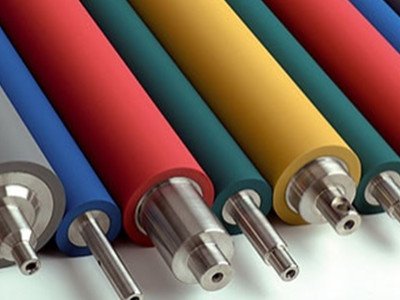
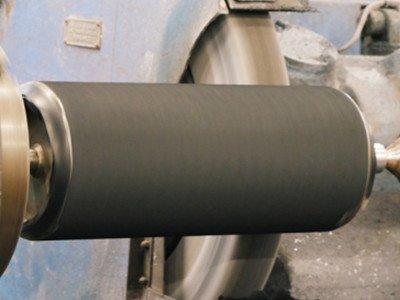
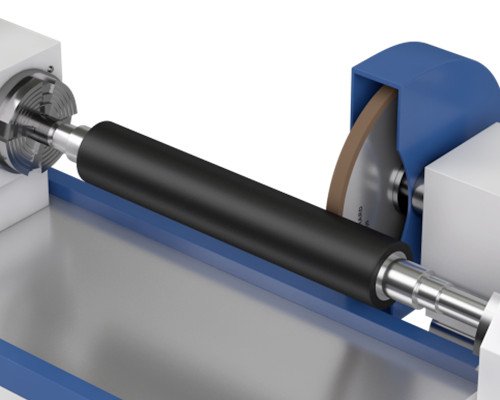
rubber roller grinding rubber roller

Technical Characteristics of Rubber Grinding

2.1 Selection of Grinding Tools

(1) Abrasive and Bond Types

Common grinding wheels for rubber processing include diamond wheels, CBN (Cubic Boron Nitride) wheels, and resin-bond grinding wheels:
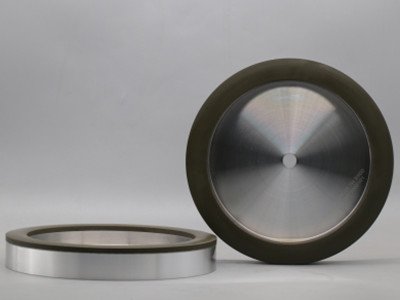
  • Diamond grinding wheels offer extremely high hardness and wear resistance, making them suitable for high-hardness rubber materials, rubber with high filler content, and applications requiring high dimensional accuracy.
  • CBN grinding wheels provide stable performance when grinding certain high-performance rubber materials or rubber compounds containing metallic fillers, especially in continuous production conditions.
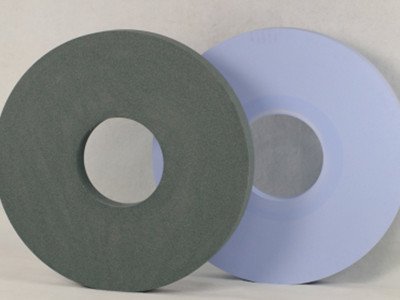
  • Resin bond grinding wheels feature good elasticity and relatively gentle cutting behavior, making them ideal for precision grinding and applications with strict surface integrity requirements.

resin cbn grinding wheel

1A1 resin diamond grinding wheel

abrasive grinding wheel

(2) Grinding Wheel Types

According to the structure and application of rubber components, different grinding wheel shapes can be selected:
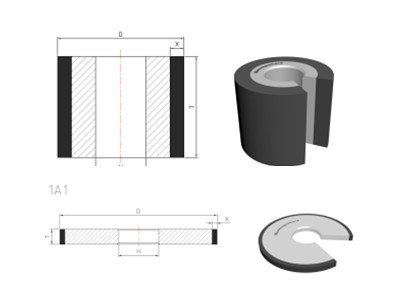
  • Surface grinding wheels for rubber sheets and flat sealing components
  • External cylindrical grinding wheels for rubber rollers and sealing rings
  • Internal grinding wheels for rubber sleeves and inner-hole sealing parts

grinding wheel mold

2.2 Control of Grinding Parameters

(1) Cutting Speed

Due to the poor thermal conductivity of rubber, excessive heat can easily accumulate during grinding. Therefore, the grinding speed for rubber materials is generally lower than that used for metal grinding, effectively reducing softening, burning, and surface melting.

(2) Feed Rate

The feed rate must be carefully controlled:

  • An excessively high feed rate may cause surface tearing or dimensional inaccuracies.
  • An overly low feed rate may increase friction and heat accumulation, negatively affecting surface quality.

Trial grinding is typically required to determine the optimal feed parameters.

(3) Cooling Method

Cooling plays a crucial role in rubber grinding. Proper cooling can:

  • Reduce grinding zone temperature
  • Minimize thermal deformation of rubber
  • Improve surface finish
  • Suppress dust and smoke generation

Water-based coolants or emulsified coolants with functional additives are commonly used.

2.3 Grinding Process Design

(1) Rough Grinding and Finish Grinding

Rubber grinding usually adopts a staged process:

  • Rough grinding focuses on rapid material removal and shape correction.
  • Finish grinding aims to achieve the required surface roughness and dimensional accuracy.

Proper allocation of grinding allowance effectively reduces the risk of surface damage.

(2) Post-Grinding Surface Treatment

For high-end applications, additional processes such as polishing, coating, or functional surface treatment may be applied after grinding to further enhance surface performance and service life.

Typical Application Cases of Rubber Grinding

Case 1: Precision Grinding of Automotive Tire Inner Surfaces

Background:
During tire manufacturing, precision grinding of the inner surface is required to ensure accurate fit and airtight sealing between the tire and the wheel rim.

Technical Implementation:

  • Grinding tool: Diamond grinding wheel for stable cutting performance and dimensional consistency
  • Grinding parameters: Low cutting speed with moderate feed rate to prevent overheating
  • Cooling: Water-based coolant to effectively control temperature and reduce smoke

Results:
After precision grinding, the inner surface of the tire achieved excellent smoothness and dimensional stability, significantly improving rim fit, reducing air leakage and vibration, and enhancing driving safety and comfort.

Case 2: Surface Finishing of Rubber Seals for Aircraft Engines

Background:
Rubber seals used in aircraft engines require extremely high dimensional accuracy and surface integrity to ensure reliable sealing performance under high-temperature and high-pressure conditions.

Technical Implementation:

  • Grinding tool: Resin bond grinding wheel to achieve controlled and gentle material removal
  • Grinding parameters: Low cutting speed and small feed rate to avoid micro-cracks or surface damage
  • Cooling: Coolant with special additives to reduce grinding heat and improve surface quality

Results:
The ground seals exhibited smooth, defect-free surfaces and stable dimensional accuracy, significantly enhancing sealing performance and ensuring the safe and efficient operation of aircraft engines.

Development Trends of Rubber Grinding Technology

  • Intelligent Manufacturing: Integration of sensors, artificial intelligence, and data analysis to optimize grinding parameters and improve consistency and efficiency.
  • Environmental Sustainability: Development of eco-friendly grinding wheels and coolants to reduce environmental impact and improve workplace safety.
  • Adaptation to High-Performance Rubber: Continuous optimization of grinding wheel formulations and processes to meet the challenges of new high-performance rubber materials.

Conclusion

Rubber grinding plays a vital role in modern manufacturing. From automotive tires to aircraft engine seals, proper selection of grinding wheels and precise control of process parameters directly affect product quality, performance, and reliability.

With the advancement of intelligent manufacturing and green processing technologies, rubber grinding solutions will continue to evolve, providing more efficient and reliable support for automotive, aerospace, and high-end industrial applications.


También podría ser de su interés
grinding rubber roll

Grinding Wheel for Rubber Roller

Rubber rollers are widely used in many industries, mainly in the transmission, calendering, coating, printing and other processes in mechanical equipment.Moresuperhard provide SG,WA and resin diamond grinding wheel fo grinding rubber roll with high grinding efficiency.
tech@moresuperhard.com
008617700605088