13
Mar
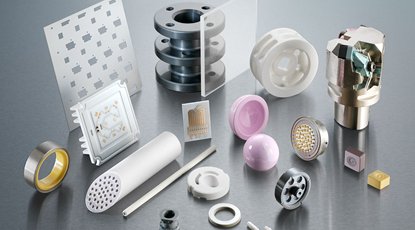
Ceramic materials are widely used in aerospace, electronics, and precision machinery industries due to their excellent properties such as high strength, high hardness, high temperature resistance, and corrosion resistance. Among them, silicon nitride, zirconia, and alumina are the most commonly used engineering ceramics for machining.

However, because of their hard and brittle nature, these ceramics are extremely difficult to grind. Diamond abrasives, with their ultra-high hardness and wear resistance, have become the most effective solution for grinding such materials.
The bond type of a grinding wheel plays a critical role in connecting diamond grains and maintaining wheel structure. Its performance directly affects grinding efficiency, machining accuracy, surface quality, and tool life. There is no universally optimal bond type; the best choice depends on the characteristics of the ceramic material and the specific machining requirements.
To facilitate accurate selection, the following table summarizes the characteristics and typical applications of several commonly used ceramic materials. Based on these properties, the advantages and limitations of different bond types can then be matched to the most suitable application scenarios.
| Ceramic Material | Key Characteristics | Typical Applications |
|---|---|---|
| Silicon Nitride Ceramic | High strength, high toughness, excellent wear resistance, high temperature resistance (≥1200°C), corrosion resistance, and strong resistance to brittle fracture | Engine ceramic components, silicon nitride ceramic bearings, semiconductor substrates, precision ceramic molds |
| Zirconia Ceramic | High toughness, excellent wear resistance, good biocompatibility, easy to polish surface, less edge chipping during grinding | Zirconia bearing rings, dental ceramic restorations, ceramic cutting tools, electronic ceramic pins |
| Alumina Ceramic | High hardness, low cost, good high temperature resistance, but relatively brittle and prone to cracking, moderate surface precision requirements | Ceramic insulators, ceramic bushings, various ceramic blanks |
After understanding the characteristics and applications of these ceramic materials, it becomes clear that different bond types of diamond grinding wheels offer significantly different performance advantages depending on the grinding requirements.
The following table summarizes the core advantages, limitations, and recommended applications of three commonly used bond types, allowing them to be matched with the ceramic material characteristics above for quick and accurate selection.
| Bond Type | Key Advantages | Key Disadvantages | Typical Applications |
|---|---|---|---|
| Vitrified Bond | High rigidity and precision, excellent self-sharpening ability, strong heat resistance, long service life | Relatively brittle, low impact resistance, surface roughness may be higher | Suitable for silicon nitride ceramics, high-precision forming grinding and high-efficiency high-speed grinding |
| Resin Bond | Excellent polishing performance, good elasticity, smooth grinding process, relatively low cost | Lower strength, weaker wear resistance, limited heat resistance, relatively poor shape retention | Suitable for zirconia ceramics, fine grinding, ultra-fine grinding, and complex profile machining |
| Metal Bond | Strong abrasive holding force, highest wear resistance, longest service life, excellent stability | Poor self-sharpening, prone to loading, difficult dressing, moderate surface quality | Suitable for alumina ceramics and ceramic blanks, rough grinding and heavy-duty grinding |
Based on the information above, and considering the characteristics, applications, and grinding requirements of different ceramic materials, several key principles can be summarized for selecting the appropriate grinding wheel bond.
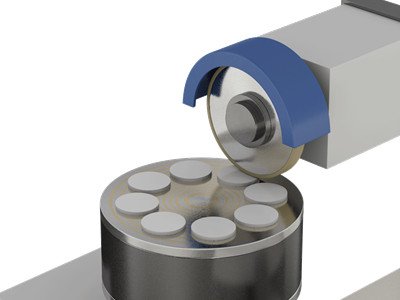
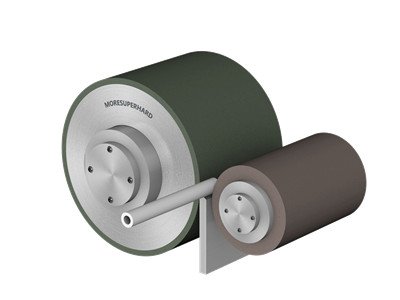
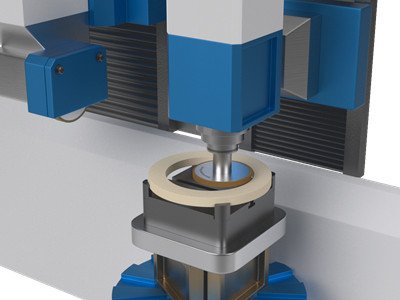
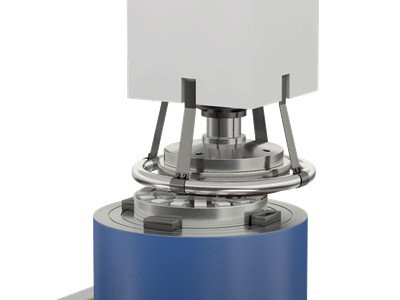
In practical machining applications:

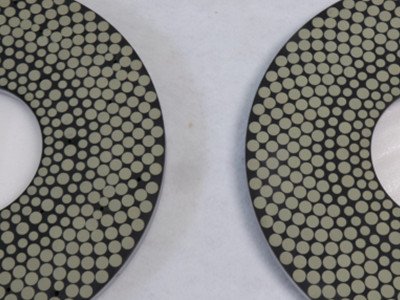
In real production environments, the selection should consider multiple factors, including the type of ceramic material, machining process, required accuracy, and cost considerations. In many cases, combining different bond types during different grinding stages can further improve both machining efficiency and final product quality.
If you are machining silicon nitride, zirconia, or alumina ceramics and need the right diamond grinding wheel solution, More SuperHard provides vitrified, resin, and metal bond diamond grinding wheels for different ceramic grinding applications. Contact us for customized grinding solutions.