13
Feb
In the upgrading of strategic industries such as aerospace and energy power, Ceramic Matrix Composites (CMC) have become core materials due to their advantages of high strength, high temperature resistance, low density and toughness brought by fiber reinforcement. With a fracture toughness of 15-25MPa·m¹/² and a thermal shock resistance temperature difference of more than 800℃, CMC are widely used in components under extreme working conditions. However, the unique material properties of CMC make their machining extremely difficult. This paper elaborates on their machining difficulties, process points, tool selection principles and application cases combined with practice, providing reference for the industry.
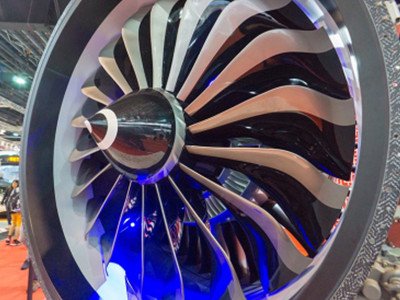
The machining difficulties of CMC stem from their physical and mechanical properties, which are prone to cracks, edge chipping and other problems, specifically focusing on four aspects:
The Mohs hardness of CMC reaches 8-9, close to that of diamond, resulting in extremely high cutting resistance during machining; although reinforced by fibers, CMC are still brittle materials, and fluctuations in cutting force are likely to cause cracks and edge chipping. Especially in the machining of CMC-SiCf/SiC, SiC fibers are prone to fiber tearing and matrix chipping.
The fiber braided structure of CMC gives them obvious anisotropy, with great differences in mechanical properties in different directions, leading to fluctuations in cutting resistance during machining, which is likely to cause tool overload, part deformation and cracking. It is necessary to dynamically adjust machining parameters according to the fiber direction, increasing machining complexity.
The thermal conductivity of CMC is only one-tenth to one-hundredth of that of traditional metals. During machining, the heat in the cutting zone is difficult to diffuse, and the local temperature can exceed 1000℃, which is easy to damage the fiber-matrix interface, cause thermal cracking, oxidation and other problems, and also generate residual stress to aggravate part defects. The control of thermal damage is a core difficulty.
CMC are mostly used in high-end fields. The surface roughness of aerospace parts often requires Ra≤0.8μm, and precision components require Ra≤0.5μm. However, the brittleness of CMC is prone to burrs, microcracks and other defects, which affect the fatigue strength and service life of parts. Therefore, surface quality control is crucial.
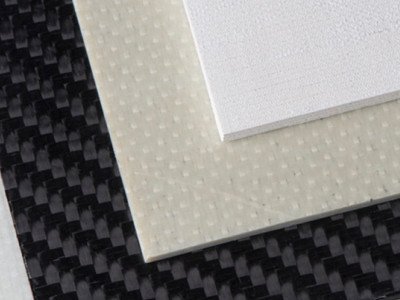
To address the machining difficulties of CMC, it is necessary to select machining methods and optimize parameters according to material properties, which are mainly divided into two categories: traditional machining and special machining:
Traditional machining is suitable for parts with simple shapes and moderate precision, with the core of controlling force and temperature, mainly including grinding and turning:
Grinding is the most widely used method. Diamond or CBN grinding wheels are preferred, with low-speed and small-feed machining. Dry machining or minimum quantity lubrication (MQL) is adopted, and chips are removed in a timely manner to avoid clogging, ensuring high-precision surface machining quality.
Turning is suitable for rotating parts. Appropriate tool angles and parameters should be selected, cutting depth and feed rate should be reduced, and cutting speed should be controlled. Vibratory turning can be used to reduce friction, avoiding brittle fracture and thermal damage of materials.
Special machining is suitable for complex and high-precision parts, with small cutting force and easy control of thermal damage. The mainstream methods are laser machining and ultrasonic-assisted machining:
Laser machining is a non-contact method, suitable for complex cutting and drilling. It is necessary to optimize laser power, pulse width and other parameters, and adopt inert gas protection to reduce thermal cracking and oxidation, improving machining quality.
Ultrasonic-assisted machining reduces friction, lowers force and controls temperature through vibration, which is suitable for various CMC machining. It is necessary to match vibration and cutting parameters, select appropriate tool materials to avoid tool chipping, which can effectively improve surface quality and extend tool life.
Tool selection should follow the principles of “high hardness, high wear resistance, low friction coefficient and thermal shock resistance”. Combined with material, process and precision requirements, tool materials, structure and parameters should be optimized, and service life control should be strengthened:
Mainstream tool materials are divided into three categories, suitable for different machining scenarios:
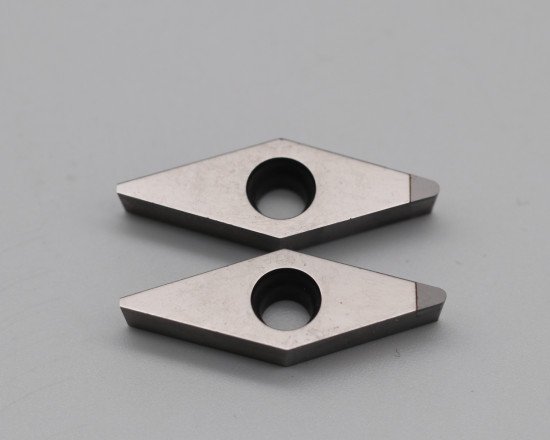
1. Diamond tools (including PCD): With extremely high hardness and low friction coefficient, they are the first choice for finishing, suitable for SiC-based CMC and other materials, which can control the surface roughness to Ra≤0.5μm. Temperature control processes should be matched to avoid high-temperature oxidation failure.

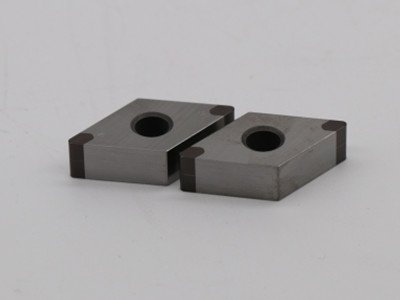
2. CBN tools: Their wear resistance is second only to diamond, with excellent thermal stability, suitable for high-speed machining and high-temperature resistant CMC, and can be used for rough and semi-finishing. Their toughness is better than that of diamond tools, and parameters should be optimized to make up for the shortcoming of surface quality.
3. Ceramic tools: Low cost and high hardness, only suitable for rough machining with low precision and small batch. They have poor toughness and wear resistance, are prone to chipping, and are not suitable for complex and high-precision machining.
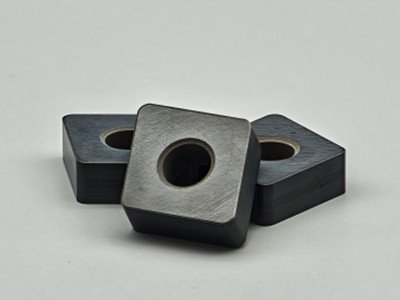
1. Structure: Integral or welded tools are preferred, and customized forming tools are adopted for complex shapes; the cutting edge needs to be passivated, and grinding wheels with loose structure are selected to facilitate chip discharge.
2. Geometric parameters: The rake angle is selected as -5° to -15°, the relief angle is 8° to 12°, and the main cutting edge angle is adjusted according to the machining method; the feed rate and cutting depth should be matched with the geometric parameters to avoid sharp increase in cutting force and material defects.
Preset the tool service life, regularly check the wear condition, and replace the tool in time when the cutting edge wear exceeds 0.03mm. Monitoring technology can be used to feedback the status in real time; clean the tool after machining, store diamond and CBN tools properly, and grind regularly while controlling the grinding temperature.
Combined with the machining case of CMC-SiCf/SiC turbine blade tenon in the aerospace field, the feasibility of the process and tool selection is verified:
The tenon has a three-dimensional braided structure with a Mohs hardness of 8.5, requiring a surface roughness of Ra≤0.6μm, a dimensional tolerance of ±0.01mm, and no obvious defects. The difficulties lie in complex structure, significant anisotropy and difficult control of thermal damage.
1. Process: Adopt the three-stage process of “rough machining – semi-finishing – finishing”, combined with ultrasonic-assisted grinding and laser machining, and monitor the precision in real time.
2. Tools: CBN grinding wheel is used for rough machining, customized PCD forming end mill for semi-finishing, and PCD grinding wheel for finishing, all of which have optimized geometric parameters to adapt to machining needs.
3. Parameters: Optimize grinding/milling speed, feed rate and other parameters according to the machining stage, control the cutting temperature not to exceed 600℃, and adopt dry or minimum quantity lubrication.
After machining, the surface roughness is Ra=0.45μm, the dimensional tolerance is ±0.008mm, and there are no defects. The mechanical properties of the parts are intact, the tool life meets the standard, and the machining efficiency is more than 30% higher than that of the traditional process, meeting the design requirements.
The core of CMC machining is to solve the problems of cutting force fluctuation, thermal damage and surface quality control. It is necessary to adhere to the principle of “process adapting to materials and tools matching processes”, optimize traditional and special machining methods, and select and maintain tools reasonably.
In the future, with the upgrading of high-end industries, CMC machining will develop towards high precision, high efficiency, low damage and intelligence. It is necessary to conduct in-depth research on machining mechanisms, develop high-performance customized tools, integrate AI, online monitoring and other technologies, and promote their large-scale and standardized application.