15
Jun
In the fields of precision grinding, mold processing, bearing manufacturing, and tool sharpening, an increasing number of enterprises areswitching from traditional corundum and silicon carbide grinding wheels to CBN ceramic grinding wheels. Compared with conventional grinding wheels, CBN ceramic grinding wheels feature high hardness, excellent wear resistance, superior thermal stability, high machining accuracy, long service life, and outstanding workpiece surface quality. They can effectively reduce grinding wheel consumption, minimize downtime for wheel replacement, and improve product yield, making them ideal for precision grinding of various iron-based hard materials such as hardened steel, high-speed steel, and bearing steel.
However, practical production cases show that most factories directly apply the processing parameters, equipment status, and dressing methods of traditional grinding wheels to CBN ceramic grinding wheels. This improper operation easily causes various problems including workpiece burning, surface chatter marks, dimensional accuracy drift, wheel clogging, low machining efficiency, and premature wheel failure. These issues not only fail to leverage the performance advantages of CBN wheels but also increase production costs and delay production schedules.
Based on mass production practical experience, this article summarizes the most common problems during the switch from traditional grinding wheels to CBN ceramic grinding wheels, and sorts out a complete and implementable guide for equipment debugging, parameter optimization, and daily maintenance. It helps enterprises complete the process switch quickly and maximize the grinding value of CBN ceramic grinding wheels.
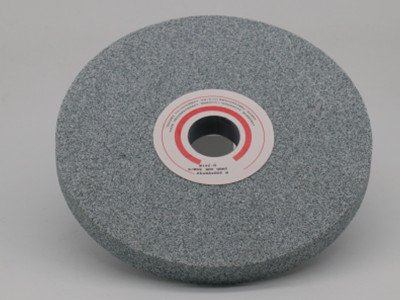
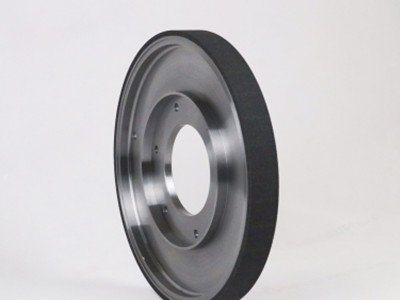
To solve various faults after switching, it is essential to clarify the essential differences between the two types of grinding wheels. All debugging problems stem from process adaptation deviations:
Traditional grinding wheels have low abrasive hardness, strong self-sharpening performance, and fast wear rate, which can renew cutting edges through continuous wear during processing. CBN ceramic grinding wheels feature extremely high abrasive hardness, almost zero wear, and dense and stable bonding agents without passive self-sharpening effect. Tiny machine tool gaps and parameter deviations will be completely reflected on the workpiece.
Traditional grinding wheels are suitable for rough grinding, large machining allowance, and general-precision processing scenarios. CBN ceramic grinding wheels are dedicated to precision grinding, high surface finish, and small-allowance finish machining, requiring extremely high standards for spindle speed, feed rate, cooling system, and equipment accuracy.
Traditional grinding wheels can be roughly dressed frequently with fast material removal. CBN ceramic grinding wheels have high hardness and high dressing difficulty, requiring special dressing tools and following the principles of “light dressing, frequent dressing, and pre-dressing” while avoiding violent dressing.
Traditional grinding wheels have poor thermal stability and can offset deformation errors through self-wear. CBN wheels are high-temperature resistant with minimal deformation. Errors caused by thermal expansion of the machine tool spindle and fixtures cannot be offset by wheel wear, which easily leads to dimensional deviations.
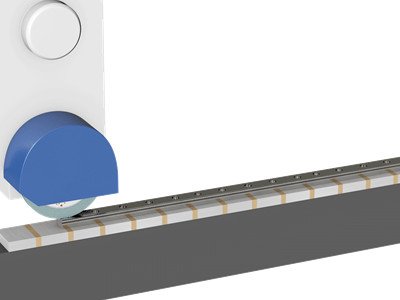
Combined with front-line grinding scenarios, this section summarizes 8 most frequent problems after process switching, with accurate cause analysis and targeted solutions applicable to most grinding machine working conditions.
Problem Phenomenon: Black burnt marks and oxide layers appear on the workpiece surface after grinding, resulting in reduced hardness. Thin-walled workpieces are prone to deformation and scrapping, which is the most common problem in the initial switching stage.
Core Causes: The low-speed and large-feed process for traditional grinding wheels is improperly adopted. CBN wheels have sharp cutting edges and low grinding resistance; low-speed operation prevents timely discharge of grinding chips and causes heat accumulation in the grinding zone. In addition, insufficient coolant flow and misaligned nozzles lead to local dry grinding or semi-dry grinding. Many operators mistakenly reduce the spindle speed to prevent burning, which is counterproductive — low speed reduces CBN grinding efficiency and aggravates thermal accumulation.
Solutions: Optimize parameter matching and appropriately increase the wheel linear speed to adapt to the micro-fracture structure characteristics of CBN wheels; reduce the single grinding depth of cut and adopt the “small cut depth, multiple passes” mode; upgrade the cooling system, increase coolant flow and pressure, and adjust the nozzle to accurately align with the grinding contact point to eliminate dry grinding.