05
Aug
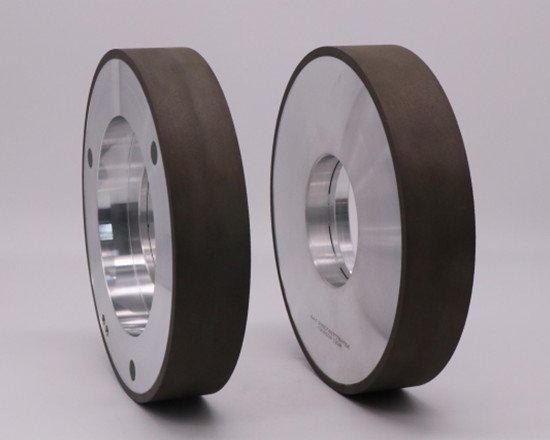
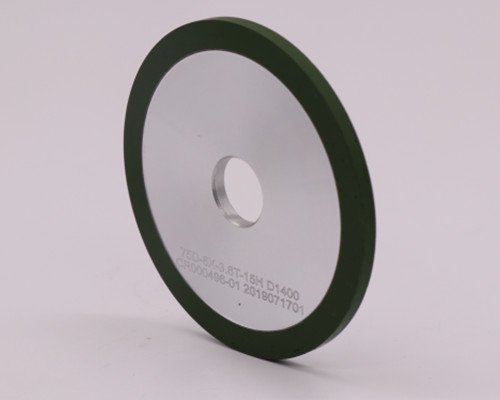
In the precision processing industries of cemented carbide, glass, ceramics and other materials, resin bonded diamond grinding wheels are core consumables for curved surface, arc and flat precision grinding due to their high grinding accuracy, moderate self-sharpening performance and excellent finished surface quality. After long-term operation, grinding wheels are prone to abrasive clogging and arc profile deformation, so most enterprises choose to return them for re-dressing and reuse. However, many customers report that workpieces processed by re-dressed grinding wheels suffer from rough surfaces, dense scratches, irregular pitting and periodic chatter marks, with unqualified surface roughness Ra values, seriously affecting the finished product yield. Combining the structural characteristics, rework processes and actual grinding conditions of resin grinding wheels, this paper comprehensively analyzes the root causes of surface roughness deterioration and sorts out the corresponding mechanism and improvement logic.
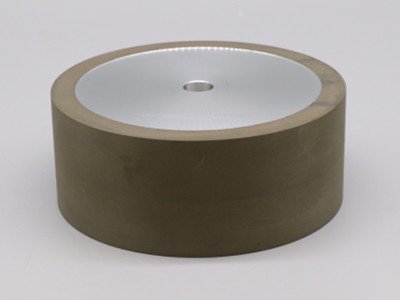
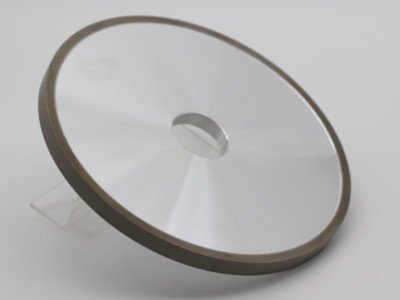
For resin bonded diamond grinding wheels with concave outer circular arcs, there are three mature industrial rework solutions. Different dressing methods have distinct impacts on the working surface, substrate and bond of the grinding wheel, which are the pre-inducements for subsequent surface finish abnormalities:
The surface finish of workpieces is fundamentally determined by the cutting state of diamond abrasives on the grinding wheel surface. Improper dressing parameters and tool selection during rework will completely change the micro-structure of the working surface, causing processing defects from the source.
The original working surface of factory-new grinding wheels is finished by standardized precision dressing, with uniform diamond abrasive protrusion height and sufficient chip clearance between abrasives. Grinding mainly relies on sharp diamond cutting edges, with minimal extrusion and friction on workpieces. However, excessive dressing feed rate, mismatched rotating speed, or overly hard and dull dressing rollers during rework will generate strong impact on diamond abrasives. A large number of diamond cutting edges chip, and massive dull and fragmented diamond particles accumulate on the working surface. In this case, the grinding wheel no longer performs cutting processing, but extrudes and rubs the workpiece through dull abrasives and resin matrix, which directly increases the Ra roughness value, resulting in irregular fine scratches and clustered pitting on the workpiece surface.
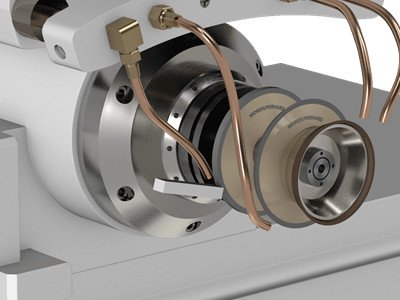
Resin bond features low hardness and limited dressing allowance. Excessive material removal during rework will make the resin bond wrap the top of diamond abrasives, significantly reducing the abrasive protrusion height. Insufficient abrasive protrusion brings multiple adverse effects: sharply reduced cutting capacity, increased grinding resistance and processing heat, continuous friction between resin bond and workpiece that easily causes chip adhesion, and matte and rough workpiece surfaces that fail to meet the requirements of precision mirror grinding.
The feed movement of dressing rollers will leave spiral lines and equidistant periodic tool marks on the grinding wheel surface. Without fine finishing after dressing, these textures will be completely replicated on workpieces. This problem is particularly prominent in surface grinding and high-precision grinding of PCD and cemented carbide. Regular stripes visible to the naked eye will appear on workpieces, failing to meet the appearance and dimensional tolerance requirements of precision parts.
Deformation correction during grinding wheel rework changes the internal stress distribution and assembly reference of the substrate. Micro-vibration will occur during high-speed operation after installation, inducing chatter marks and unstable surface roughness.
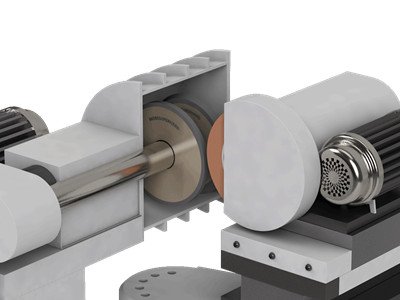
The correction of warped aluminum and steel substrates requires pressurization and heating, leaving a large amount of residual internal stress inside the substrate. The substrate produces micro elastic deformation under grinding load, leading to fluctuating cutting depth. During high-speed operation, the residual stress is gradually released, causing continuous slight chatter of the grinding wheel and forming wavy chatter marks on workpieces with poor roughness stability. Even if the flatness and parallelism of the grinding wheel are restored, residual stress will still damage the surface finish.
Rework dressing will reprocess the assembly reference surface of the grinding wheel, easily causing matching problems during customer installation: uncleaned reference surface with residual abrasive debris, uneven clamping force of flanges, and deteriorated dynamic balance values. Micro-vibration is amplified at high rotating speeds, forming dense chatter marks on the workpiece surface and further increasing overall roughness.
Resin bond has poor heat resistance. It will soften and age rapidly when the temperature exceeds 120~180℃, and high-temperature operations during rework will cause irreversible damage to the bonding system of the grinding wheel.
Most enterprises simply attribute poor processing results to grinding wheel quality, ignoring the working condition changes of re-dressed grinding wheels and failing to adjust grinding parameters accordingly, which further exacerbates surface defects.
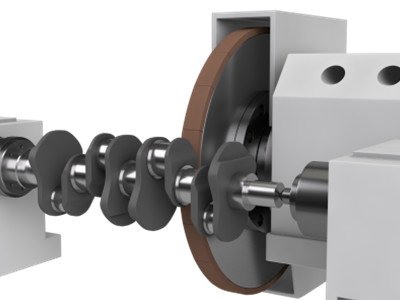
Poor workpiece surface roughness after resin bonded diamond grinding wheel re-dressing is not caused by a single factor, but the superposition of four major problems: abnormal working surface micro-morphology, unbalanced substrate internal stress, thermal damage of resin bond, and mismatched on-site grinding processes. On the grinding wheel production and rework side, manufacturers need to optimize dressing parameters, control dressing allowance, avoid high-temperature dry dressing, conduct fine finishing after rework, and recalibrate dynamic balance. On the end-user side, enterprises shall appropriately adjust grinding feed parameters, match cooling systems, clean assembly reference surfaces and check machine tool status after installing reworked grinding wheels. Two-way process control can effectively stabilize workpiece surface roughness and give full play to the high-precision processing advantages of resin bonded diamond grinding wheels.