06
Aug
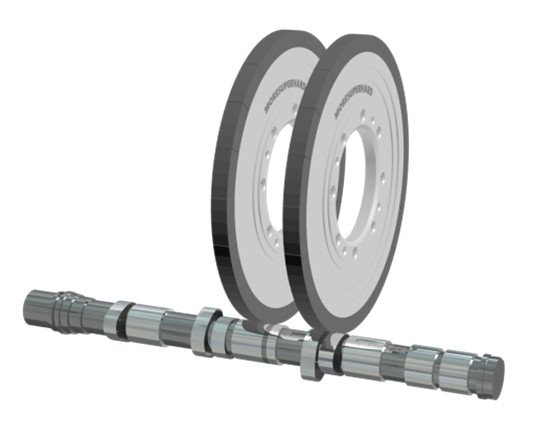
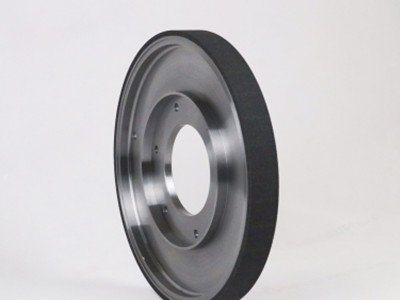
With superior hardness, high thermal stability and long service life, CBN grinding wheels are widely applied in precision grinding of ferrous materials including bearing parts, shaft components and die steels. Vitrified CBN wheels feature high bonding strength and excellent forming precision, yet the rigid vitrified bond limits the self-sharpening performance of abrasive grains. New sharp wheels deliver stable machining performance and controllable surface roughness within specified process standards. However, as grinding proceeds and the wheel wears continuously, the Ra value of workpieces increases significantly under fixed grinding parameters when the wheel reaches the latter half of its service life, generating severe grinding furrows, chatter marks and thermal burns.

Most manufacturing workshops only dress or replace wheels until they reach the minimum usable diameter, ignoring gradual deterioration of grinding performance during wheel wear and resulting in mass defective products and increased rework costs. Therefore, clarifying the internal mechanism of surface quality degradation induced by wheel wear and establishing standardized improvement solutions are critical to stabilizing precision grinding processes.
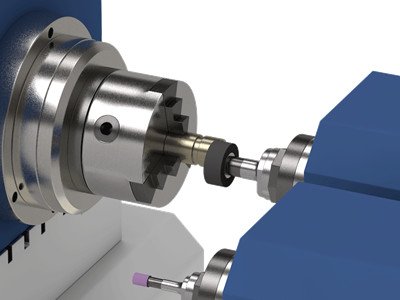
When spindle speed remains constant, continuous wear gradually reduces the outer diameter D of the grinding wheel. According to the peripheral speed formula V_s=πDN/60, shrinking wheel diameter directly lowers the peripheral speed. At high peripheral speeds, sharp CBN grains cut metal workpieces efficiently. In contrast, insufficient peripheral speed prevents effective chip formation; abrasive grains merely rub and plough the workpiece surface, leaving deep irregular furrows and raising surface roughness Ra. The more severe the wheel wear, the more obvious the deterioration of surface finish caused by inadequate peripheral speed. For centerless grinding, reduced wheel diameter also changes the supporting force of workpieces and further aggravates surface texture defects.
The hard vitrified bond firmly holds CBN abrasive grains but restricts their self-sharpening behavior. During grinding, the tips of abrasive grains wear flat to form large wear flats, completely blunting cutting edges. Dulled grains cannot micro-fracture or shed to expose fresh sharp cutting edges. The grinding mechanism shifts from effective cutting to rubbing, burnishing and heavy extrusion, which greatly increases grinding force and induces plastic pile-up of workpiece material. Thick heavy grinding marks remain on machined surfaces with drastically deteriorated finish, often accompanied by thermal burns.
Internal pores of vitrified CBN wheels serve as chip storage and evacuation channels. Fine metallic chips generated in long-duration grinding gradually fill wheel pores and cause loading. Clogged wheels lose chip accommodation space; trapped chips are repeatedly pressed between wheel and workpiece, scratching forming surfaces and elevating roughness. Chip clogging also intensifies frictional heat and exacerbates grinding burns. This issue becomes much more severe when grinding soft, adhesive steel grades.
Uneven progressive wear and local profile deformation break the original circular geometry of grinding wheels. Periodic vibration occurs during high-speed rotation due to imbalance, leaving evenly spaced chatter marks (visible wavy textures) on workpiece surfaces and drastically worsening roughness values. Vibration also amplifies grinding impact, accelerating abrasive dulling and chip clogging to form a vicious cycle, significantly shortening the stable precision grinding cycle of the wheel.
Production lines generally adopt fixed grinding parameters optimized exclusively for brand-new sharp wheels. In the late wear stage, dulled grains, low peripheral speed and elevated friction resistance render the original feed rates and depths of cut excessively aggressive. Heavy cutting loads strengthen extrusion and ploughing effects, aggravating surface damage and roughness deviation. Static parameters fail to match the continuously degraded grinding performance of worn wheels, leading to batch surface roughness nonconformity.

This is the simplest and most cost-effective improvement solution. As wheel outer diameter shrinks from wear, spindle speed is gradually increased to compensate for peripheral speed loss, maintaining consistent cutting velocity and ensuring efficient material removal by sharp CBN grains. For centerless grinding processes, besides raising grinding wheel spindle speed, the work-rest blade height can be slightly lowered to optimize workpiece supporting contact conditions and reduce ploughing scratches.
Abandon the traditional operation of dressing wheels only after reaching the minimum diameter threshold. Intermediate dressing shall be carried out after approximately one-third of the wheel’s usable life is consumed to eliminate premature grain dulling, mild chip clogging and slight geometric distortion. A diamond dresser with fine dressing infeed is adopted to resharpen CBN cutting edges, restore original wheel grinding performance, stabilize workpiece surface finish and extend the stable precision service cycle of the wheel.
Increase coolant delivery pressure and adjust nozzle angles to direct coolant jets accurately into the grinding contact zone. High-pressure flushing instantly washes away fine chips and avoids pore embedding. For soft, chip-adhesive workpiece materials, appropriately reduce coolant concentration if necessary to minimize metal powder adhesion and mitigate wheel loading. Sufficient cooling simultaneously suppresses excessive grinding heat and prevents thermal surface damage.
When the wheel enters its late wear phase, actively lower table feed rate and reduce depth of cut per pass to adopt light-load grinding conditions. Reduced cutting loads alleviate extrusion and ploughing by dulled abrasive grains, weaken friction-induced surface damage and restrain roughness growth.
Excessive workpiece surface roughness in the late wear stage of vitrified CBN wheels stems from multiple coupled factors. Reduced peripheral speed caused by wheel diameter attenuation acts as the primary contributor, compounded by abrasive grain dulling, pore chip clogging, rotational vibration imbalance and mismatched static grinding parameters, which collectively degrade machined surface quality.
For rapid low-cost on-site improvement, peripheral speed compensation, regular intermediate dressing and optimized coolant supply are prioritized. Long-term stable process control requires supplementary dynamic grinding parameter adjustment and application-specific wheel selection. The integrated set of countermeasures effectively delays surface quality deterioration caused by wheel wear, prolongs the stable precision grinding cycle, reduces defective rates and rework expenses, and improves overall economic benefits of precision grinding production.