Home > Industry Solutions > Complete Selection Guide for Grinding Wheels of 6‑10% Cobalt Tungsten Carbide

17

Sep

Complete Selection Guide for Grinding Wheels of 6‑10% Cobalt Tungsten Carbide

158
Share:

Material Characteristics & Machining Challenges of 6‑10% Co WC‑Co Medium‑Low Cobalt Hard Alloy

Moresuperhard Reminder: Premature tool failure and short service life in many workshops are not always caused by raw material defects. Improper wheel selection will induce invisible surface micro‑cracks due to grinding thermal damage, which will significantly shorten the service life of finished workpieces.
  • High hardness and high brittleness. Compared with high‑cobalt grade (>12% Co), it has much higher risks of grinding cracks and edge chipping.
  • The cobalt binder phase is prone to corrosion and precipitation under heated alkaline water‑based grinding fluid, resulting in surface pits and discoloration and reducing tool service life.
  • High requirement for chip removal. Avoid over‑dense wheel structure. Sufficient chip‑holding space shall be reserved to prevent wheel glazing caused by adhered cobalt‑rich grinding swarf.
  • Ordinary alumina or silicon carbide wheels are strictly prohibited. They suffer excessive wear, low efficiency and easily introduce thermal damage to workpieces.

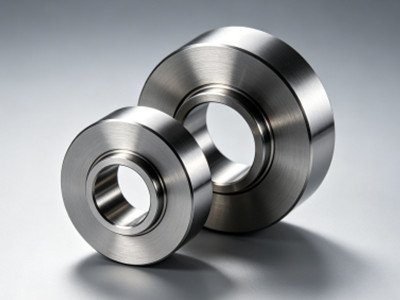
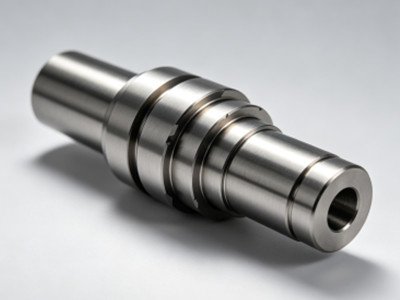
6‑10% Cobalt Tungsten Carbide wc-co carbide

Bond Selection Comparison: Resin / Vitrified / Metal / Electroplated SDC Diamond Wheels for 6‑10% Co Tungsten Steel Machining

Moresuperhard supplies 4 series of diamond wheels: resin bond (B), vitrified bond (V), metal bond (M) and electroplated. Formulas are optimized for 6‑10% Co hard alloy with adjusted porosity and grit retention to lower chipping risk. See the comparison table below:

Bond Type Key Advantages Limitations Application for 6‑10% Co Hard Alloy Moresuperhard Product Features
Resin Bond (B) Good self‑sharpening performance, high elasticity to buffer grinding impact, low chipping risk, excellent surface finish, low grinding resistance Limited heat resistance, not suitable for deep cut, relatively fast abrasive layer wear ✅Semi‑finish & finish grinding of cutting edges; clearance surface grinding & edge honing; widely adopted on Vollmer, Walter CNC tool grinders Optimized resin formula for better heat resistance, reduces binder decomposition under high temperature, less burrs and higher finished‑product yield
Vitrified Bond (V) Controllable porosity, excellent heat dissipation, stable self‑sharpening, high‑speed grinding available, easy dressing Brittle bond, poor impact resistance, not fit for intermittent grinding ✅Mass‑production continuous profile grinding, slotting for automated production lines Controllable porous structure improves chip removal & heat dissipation, reduces cobalt‑phase loading, longer dressing interval, ideal for large‑scale tool manufacturers for cost‑efficiency improvement
Metal (Bronze) Bond (M) Superior profile retention, long service life, stable geometry after long‑time machining Poor self‑sharpening, easy glazing, frequent truing‑sharpening required ✅Heavy‑stock removal rough grinding, profile forming, complex R‑profile machining, heavy‑load grinding Special metal formula balances grit retention and self‑sharpening, lowers glazing tendency; SiC stick sharpening process guidance provided
Electroplated Diamond Single‑layer grit structure, high forming accuracy, capable for complex special profiles; reusable substrate via re‑plating Limited stock removal capacity; non‑dressable; discard when abrasive layer is worn out ✅Thin‑edge & small‑R forming, narrow‑slot grinding, low‑stock profile finish forming High‑precision substrate with uniform grit distribution; fast customizing & re‑plating service for special thin‑edge profiles
Selection Note: Over‑dense wheel structure shall be avoided for 6‑10% Co hard alloy. Moresuperhard adjusts wheel structure according to working conditions to reserve chip‑removal space and prevent cobalt‑phase loading & glazing.

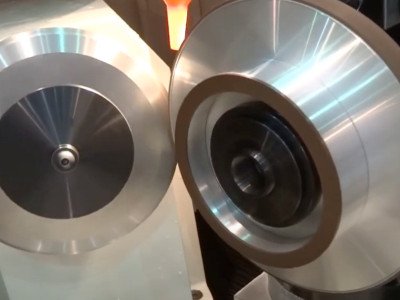
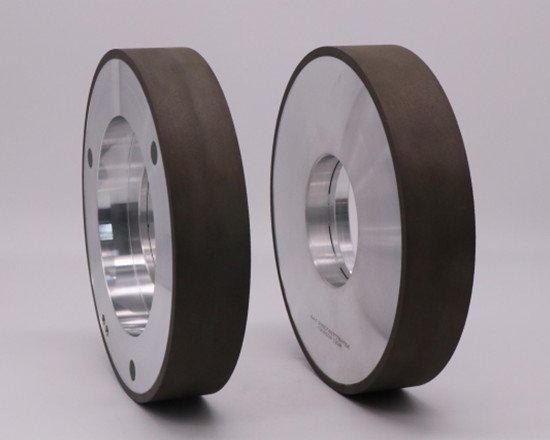
resin diamond grinding wheel for grinding CBN inserts resin diamond grinding wheel for carbide circular knives

SDC Diamond Wheel Grit Size & Concentration Parameter Recommendation for 6‑10% Co Hard Alloy Grinding

Important Reminder: This grade has high brittleness. Do not adopt excessively high concentration in finish grinding. Excessive concentration may squeeze workpieces and trigger micro‑cracks on cutting edges.
  • Rough Grinding (Heavy‑stock removal, slotting, damaged‑edge rework)
    Grit size: #80~#120; Concentration: 100%‑125%
  • Semi‑Finish Grinding (Mass‑production main‑process, cutting‑edge profile forming)
    Grit size: #140~#180; Concentration: 75%‑100%; 100% concentration is preferred for resin / vitrified bond.
  • Finish Grinding / Edge Honing (Reduce Ra value & suppress micro‑cracks)
    Grit size: #240~#400; Concentration: 75‑100%

Moresuperhard supports non‑standard customization on grit size and diamond concentration. Matching parameters are provided based on machine rigidity and stock removal to avoid scrap loss caused by parameter mismatch.

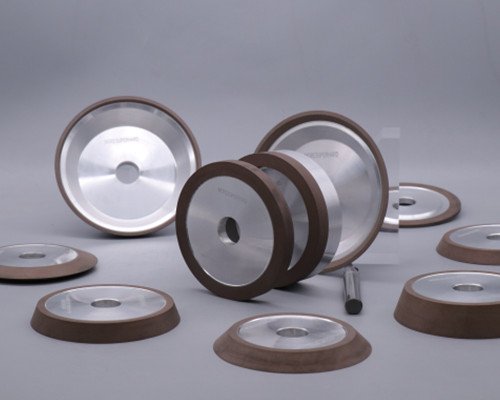
Wheel Profile Specifications (12A2 / Dish / 1A1 / 1V1) and Substrate Material Selection for 6‑10% Co Tungsten Steel

Common Wheel Profiles

  • 12A2 Cup Wheel: For end‑face edge grinding and clearance surface grinding of hard‑alloy cutting tools, mainstream profile for tool grinders.
  • Dish Wheel: Thin‑edge & narrow‑edge hard‑alloy inserts, small‑R profile grinding.
  • 1A1 Flat Wheel with R: Arc profile grinding, external grinding and copy profile machining.
  • 1V1 Double‑Bevel Wheel: Slotting, threading tools and helical‑edge forming grinding.

Substrate Material

  • Aluminum Substrate (Preferred): Excellent dynamic balance and heat dissipation, first choice for most working scenarios.
  • Steel Substrate: Suitable for heavy‑load rough grinding with large outer diameter.

Moresuperhard keeps sufficient stock for standard specifications. Fast drawing‑based production for special non‑standard substrates, compatible with domestic and imported CNC tool grinders.
resin diamond grinding wheel 3

Grinding Process Guidelines for 6‑10% Co WC‑Co Hard Alloy: Practical Specifications for Cooling, Feed Rate and Wheel Dressing

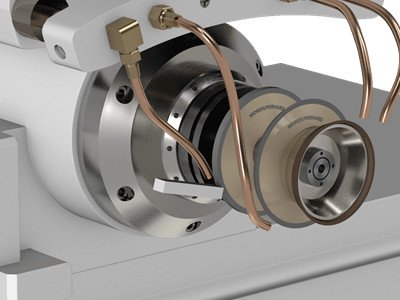
Proper wheel selection is only the foundation. Improper process parameters still cause cracks and edge chipping. Moresuperhard technical team offers free grinding‑process consultation service.

1. Cooling (Top Priority)

✅Adopt dedicated water‑based grinding fluid for hard alloy. Keep pH value within 7.5‑8.5 (weakly alkaline‑neutral). Add cobalt‑ion chelating agent to suppress cobalt precipitation corrosion and prevent workpiece discoloration and surface pits.

❌Strong‑alkaline grinding fluid is strictly prohibited. Strong alkali will corrode cobalt binder phase and reduce workpiece strength.

❌Dry grinding should be avoided as far as possible. Instant high temperature under dry grinding easily triggers thermal cracks.

2. Feed Strategy

Due to high brittleness of 6‑10% Co grade: adopt shallow depth of cut with multiple passes. Single heavy cut is forbidden. Leave 0.005‑0.01 mm finishing pass in final finish grinding to release grinding stress and minimize edge micro‑chipping.
3. Wheel Dressing Rules

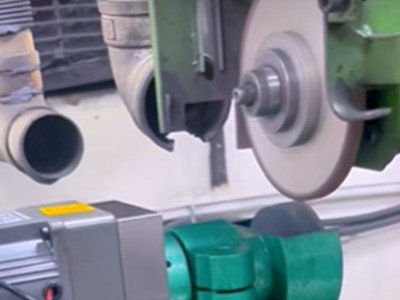
  • Resin / vitrified diamond wheels: Periodically dress with diamond dressing pen or dressing roller to maintain sharpness.
  • Metal‑bond wheels: Continuous sharpening with SiC stick is mandatory to avoid glazing passivation.
  • Electroplated diamond wheels: Non‑dressable. Return substrates for re‑plating once abrasive grits are worn out.

dressing resin diamond grinding wheel dressing process

Moresuperhard Superabrasives: Wheel Products and Supporting Technical Services for 6‑10% Cobalt Hard Alloy

Moresuperhard (Henan Moresuperhard Superabrasives) is a high‑tech enterprise focusing on superabrasive tools. We serve more than 800 tool‑manufacturing customers worldwide. For 6‑10% Co hard alloy grinding, our deliverables include:


  1. Full‑range resin, vitrified, metal and electroplated SDC diamond wheels: standard stock and fast non‑standard customization.
  2. Free technical support: provide wheel parameters and grinding‑process suggestions according to machine model, stock removal and workpiece drawings.
  3. Electroplated wheel re‑plating service to lower customers’ procurement cost.
  4. On‑site technical support to solve on‑site problems such as edge chipping, micro‑cracks and wheel glazing passivation.
Conclusion: For machining 6‑10% cobalt tungsten steel, the core solution is SDC synthetic diamond wheel + well‑matched bond / grit / concentration + proper cooling + shallow‑cut multi‑pass grinding process. Combined application stabilizes chipping & micro‑crack control, improves finished‑product yield and cuts comprehensive production cost.
También podría ser de su interés
resin bond diamond grinding wheel

Resin Bond Diamond Grinding Wheel

Resin diamond grinding wheel is a kind of efficient and durable grinding tool, which is made of diamond abrasive and resin bond, and is suitable for processing hard materials such as cemented carbide, ceramics, optical glass, sapphire, semiconductor materials, etc. The resin bond has good elasticity and grinding performance, and is particularly suitable for processes requiring precision grinding or polishing.
tech@moresuperhard.com
008617700605088