11
Sep
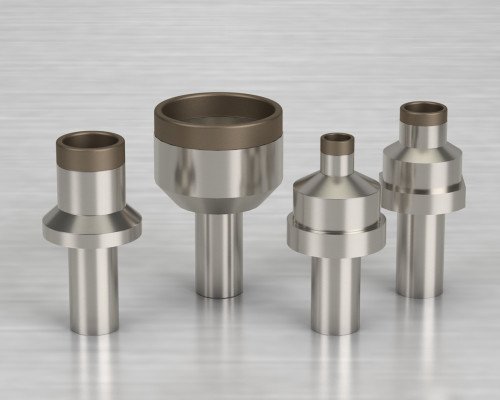
In the field of optical component manufacturing, micro small glass lenses impose extremely strict requirements on grinding tools in terms of profile accuracy and surface forming performance. This case presents the custom‑built metal‑bonded sintered diamond grinding head developed by Moresuperhard, for rough and finish grinding of small lenses made of N‑SF11 special optical glass, solving the customization challenge of grinding tools for profile grinding of micro‑size lenses.
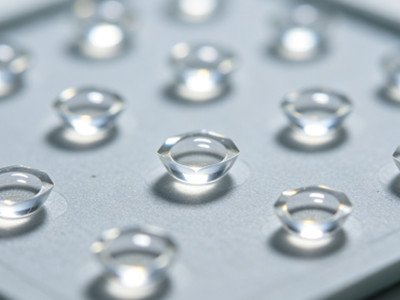
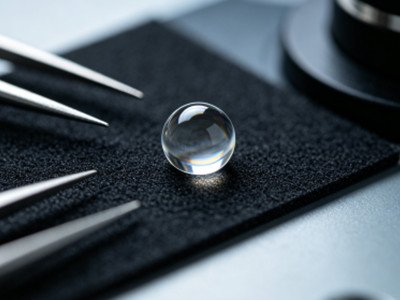
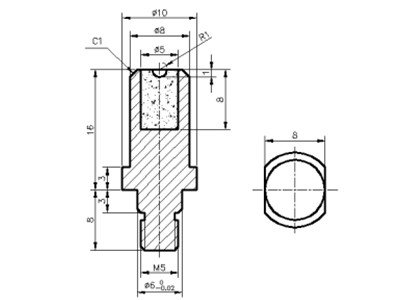
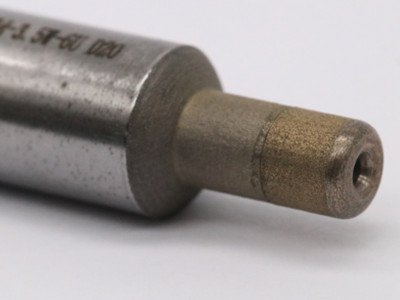
The customer provided complete engineering drawings and required a miniature custom metal‑bonded sintered diamond grinding head. The working end features a hemispherical concave cavity whose profile perfectly matches the outer contour of the target lens. Two separate specifications for rough grinding and finish grinding were required. Due to the miniature dimensions of the grinding head and its inner concave cavity, the manufacturing difficulty was relatively high. After technical evaluation by Moresuperhard engineer Zhao Xiao, the custom special‑shaped micro diamond grinding head was confirmed to be manufacturable.
Based on customer drawings, Moresuperhard adopted the metal sintering process to produce this special‑shaped grinding head with hemispherical concave profile. Considering the customer’s segmented rough‑to‑finish grinding workflow, our engineer Zhao Xiao recommended two diamond grit sizes:
The grinding head is equipped with an M5 threaded shank for mounting, ensuring high repeat positioning accuracy on processing equipment. The working section is machined with an R1 hemispherical concave profile to realize form‑copy grinding matching the outer sphere of the lens.
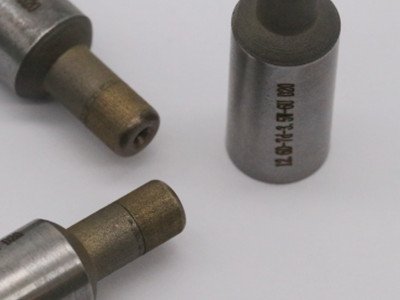
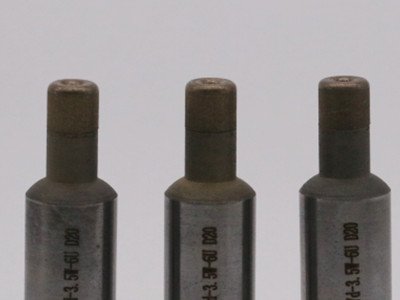
After machine‑shop trials, the customer reported stable overall performance of Moresuperhard’s custom metal‑bonded sintered diamond grinding head. The grinding resistance remained appropriate, tool profile retention was good, and the geometric spherical form of workpieces met drawing specifications. Material‑removal efficiency for rough grinding satisfied production expectations.
Nevertheless, a quality issue appeared in the finish‑grinding stage: after processing with the 1000‑grit metal‑bonded diamond grinding head, the lens still exhibited excessively high surface roughness and failed to meet final optical mirror‑surface requirements.
Our technical team identified the root cause: material removal of metal‑bonded diamond tools relies on cutting action of diamond grains. Even 1000‑grit diamond particles leave inherent grinding marks. Metal‑bonded diamond grinding heads can only deliver grinding‑level finishing and cannot directly generate optical mirror surfaces.
After rough and finish forming with metal‑bonded sintered diamond grinding heads, add an independent polishing step. Combine dedicated optical polishing pads with optical polishing fluid to further process N‑SF11 glass lenses, eliminate grinding scratches and achieve qualified mirror‑finish surface quality.
Moresuperhard also provides full‑set process consultation covering grinding heads plus polishing consumables. Customized complete grinding solutions for optical glass are available according to your equipment configuration and production capacity.
Form‑copy grinding for micro‑optical small lenses demands strict control over diamond grinding‑head profile accuracy, sintering technology and grit‑size selection. Moresuperhard metal‑bonded sintered diamond grinding heads are capable of efficient rough grinding and finish forming for special optical glass such as N‑SF11.
Important note: Diamond grinding heads are designed for geometric profile forming. Additional polishing procedures are required to obtain optical‑grade mirror surfaces.
Moresuperhard offers custom non‑standard special‑shaped diamond / CBN grinding heads. We conduct full‑range customization including bond formulation, diamond grit size and tool geometry based on customer drawings, workpiece materials and processing conditions. Our products serve precision‑part grinding applications for optical glass, ceramics, cemented carbide and more. Send us your drawings and working conditions to get your tailored abrasive‑tool solution.