23
Sep
Fused silica is mainly composed of SiO₂, with a Mohs hardness of ~7 and fracture toughness of only 0.75 MPa·m¹ᐟ². It features low thermal conductivity and low thermal expansion coefficient.
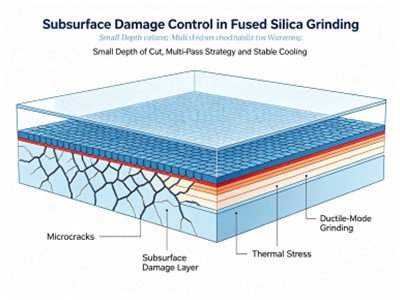
During grinding, material removal is dominated by brittle fracture mode:
Therefore, the core grinding objective for fused silica: promote material removal toward ductile‑mode grinding. Adopt step‑down grit size strategy to control and eliminate subsurface damage layer progressively.
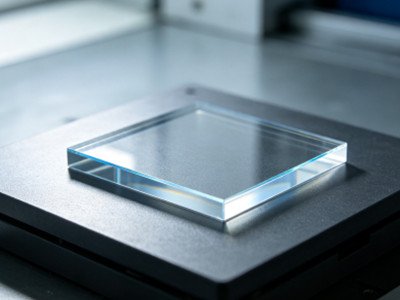
Grinding of fused silica optical components strictly follows the principle of coarse‑to‑fine progressive processing. Each grinding step shall sufficiently remove subsurface damage and scratches left by the previous procedure. The dwell time for each step is recommended to be 2‑4 times of the time required to eliminate scratches from the prior process.
Complete process chain: Coarse Grinding → Semi‑Fine Grinding → Fine Grinding → Super‑Fine Grinding / Lapping → CeO₂ Polishing. Surface quality after polishing is evaluated according to MIL‑PRF‑13830B (Scratch‑Dig).
Process Flow: Coarse Grinding (Shaping) → Semi‑Fine Grinding → Fine Grinding → Super‑Fine Grinding / Lapping → Polishing
Process Principle: Remove subsurface damage from previous process step‑by‑step; reduce grit size progressively; dwell time of each stage is 2‑4 times the scratch‑removal time for former procedure.
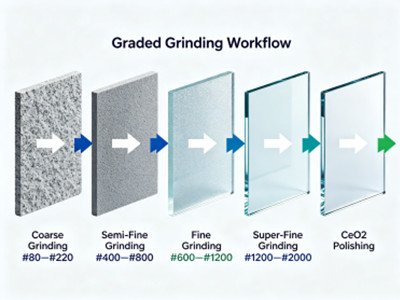
| Procedure | Recommended Grit Size | Achievable Ra (μm) | Core Function |
| Coarse Grinding | #80‑#220 | 1.0‑3.0 | Remove large stock allowance and realize basic shaping |
| Semi‑Fine Grinding | #400‑#800 | 0.2‑0.5 | Correct geometry and eliminate micro‑cracks generated in coarse grinding |
| Fine Grinding | #600‑#1200 | 0.2‑0.4 | Improve surface quality and reduce depth of damage layer |
| Super‑Fine Grinding / Lapping | #1200‑#2000 | 0.05‑0.15 | Pre‑polishing surface preparation, strictly control subsurface damage |
| Polishing | CeO₂ Cerium‑oxide Polishing Slurry | <0.5 nm | Achieve optical‑grade ultra‑smooth surface |
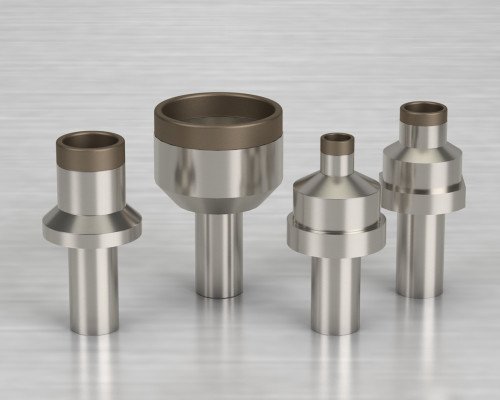
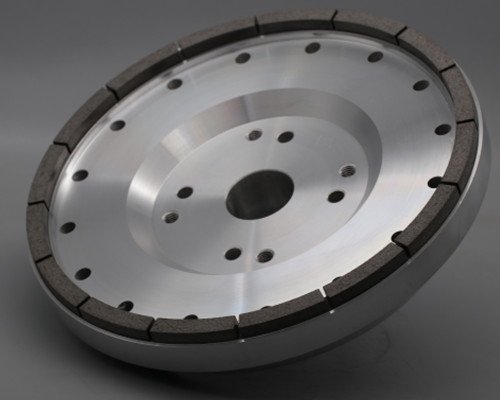
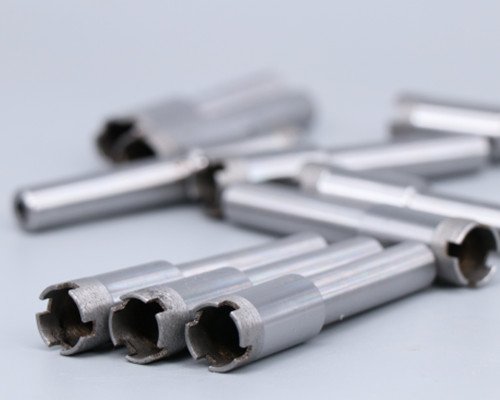
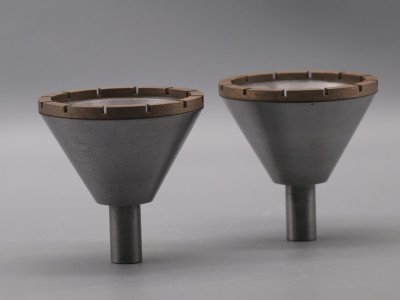
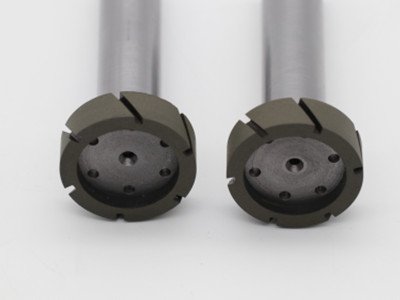
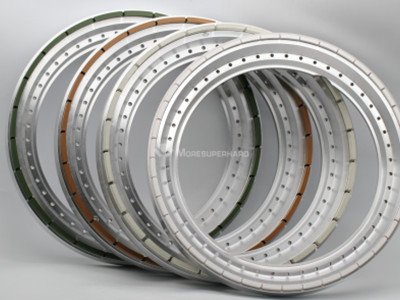
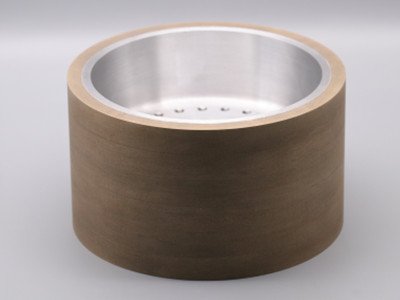
Due to high hardness of fused silica, conventional silicon carbide or alumina wheels suffer fast wear and low removal efficiency. Diamond grinding wheels are mandatory for production. Synthetic diamond is the mainstream abrasive for fused silica processing for its uniform grit size, low impurity and controllable crystal morphology. Wheel selection shall cover five dimensions: abrasive type, bond, grit size, concentration and wheel hardness.
Grit size decreases progressively along processing stages. Reference for two grit standards:
| Processing Stage | Mesh Grit Size | European D‑Code |
| Heavy‑stock Coarse Grinding | #46‑#60 | D46‑D64 |
| Semi‑Fine Grinding | #80‑#120 | D20‑D30 |
| Fine Grinding | #180‑#240 | D7‑D15 |
| Pre‑polishing Super‑Fine Grinding | #400‑#1000 and above | D3‑D7 |
Note: European D‑Code denotes maximum grain dimension. Smaller D value means finer abrasive grain and lower surface roughness.
Process parameters directly determine final yield. Focus on peripheral speed, cutting depth, feeding strategy, cooling, wheel dressing and dynamic balancing:
Grinding of fused silica optical components is a systematic engineering combining grinding‑wheel selection, process design and parameter control. Key principles for practical production:
Proper implementation of above process can balance processing efficiency and surface quality, laying solid foundation for qualified optical‑grade surfaces in follow‑up polishing.