24
Sep
Carbon graphite is a widely‑used special non‑metallic material in modern industry, commonly manufactured into fuel‑cell components, sealing parts, crucibles, moulds, motor brushes and high‑temperature tooling. Many process engineers encounter a counter‑intuitive phenomenon during grinding: carbon graphite itself is low‑hardness material, yet it creates extremely heavy abrasive wear on grinding wheels and cutting tools.
Typical processing defects include edge chipping, material spalling and surface scratches. Conventional alumina or silicon carbide wheels wear rapidly and require frequent dressing. Graphite dust clogs wheel pores easily, resulting in lower removal rate, unstable dimensional accuracy, poor yield and higher overall production cost.
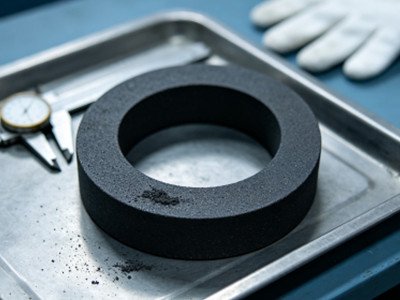
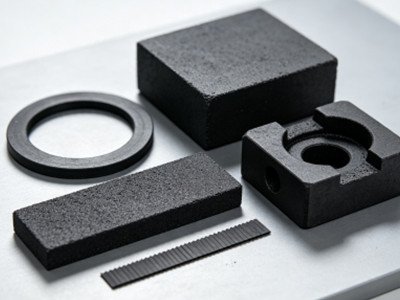
Diamond super‑hard grinding wheels are the preferred solution for carbon graphite grinding. They retain sharp cutting edges and original geometric profile over long operating time, reduce frequent dressing operations, and deliver superior performance in material removal rate, dimensional stability, finished‑part yield and total‑cost‑of‑ownership compared with conventional abrasive wheels.
Abrasive selection: Synthetic Diamond (D)
Carbon graphite consists mainly of carbon elements. Diamond is an allotrope of carbon. Under typical grinding temperature conditions, synthetic diamond maintains good chemical inertness against carbon graphite, avoiding rapid chemical wear of abrasive grains.
Silicon‑carbide wheels, though carbon‑based, suffer fast grain consumption when grinding graphite. Wheel profile degrades quickly and needs continuous compensation and dressing. Silicon carbide is only suitable for small‑volume trial processing instead of mass production.
The bond system determines wheel rigidity, elasticity, self‑sharpening property and chip‑holding capacity. It directly influences edge chipping risk and thermal deformation of graphite workpieces, ranking as the second most important factor after abrasive grain.
Advantages
Limitations
✅ Applications: Fine grinding, surface grinding, cylindrical grinding for carbon graphite components where edge integrity and low surface roughness are required.
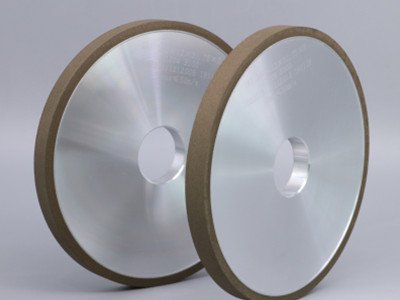
Advantages
Limitations
✅ Applications: Complex profile form grinding, graphite slotting & cutting, irregular‑shape graphite parts for small‑to‑medium batch sizes.
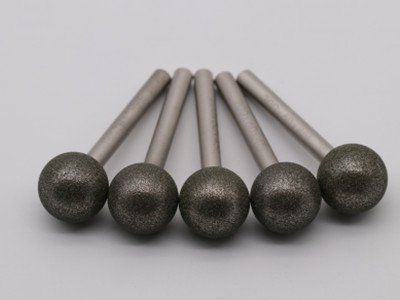
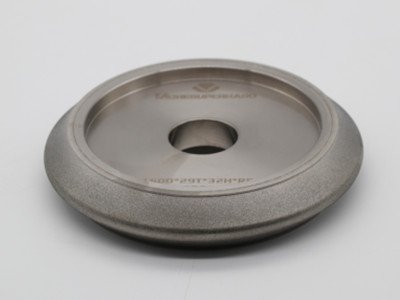
Advantages
Limitations
✅ Applications: High‑volume continuous manufacturing, high‑precision profile grinding where heat dissipation, anti‑clogging performance and long wheel life are prioritised.
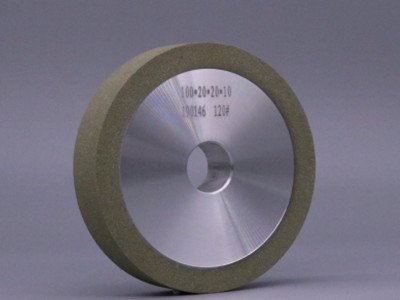
Grit size balances material removal capacity and surface roughness. Below are industry‑standard reference ranges. Adjust according to stock removal, wall thickness, surface‑quality target and machine rigidity: