09
Sep
Germanium and silicon are hard‑brittle materials different from ductile metals. Poor tool geometry or edge quality will trigger brittle fracture instead of ductile material removal during SPDT, resulting in micro‑chipping, surface cracks, tool marks, higher surface roughness and severe subsurface damage, leading to scraped infrared components.
Identical SCD tool specifications may deliver inconsistent results across different workshops. Final machining performance depends on the whole system: diamond quality, cutting‑edge condition, tool geometry, machine rigidity, workpiece clamping and cutting parameters.
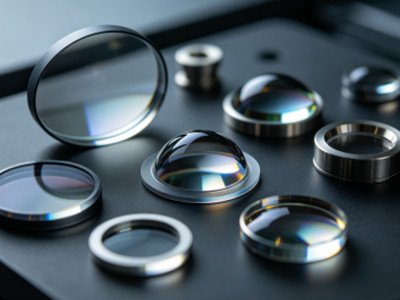
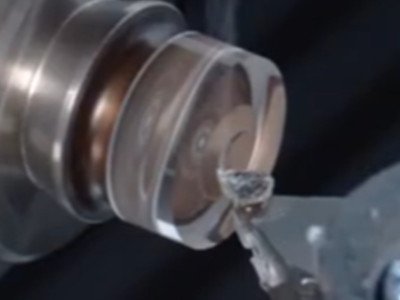
Moresuperhard manufactures high‑precision single‑crystal diamond tools optimized for hard‑brittle infrared materials. We strictly control diamond crystal orientation, lapping & polishing processes and edge inspection to reduce trial‑and‑error and improve production yield for first‑time SPDT users.
It is insufficient to merely confirm “whether the tool uses single‑crystal diamond”. Cutting‑edge quality ranks highest for infrared optics machining. Micro‑defects, tiny chippings or polishing scratches on cutting edges will transfer directly onto optical surfaces.
Major evaluation factors:
There is no universal “one‑size‑fits‑all” specification. All parameters must be matched to your actual machine and workpiece.
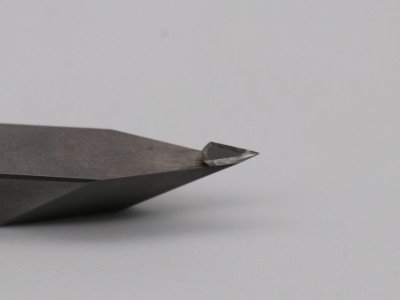
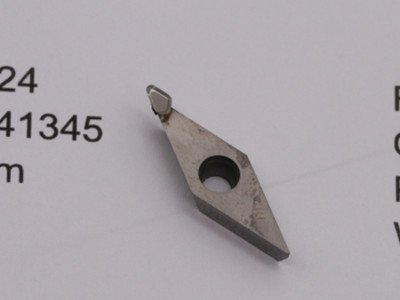
The theoretical residual height formula: \(h≈f²/(8R)\). Larger nose radius reduces theoretical residual height under ideal geometric conditions.
In real SPDT processes, a larger nose radius increases cutting force and tool‑workpiece contact area. If machine stiffness, spindle stability or workpiece clamping is insufficient, big nose radius may amplify vibration and generate chatter marks, degrading surface figure accuracy especially for brittle Ge and Si.
Moresuperhard engineers evaluate proper nose radius according to workpiece aperture, machine rigidity, feed rate and finishing targets, instead of blindly adopting maximum R value.
Both positive and negative rake angles are applied in SCD tools. A ‑25° negative rake is seen in some germanium‑turning cases to strengthen edge support, but it is NOT a universal standard.
Excessively large positive rake weakens edge resistance against micro‑chipping. Over‑negative rake increases cutting force and vibration risk. Rake angle must be designed cooperatively with nose radius, depth of cut and machine condition. Moresuperhard customizes rake angle aiming to realize stable ductile‑mode removal for germanium and silicon.
Relief angle prevents flank‑face rubbing against finished optical surface and maintains edge mechanical support. 10° relief angle is frequently adopted yet not fixed standard for infrared optics.
Note: Rake angle, relief angle and nose radius must be designed as an integrated set, not selected separately.
Ultra‑precision SCD tools are highly dependent on tool post and clamping system. Wrong shank size, reference surface or overhang will introduce clamping offset and vibration.
Provide lathe model, tool‑holder drawing or photos of existing tools, rather than guessing dimensions like 6×6 mm or 8×8 mm. Moresuperhard supports custom shank sizes compatible with mainstream domestic and imported SPDT lathes.
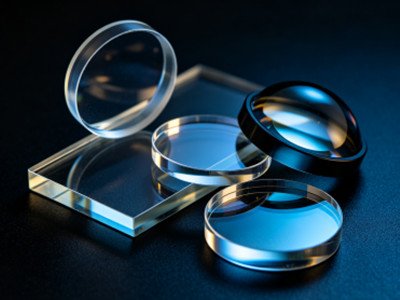
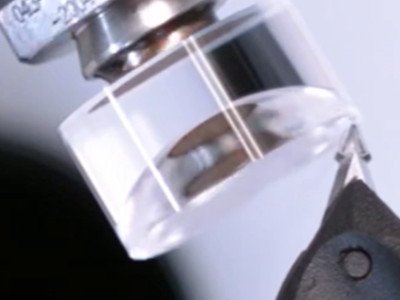
Customers are not required to know complete tool parameters before inquiry. Deliver application‑related information for Moresuperhard to generate proper solution:
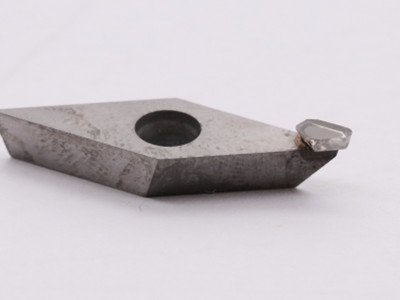
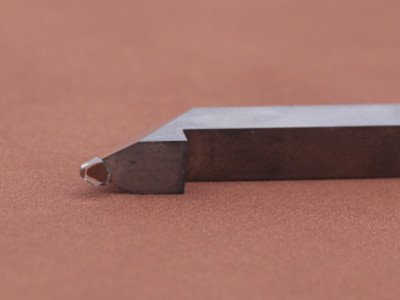
For manufacturers using single‑crystal diamond tools for germanium/silicon infrared optics for the first time, focus on workpiece features, SPDT lathe condition and optical performance targets, instead of searching for universal fixed parameters.
Moresuperhard delivers custom monocrystalline diamond cutting tools for infrared optical industry, supporting R&D prototyping and mass production. Our solutions help solve typical SPDT challenges for hard‑brittle infrared materials: micro‑chipping, tool marks and subsurface damage, shorten commissioning cycle and improve finished‑part yield. Send your drawings and machine information to get your tailored single‑crystal diamond tool solution from Moresuperhard.