19
Aug
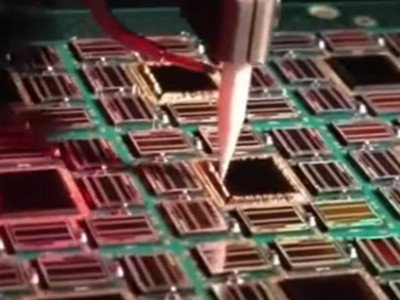
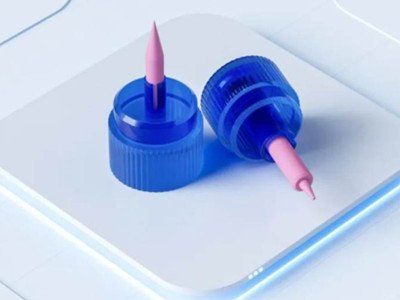
A ceramic capillary (also called a bonding tip, English: Ceramic Capillary or Bonding Tip) is a critical precision consumable in the back-end wire bonding process of semiconductor packaging. Its body is sintered from toughened zirconia (ZrO2) or high-purity alumina (Al2O3) ceramic, combining high hardness, high wear resistance, and extreme brittleness.
During wire bonding, the ceramic capillary uses a precision geometric profile to press gold or copper wire between the chip pad and the lead frame, creating an electrical interconnect. The dimensional accuracy and surface finish of the capillary directly determine bond joint reliability and yield, and both of these metrics depend heavily on the grinding and dressing quality of the upstream diamond grinding wheel.
Diamond grinding wheels inevitably experience performance degradation during continuous grinding of ceramic powder. This manifests as four typical problems:
Wheel dressing is the core process ensuring ceramic capillary dimensional accuracy, surface finish, and freedom from chipping and micro-cracking. It directly determines capillary yield, wheel service life, and bond joint stability. An improperly dressed wheel will cause chipping, micro-cracking, and other fatal defects in the capillary, leading to batch scrap.
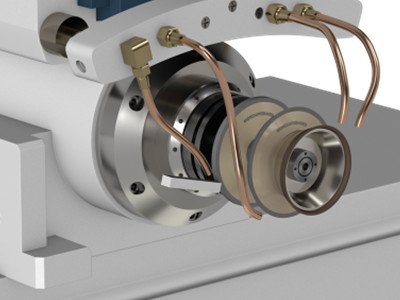
Diamond grinding wheels used for ceramic capillary grinding are classified into three major categories by bond type: resin, ceramic, and metal. The differences in hardness, porosity, and self-sharpening among these bonds are significant, and dressing methods vary accordingly.
| Bond Type | Hardness Characteristics | Typical Applications | Dressing Method | Dressing Difficulty |
|---|---|---|---|---|
| Resin Bond | Relatively soft, good elastic cushioning | Semi-finish forming, tip R-radius profiling, mirror polishing | Single-point diamond dresser, rotary dresser for sharpening | Low |
| Ceramic Bond | Harder, high porosity | Rough grinding, high-efficiency grinding, precision form grinding | Rotary diamond dressing wheel, diamond roller | Medium |
| Metal Bond | Hardest, extremely strong wear resistance | Rough grinding, deep-cut grinding, long-life scenarios | Diamond roller dressing, electrochemical dressing (ELD), laser dressing | High |
Resin bond wheels are the most commonly used type in ceramic capillary grinding. Because they are relatively soft, the requirements for tool sharpness during dressing are more lenient. Ceramic bond wheels have high porosity, smooth chip evacuation, and higher grinding efficiency than resin wheels, but dressing requires sharper diamond tools. Metal bond wheels offer the best wear resistance and longest service life, but the bond’s extremely strong grip on diamond grains makes conventional mechanical dressing inefficient, often requiring special dressing methods such as electrochemical or laser dressing.
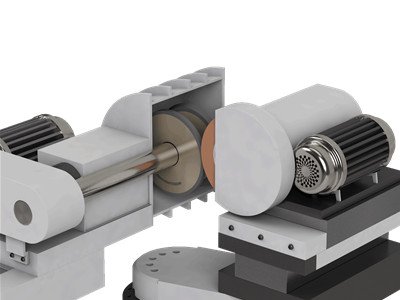
“Truing first, dressing second” is the industry standard process for dressing diamond superabrasive wheels. The two steps address different levels of problems and cannot be skipped or reversed.
The purpose of truing is to correct the geometric shape and dimensional accuracy of the wheel and eliminate radial runout. The operation involves a diamond dressing tool making successive feeds along the wheel working face, removing the excess abrasive layer so the working face returns to the designed profile contour. The core metrics in the truing stage are geometric accuracy and radial runout, which directly affect the dimensional consistency of subsequent grinding.
The purpose of dressing is to expose new diamond grain cutting edges on the trued wheel surface, restoring the wheel’s cutting ability. The dressing operation controls the feed depth and speed of the dressing tool so that the bond is moderately removed, allowing new grains to micro-protrude above the bond surface and form effective cutting edges. Insufficient dressing leads to excessive cutting force and workpiece burn; excessive dressing causes grains to dislodge too quickly and shortens wheel life.
The order of the two steps cannot be reversed: a wheel that has not been trued has large radial runout, and dressing at that point cannot achieve uniform grain exposure, significantly reducing the dressing effect.
In wheel dressing practice, improper parameter control or incorrect method selection will trigger a series of defects. The following are four common defects and their corresponding prevention methods:
Implementing the “truing first, dressing second” two-step process and selecting the correct parameters based on the dressing characteristics of different bond wheels can effectively prevent the above defects, maximize wheel service life, and reduce the ceramic capillary scrap rate.
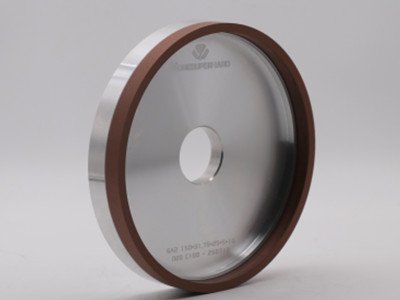
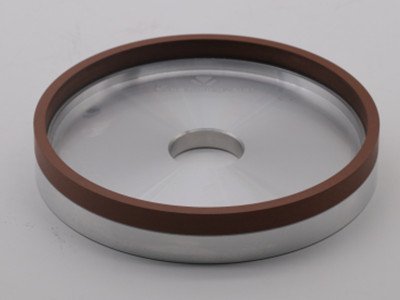
MORESUPERHARD specializes in the precision ceramic consumable grinding field for semiconductor packaging, providing ceramic capillary (bonding tip) manufacturers with a full-chain product solution encompassing resin-bonded diamond grinding wheels and accompanying dressing tools. Products are optimized for grinding toughened zirconia and high-purity alumina ceramics, covering the complete process from rough grinding to mirror polishing.
Core Product
Made with premium diamond abrasive and high-performance resin bond, the abrasive layer is uniform with controllable grain protrusion height. Suitable for ceramic capillary semi-finish forming, tip R-radius profiling, taper precision grinding, and mirror polishing, delivering high surface finish and low chipping rates.
Supporting Tools
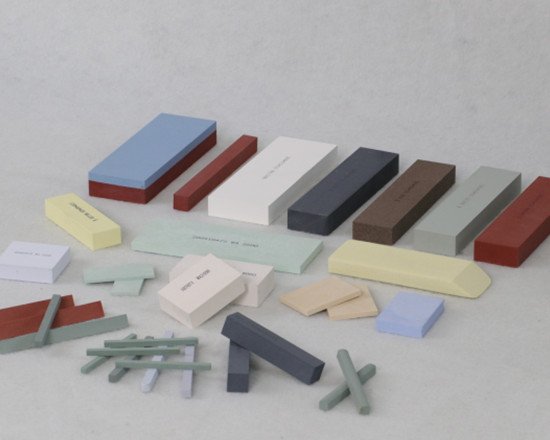
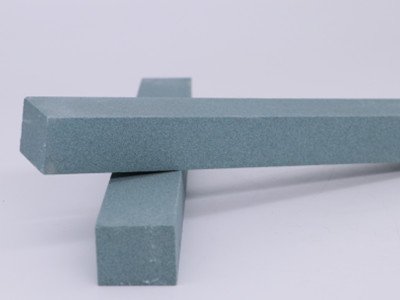
Provides a full range of dressing tools including single-point diamond pens, rotary diamond dressers, and diamond dressing rollers. Deeply matched with MORESUPERHARD resin wheel parameters, enabling efficient truing and precise sharpening, reducing dressing frequency and extending wheel service life.

MORESUPERHARD has established supporting partnerships with multiple domestic ceramic capillary manufacturers, helping customers quickly build stable mass production capability, reduce capillary scrap rates, and improve yield.