07
May
With the widespread application of cemented carbide in fields such as cutting tools, molds, mining tools, and electronic components, traditional corundum grinding wheels have become increasingly unable to meet the processing demands associated with its high hardness and exceptional wear resistance.
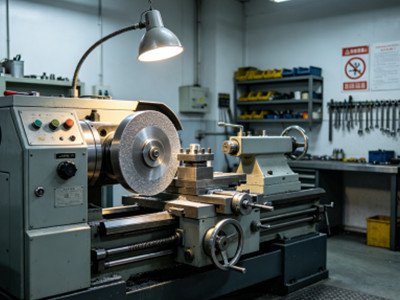
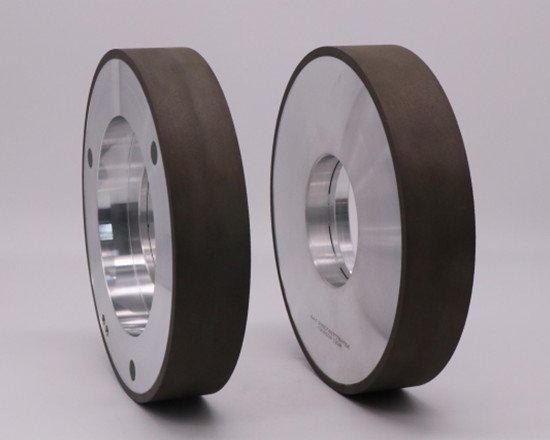
Resin-bonded diamond grinding wheels have emerged as essential tools for the precision grinding of cemented carbide, distinguished by their sharp cutting action and the high surface quality they produce. Concurrently, universal grinding machines—characterized by their flexible structure, strong adaptability, and ease of adjustment—are widely employed for the external cylindrical, internal cylindrical, surface, and complex-profile grinding of cemented carbide; they are particularly well-suited for tool resharpening and small-batch, high-precision processing.
In recent years, driven by the advancement of green manufacturing initiatives, an increasing number of enterprises have begun adopting dry grinding processes—which require no cutting fluids—in order to reduce environmental and maintenance costs while enhancing operational flexibility. However, dry grinding can also give rise to issues such as elevated grinding temperatures, wheel clogging, dust contamination, and wheel passivation.
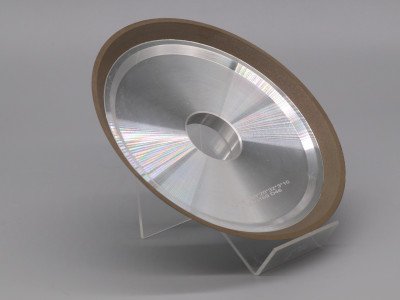
Consequently, the judicious selection of resin-bonded diamond grinding wheels and the optimization of dry grinding process parameters have become critical technical priorities in the processing of cemented carbide using universal grinding machines.
Hard alloys (cemented carbides) are primarily formed by sintering tungsten carbide (WC) particles bonded with cobalt (Co). Their characteristics include:
High hardness
Strong wear resistance
High compressive strength
Relatively high brittleness
Moderate thermal conductivity
When processing hard alloys, standard corundum grinding wheels often encounter issues such as low grinding efficiency, rapid wheel wear, and poor workpiece surface quality; consequently, diamond abrasives are typically employed for this type of processing.
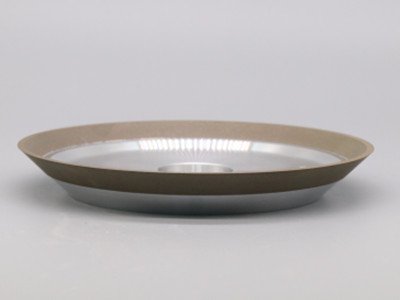
As the hardest material found in nature, diamond possesses exceptional wear resistance and cutting capability. It can effectively cut through the tungsten carbide particles within hard alloys, thereby achieving superior grinding efficiency and processing precision.
Among the various types of diamond grinding wheels, those utilizing a resin bond are the most commonly used for the fine grinding and resharpening of hard alloys. Compared to ceramic and metal bonds, resin bonds offer the following advantages:
(1) Lower Grinding Forces
Resin bonds possess inherent elasticity; during the grinding process, they can absorb a portion of the impact forces and dampen grinding vibrations, making them particularly well-suited for cutting-edge processing and precision grinding applications.
(2) Superior Surface Quality
During fine grinding operations, resin-bonded wheels can achieve lower surface roughness values, making them ideal for finishing the flank faces and rake faces of hard alloy cutting tools, as well as the surfaces of precision components.
(3) Enhanced Self-Sharpening Properties
During grinding, the resin bond gradually wears away, allowing dulled abrasive grains to detach in a timely manner and expose fresh, sharp grains; this ensures a consistently sharper and more efficient grinding action.
(4) Compatibility with Universal Grinders
Universal grinding machines typically possess lower structural rigidity compared to large-scale CNC grinders. Since resin-bonded wheels generate lower grinding forces, they are better suited for the specific processing characteristics of universal grinders—namely, operations involving shallow depths of cut and high precision requirements.
Consequently, in the fields of hard alloy tool resharpening and precision machining, resin-bonded diamond grinding wheels remain one of the most prevalent and well-established grinding solutions available.
Wet grinding processes require the extensive use of cutting fluids for cooling and lubrication; while this effectively controls grinding temperatures, it gives rise to numerous drawbacks: high procurement costs for cutting fluids, cumbersome maintenance of circulation and filtration systems, and steep costs for waste fluid disposal. Furthermore, it frequently leads to workshop environmental pollution and accelerates equipment corrosion. For small and medium-sized manufacturing enterprises, the daily operation and maintenance of cutting fluids constitute a persistent burden of fixed costs; in contrast, dry grinding—which requires no reliance on cutting fluids—can significantly reduce both production and maintenance expenses while effectively alleviating the pressure on enterprises regarding environmental compliance and management.
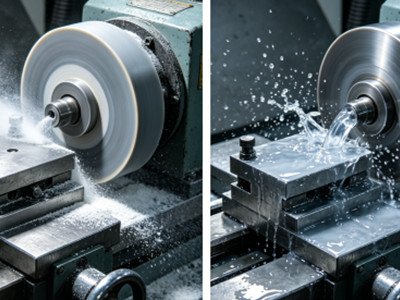
Universal grinding machines are widely utilized in scenarios involving frequent workpiece changeovers, small-batch production, the switching between products of varying specifications, and complex regrinding processes—situations that demand a high degree of adaptability. By adopting a dry grinding process, equipment setup and adjustment become significantly simpler; furthermore, the condition of the workpiece remains clearly and intuitively visible throughout the machining operation, and maintaining a clean and hygienic work environment is greatly facilitated. Consequently, the overall operational flexibility of the equipment is substantially enhanced. Given its multifaceted advantages—encompassing cost-effectiveness, environmental sustainability, and practical production adaptability—dry grinding has progressively emerged as a key developmental trend within the field of carbide regrinding.
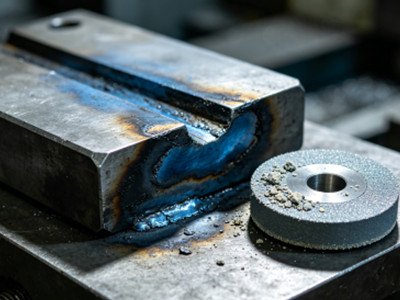
Severe Burning (Bluing/Blackening) on the Workpiece Surface
Causes: Excessive accumulation of grinding heat. This is typically caused by an overly deep depth of cut, excessive grinding wheel surface speed, or a grinding wheel that has become dulled and has not been dressed in a timely manner.
Countermeasures: Immediately reduce the grinding depth and appropriately lower the grinding wheel speed. Inspect and dress the grinding wheel to restore its sharpness. Verify whether the grinding wheel’s abrasive grains feature a copper coating to enhance heat dissipation.
Extremely Low Grinding Efficiency (“Unable to Cut”)
Causes: The grinding wheel has not been properly “opened” (conditioned), or the wheel hardness is too high with poor self-sharpening properties, preventing dulled grains from shedding.
Countermeasures:Thoroughly and sharply dress the grinding wheel using a dressing stick. If this proves ineffective, it is necessary to switch to a softer grinding wheel specification or one utilizing a structured abrasive grain configuration.
Workpiece Surface Scratches of Varying Depths
Causes: Uneven shedding of abrasive grains, or poor chip evacuation resulting in chips scratching the workpiece surface.
Countermeasures: Verify that the wheel dressing was uniform. A whetstone may be used to lightly touch-dress the wheel surface, removing protruding grains and clogged debris to ensure a more uniform distribution of abrasive grains.
| Common Problems | Main Causes | Solutions |
|---|---|---|
| Workpiece discoloration and burn | Severe heat accumulation | Reduce linear speed and feed rate |
| Low grinding efficiency | Grinding wheel passivation | Dress the grinding wheel or reduce wheel hardness |
| Severe workpiece scratches | Wheel clogging or uneven abrasive grain shedding | Dress the grinding wheel and improve chip removal |
| Obvious surface chatter marks | Insufficient workpiece rigidity | Reduce overhang and cut depth |
| Short grinding wheel service life | Aggressive processing parameters or poor heat dissipation | Optimize parameters and adopt open-structure wheel |
Prioritize Surface-Coated Abrasives: This effectively enhances dry grinding performance, increases the resin’s retention force on the abrasive grains, and prevents premature shedding.
Consider Chemical Surface Treatment: This method improves the resin’s adhesion to the abrasive grains. Studies indicate that grinding wheels treated in this manner can achieve a grinding ratio increase of over 50% under dry grinding conditions, while maintaining undiminished cutting sharpness.
Innovative Structure—Agglomerated Abrasives: Composed of clusters of fine diamond particles, this type of abrasive fractures continuously during grinding to expose fresh, sharp cutting edges, thereby achieving an optimal balance between extended service life and high grinding efficiency.