Home > Industry Solutions > Which Grinding Wheels Should You Use for Grinding Nitinol?

10

Nov

Which Grinding Wheels Should You Use for Grinding Nitinol?

2
Share:

Short answer: two superabrasive wheels cover almost every Nitinol job — a high-porosity vitrified bond CBN wheel for precision rough and semi-finish grinding, and a resin bond CBN wheel for fine grinding, edge finishing and polishing.

Diamond is usually not the first choice here. NiTi is a nickel-titanium alloy, and diamond wears chemically fast against titanium-family materials, while CBN stays far more inert and thermally stable in the same grinding zone. That single difference explains why CBN dominates Nitinol production.
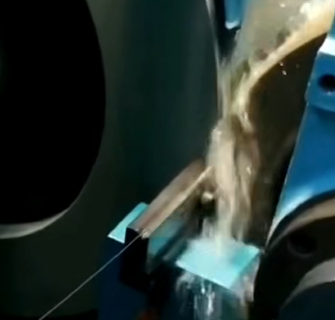
Centerless Grinding of Nitinol Medical Guidewires

Typical Nitinol Workpieces

Nitinol applications are heavily concentrated in high-precision medical devices, the primary workpieces processed with our CBN grinding wheels:

  • Vascular stents, self-expanding stents and stent blanks
  • Nitinol hypotubes, thin-walled micro tubing for catheter systems
  • Interventional guide wires and core wires
  • Root canal files, orthodontic archwires
  • Stone retrieval baskets, clot retrievers, endoscopic snares
  • Vena cava filters, occluders, heart valve frames
  • Bone staples, bone anchors and orthopedic fixation pins

Beyond healthcare, Nitinol is also used in SMA actuators, aerospace pipe couplings, flexible eyeglass frames and memory springs.

medical nitinol workpieces

Why Nitinol Punishes Conventional Grindin  Wheels?

Nitinol is a classic difficult-to-grind material. Four properties work against you at the same time:

  • Superelasticity. The material springs back instead of cutting cleanly, so abrasive grains rub rather than shear.
  • Transformation pseudo-plasticity and heavy work hardening. The surface hardens as it is deformed, raising forces on the next pass.
  • Low thermal conductivity. Heat stays in the grinding zone instead of going into the chip or the workpiece.
  • High toughness, rubbery chips. Chips smear into wheel pores instead of breaking away, which is the root cause of loading.

The practical result is a familiar loop: the wheel glazes and loads, forces climb, heat concentrates, and the part burns. For medical Nitinol parts this is not just a cosmetic problem — a thermal damage layer can destroy the superelastic behaviour the component was designed around, and the part is scrap.

Option 1: Vitrified Bond CBN Wheel — First Choice for Precision and Volume

Abrasive: cubic boron nitride (CBN), second only to diamond in hardness, with high thermal stability and strong chemical inertness against nickel and titanium.

Bond and structure: vitrified (ceramic) bond combined with a deliberately high-porosity, large-pore structure.

What this combination delivers on Nitinol:

  • Chip room and heat removal. Open pores hold the rubbery Nitinol chips instead of letting them glaze the wheel face, and coolant reaches deep into the grinding zone to carry heat away — the main defence against annealing, phase change and burn.
  • Profile retention. Low abrasive wear keeps form and geometry stable, so dressing intervals stretch out and batch-to-batch size stays inside tolerance.
  • Stable surface integrity. A cooler, freer-cutting action limits the thermally damaged layer, which is what medical inspection actually rejects parts for.

Best for: OD grinding, centerless grinding and form grinding of Nitinol hypotubes, guide wires, stent blanks and other medical workpieces in roughing and semi-finishing, including automated and lights-out production.

Option 2: Resin Bond CBN Wheel — Fine Grinding and Edge Finishing

Bond: resin. The elastic bond gives a gentler cutting action and a finer surface finish than a rigid vitrified wheel.

What it delivers:

  • Lower grinding force, so thin-wall and slender Nitinol parts deflect less and hold form.
  • Better surface roughness and cleaner edges with less burr, suitable for final sizing and edge preparation.
  • Flexible for profile finishing and honing of small medical components.

One condition: resin dissipates heat worse than vitrified bond. Adequate coolant flow is mandatory, not optional. Running this wheel with weak cooling is the fastest way to burn a Nitinol part and to glue chips into the bond.

Best for: final fine grinding, polishing, edge trimming and re-sharpening of Nitinol medical parts.
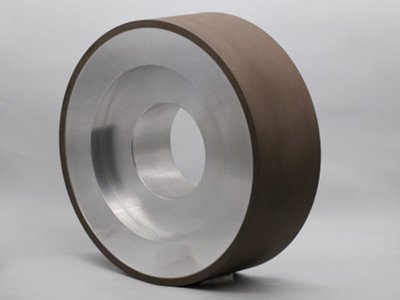
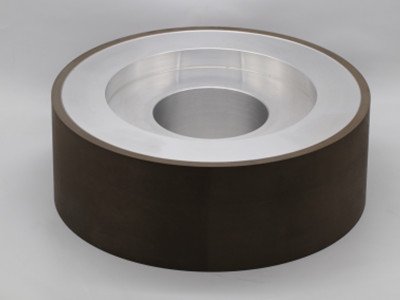
resin bond cbn grinding wheel resin cbn centerless grinding wheel

Selection Matrix for Grinding Nitinol Alloys

Operation Wheel Why
OD and centerless roughing, semi-finishing Vitrified CBN, high porosity Open structure swallows chips, keeps heat down, holds size over long runs
Form grinding: stent blanks, root canal files, hypotubes Vitrified CBN, high porosity Low wear keeps the profile accurate across the batch
Fine grinding to a lower Ra Resin bond CBN Elastic bond, gentle action, finer finish
Edge finishing, deburring, polishing Resin bond CBN Controlled edge quality with minimal burr
Coolant supply is weak or intermittent Do not use resin bond Resin cannot carry the heat away; switch to vitrified and fix the coolant first
Someone proposes a diamond wheel Usually reconsider Chemical wear against Ti-family alloys is higher; CBN is the safer default

Four Process Settings That Decide Whether the Wheel Works

A correct wheel can still burn parts if the process around it is wrong. These four carry most of the risk:

  1. Coolant, delivered where it matters. High flow and adequate pressure, aimed at the contact arc rather than the whole wheel, plus clean filtration so fines do not recirculate into the pores.
  2. Wheel speed kept moderate. Pushing peripheral speed up adds heat faster than it adds removal on Nitinol; tune it against your machine and coolant capability.
  3. Feed and depth of cut under control. Small, consistent increments keep work hardening from compounding pass to pass.
  4. Dressing on schedule. A glazed wheel rubs instead of cutting. Dress before forces climb, and use a sharp diamond dresser so the CBN layer opens up rather than smears.

Why Choose Moresuperhard?

Nitinol is a specification problem as much as a wheel problem: porosity, grit size, concentration and profile all have to match the workpiece, the machine and the removal rate. We work from your part drawing and process data rather than from a catalogue page.

  • Custom build. Porosity, CBN grit and concentration, bond grade and wheel geometry set to your Nitinol operation.
  • Medical-part focus. Wheels developed around stents, guide wires, root canal files and suture components, where surface integrity is inspected, not assumed.
  • Process support. Help with wheel speed, infeed and coolant strategy so loading and burn are designed out, not dressed away afterwards.
  • One supplier for the cell. Vitrified CBN, resin CBN, diamond wheels, dressing tools and custom superabrasive forms.

Send us your Nitinol part details and current grinding parameters. We will tell you which of the two wheel types fits, and what to change if the current wheel keeps loading.

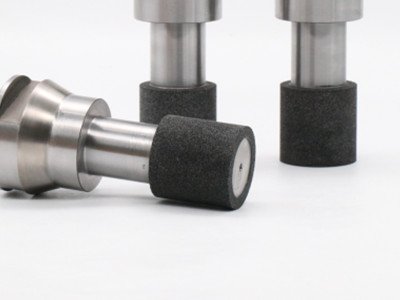
vitrified bond cbn grinding wheel vitrified cbn grinding wheel 3

FAQ

Is a diamond wheel better than CBN for Nitinol?

Usually no. Diamond reacts chemically with titanium-family alloys and wears faster in this application; CBN is the more stable choice unless a specific operation calls for diamond.

Can Nitinol be ground dry?

No. Low thermal conductivity means heat stays in the part. Coolant is essential with either bond, and especially with resin bond.

Why does my wheel keep loading up?

Three usual causes: porosity too closed for rubbery Nitinol chips, coolant not reaching the contact zone, or a glazed wheel that was never dressed. Check the structure and cooling before blaming the abrasive.

Which wheel for stents, guide wires and root canal files?

Vitrified high-porosity CBN for the form and semi-finish operations, resin bond CBN for the final finish and edge work.
También podría ser de su interés
applications of CBN grinding wheel

Vitrified CBN Grinding Wheel

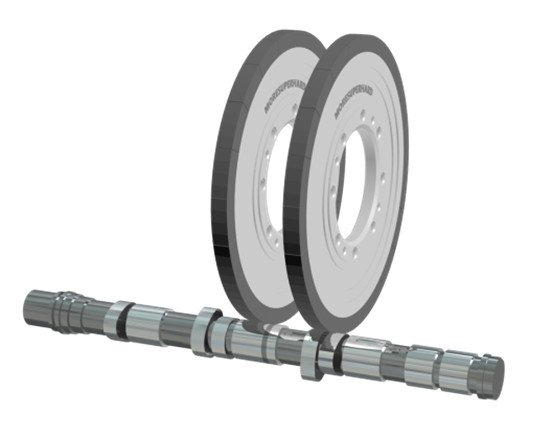
Vitrified CBN grinding wheels use cubic boron nitride as the abrasive and vitrified bonds for high strength and durability. They offer excellent wear resistance, heat stability, and sharp cutting performance. With long dressing intervals, they are ideal for precision grinding of hard materials like hardened steel, cast iron, and super alloys. Commonly used in industries such as automotive, aerospace, and tool manufacturing, these wheels improve efficiency, surface finish, and extend tool life while reducing operational costs.
resin cbn cup wheel

Resin Bond CBN Grinding Wheel for Hardened Steel

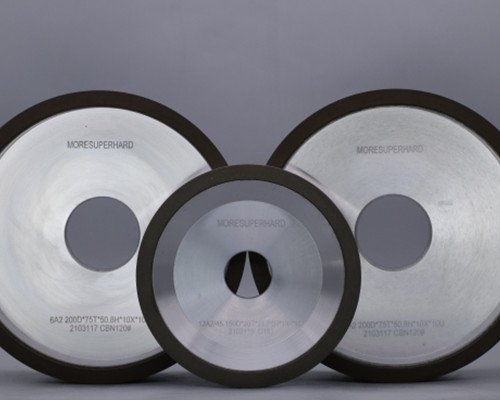
Custom resin bond CBN grinding wheels for precision grinding of hardened steel with consistent quality and long service life.
tech@moresuperhard.com
008617700605088