28
Aug
Cermet is a composite material consisting of a ceramic hard phase and a metallic binder phase. The hard phase is typically titanium carbide (TiC) or titanium carbonitride (TiCN), while the binder phase is primarily nickel (Ni) or cobalt (Co). Compared to traditional cemented carbides (WC-Co systems), cermets offer superior chemical stability, oxidation resistance, and red hardness at elevated temperatures. Since they contain little or no tungsten, they also provide a significant raw material cost advantage as tungsten prices continue to rise.
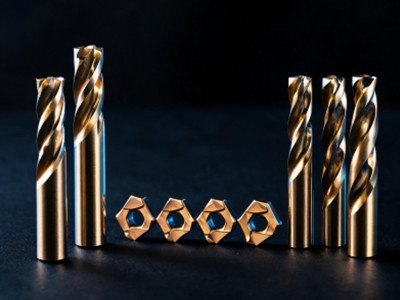
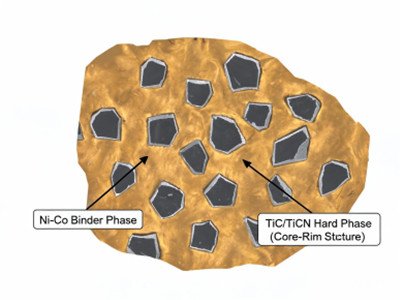
In terms of mechanical properties, cermet hardness is generally comparable to that of cemented carbide, with Vickers hardness reaching 15-16 GPa in some systems and fracture toughness around 8-10 MPa·m1/2. However, the strength-toughness balance remains inferior to the WC-Co system, and the material is more brittle. This directly limits machining options — cermet parts can almost exclusively achieve dimensional accuracy and surface quality through grinding, as cutting operations are generally not feasible.
The difficulty of grinding cermet stems from three compounding challenges inherent in its material composition and physical properties:
TiC, TiN, and other hard phases do not readily form affinity reactions with other materials. When diamond abrasive grains contact the cermet surface, they cannot effectively penetrate the material — instead, they slip across the workpiece surface, and the grinding force fails to convert into actual cutting action. This explains why conventional diamond wheels often “cannot grind” cermet.
Cermet hardness typically reaches 85-93 HRA, with high density and hardness causing a sharp increase in cutting resistance during grinding and rapid localized temperature spikes. The holding power of ordinary bond systems over diamond grains degrades rapidly under high temperature and pressure, leading to grain dulling and even detachment.
Cermet has relatively low fracture toughness. Fluctuations in grinding force or excessive temperatures easily cause workpiece edge chipping and fracture. If heat in the grinding zone cannot be dissipated in time, thermal damage (burning) to the workpiece surface occurs, severely impacting tool yield and service life.
The grinding difficulty of cermet is not caused by a single factor but by the combined effect of “chemical inertness + high hardness + high brittleness.” The solution must be designed systemically across bond formulation, abrasive structure, and dressing technology — improvement in any single link alone cannot fundamentally solve the problem.
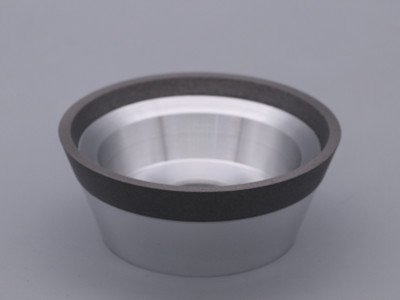
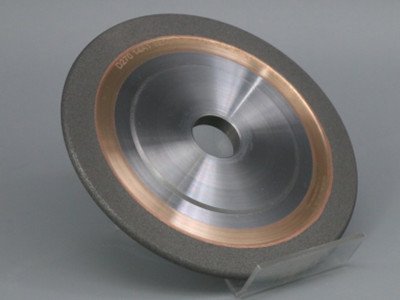
Metal bond diamond grinding wheels are the proven optimal tool for grinding cermet. Their core advantages include:
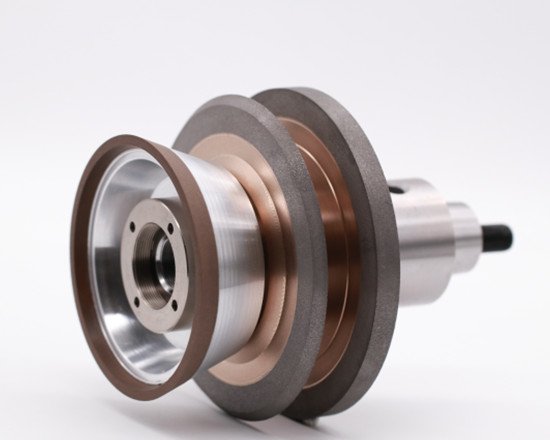
Unlike electroplated wheels with a single abrasive layer, metal bond wheels use a bronze or alloy matrix to consolidate diamond grains into a three-dimensional, multi-layer structure. When surface grains become dull, the bond wears at a controlled rate, allowing dull grains to fall off and exposing fresh underlying grains. This self-sharpening mechanism ensures the wheel maintains sharpness throughout its service life.
The bond, formed through high-temperature sintering of metal powder, creates a strong chemical-metallurgical bond with diamond grains. When grinding extremely hard materials like cermet, grains do not easily detach due to increased cutting resistance. Wheel life is typically tens to hundreds of times longer than that of electroplated wheels.
Metal bonds inherently possess good thermal conductivity. Heat generated in the grinding zone is quickly conducted away through the bond and wheel body, effectively reducing localized temperature rise and minimizing the risk of workpiece burning and thermal cracking — critical for brittle cermet materials.
The alloy powder ratio in the metal bond (such as Cu/Sn bronze systems, Co/Cu systems, Fe/Cu/Sn systems, etc.) can be adjusted according to workpiece material characteristics, finding the optimal balance between wear resistance and self-sharpening.
| Property | Metal Bond | Electroplated | Resin Bond |
|---|---|---|---|
| Abrasive Structure | 3D Multi-Layer | Single Layer | Multi-Layer |
| Grain Retention | Extremely Strong (Metallurgical) | Weak (Electroplated Ni) | Moderate |
| Self-Sharpening | Good | None (scrapped after grain loss) | Good |
| Thermal Conductivity | Excellent | Moderate | Poor |
| Service Life | Very Long (100x+) | Short | Moderate |
| Dressing Difficulty | Higher (requires EDM) | Not dressable | Low (conventional) |
| Cermet Suitability | Best | Not suitable | Limited |
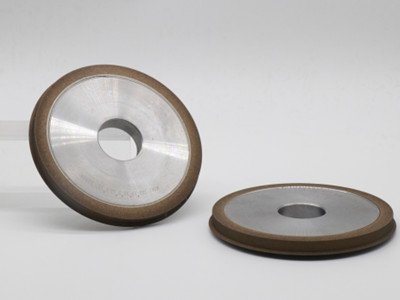
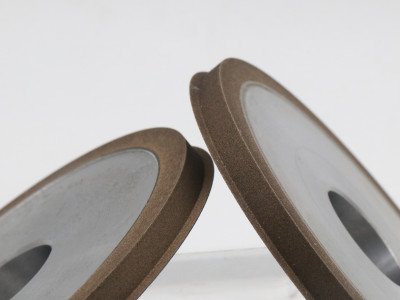
The strong retention and long life of metal bond wheels also bring an industry-recognized challenge: difficulty in dressing complex profiles. Many workpiece applications require the wheel to have a specific profile, particularly involving sharp corner geometries. Traditional mechanical dressing methods easily cause corner chipping.
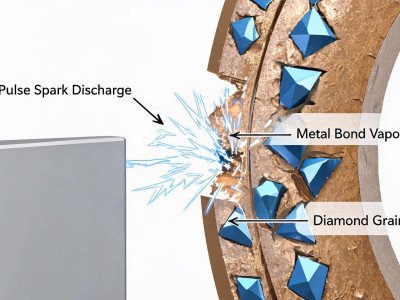
Metal bond wheels possess excellent electrical conductivity, which provides the physical basis for electrical discharge machining (EDM). Moresuperhard recommends and supports EDM dressing technology, which uses the high temperature generated by pulsed spark discharge to instantly melt and vaporize the metal bond on the wheel surface, naturally exposing the diamond abrasive grains.
Technology Synergy
Metal bond wheels solve “grinding effectively and durably,” while EDM dressing solves “dressing precisely without chipping.” The synergy of these two technologies forms a complete technical loop for precision cermet grinding.
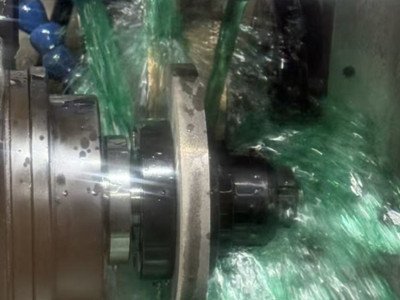
As a professional superhard abrasives manufacturer, Moresuperhard has a complete R&D and production system covering four categories of diamond/CBN wheels: resin bond, vitrified bond, electroplated, and metal bond. Addressing the dual pain points of “difficult machining” and “difficult dressing” of cermets, the company provides a system-level solution:
By adjusting the alloy powder ratio in the metal bond, Moresuperhard enhances wheel self-sharpening while ensuring extremely high wear resistance. This allows the wheel to maintain a long service life when grinding extremely hard cermets, while also resisting clogging and preventing workpiece burning.
For applications requiring complex sharp-corner profiles, Moresuperhard recommends and supports the EDM online dressing solution. Using thermal energy of pulsed discharge to non-contactly remove the metal bond and naturally expose diamond particles, metal bond wheels can be dressed into precision “sharp corner” structures with roundness errors controllable at the submicron level.
| Solution Dimension | Technical Measure | Problem Addressed |
|---|---|---|
| Bond Formulation | Customized Cu/Sn bronze & multi-component alloy ratios | Cannot grind, clogging, workpiece burning |
| Abrasive Structure | 3D multi-layer diamond grain arrangement | Short life, frequent wheel changes |
| Dressing Process | Online EDM dressing | Difficulty dressing complex sharp-corner profiles |
| Process Parameters | Joint optimization of grinding & dressing parameters | Balancing efficiency and surface quality |
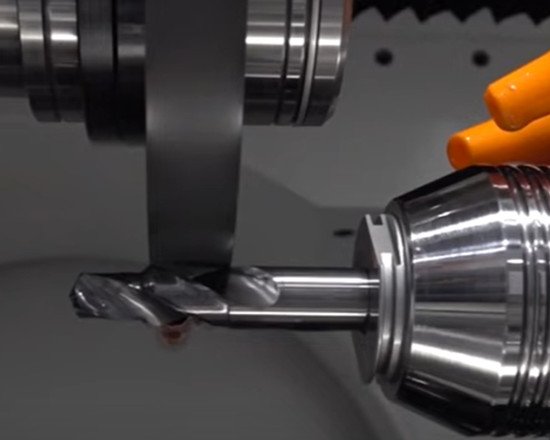
Metal bond diamond grinding wheels are widely used in various precision grinding operations for cermet materials:
In practical production, a customer previously used electroplated diamond wheels for cemented carbide workpieces. After switching to cermet as an alternative material due to rising tungsten prices, the original electroplated wheels could no longer meet machining requirements. After adopting Moresuperhard’s metal bond diamond grinding wheels with EDM dressing, not only was the “cannot grind” problem solved, but wheel life and machining efficiency also improved significantly.
When selecting metal bond diamond grinding wheels for cermet grinding, the following key parameters should be considered:
| Parameter | Selection Basis | Recommendation |
|---|---|---|
| Bond System | Workpiece hardness & process | Cu/Sn bronze for fine grinding; multi-component alloy for rough/semi-fine grinding |
| Diamond Grit Size | Precision & efficiency | Coarser (D46-D60) for rough grinding; finer (D15-D30) for fine grinding |
| Wheel Concentration | Number of active grains | Medium to high concentration recommended for cermet |
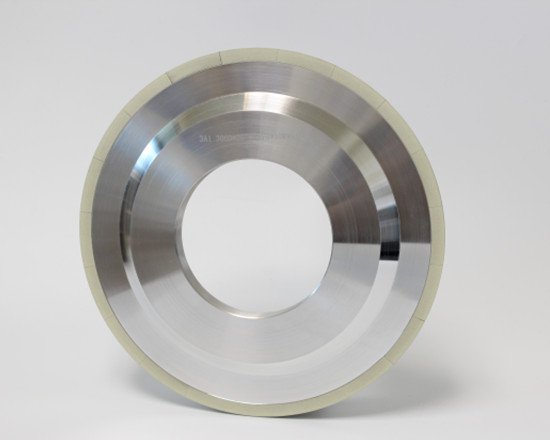
| Wheel Shape | Workpiece profile | 1A1 flat for peripheral grinding; 1V1 dish for fluting; custom for form grinding |
| Dressing Method | Profile complexity | Mechanical for simple profiles; online EDM for complex sharp-corner profiles |