Home > Industry Solutions > Diamond Grinding Wheels for Optical Glass Precision Grinding

15

Apr

Diamond Grinding Wheels for Optical Glass Precision Grinding

31
Share:

Optical glass is widely used in high-end applications such as smartphone cover glass, automotive displays, AR/VR lenses, and precision optical components. As these industries continue to evolve, the demand for higher precision and better surface quality has never been greater.

However, optical glass machining remains a complex challenge due to its inherent properties. Materials such as soda-lime glass, aluminosilicate glass, and quartz glass exhibit high hardness (Mohs 5.5–7) combined with extreme brittleness. This makes them highly sensitive to grinding forces, often resulting in chipping, micro-cracks, and subsurface damage.

To overcome these challenges, manufacturers increasingly rely on optimized diamond grinding wheel solutions, combined with carefully controlled process parameters and cooling strategies.

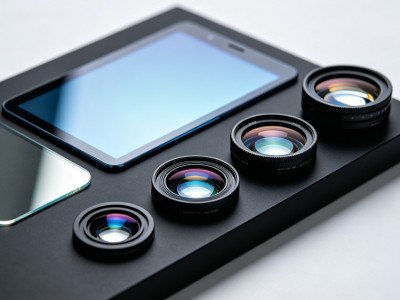
optical lens 2 optical glass

Understanding the Core Challenges in Optical Glass Grinding

Unlike ductile materials, optical glass behaves in a brittle manner during machining. Instead of deforming, it fractures under stress. This fundamental characteristic defines the entire grinding strategy.

The primary challenges include:

  • Edge chipping caused by brittle fracture
  • Strict surface roughness requirements (Ra ≤0.05–0.08 μm)
  • Subsurface damage control within 3–8 μm
  • Complex geometries such as 2.5D and 3D curved surfaces
  • High-volume production with consistent quality

Balancing efficiency and surface integrity is the key difficulty. Increasing removal rates often leads to more damage, while conservative parameters reduce productivity.
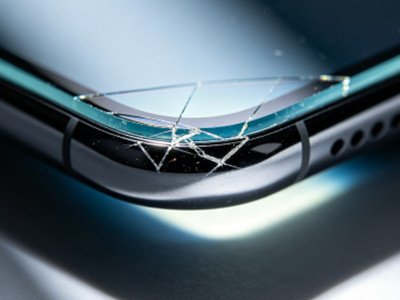
glass break

Why Diamond Grinding Wheels Are Essential

Diamond is the hardest known material, making it ideal for machining glass. Diamond grinding wheels provide high cutting efficiency while maintaining control over surface damage.

However, achieving optimal results requires more than just using diamond—it requires precise engineering of the grinding wheel.

Abrasive Selection: Fine Grit for Precision

The choice of abrasive grit directly determines surface quality and damage levels.

  • Rough grinding: D46–D64 for fast material removal
  • Semi-finishing: D20–D30 for shape correction
  • Finishing: D7–D15 for low roughness
  • Ultra-finishing: D3–D7 for near-optical surfaces

A narrow particle size distribution ensures consistent cutting behavior and reduces random scratching.
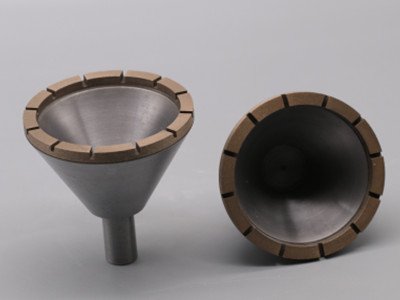
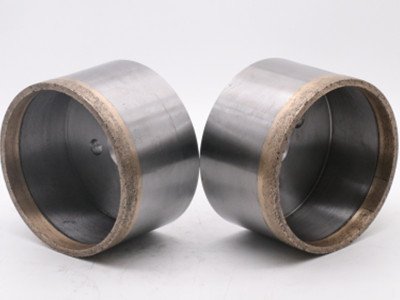
milling grinding wheel for glass diamond grinding wheel for glass

Bond System Optimization

The bond type controls how abrasives are held and released during grinding.

  • Resin bond: Excellent surface finish, best for fine grinding
  • Vitrified bond: High rigidity and shape retention
  • Metal bond: Long tool life, suitable for precision forming
  • Electroplated: High cutting efficiency for aggressive operations

For most optical glass applications, resin bond wheels provide the best balance between performance and surface quality.

Diamond Concentration Control

Lower concentration reduces cutting aggressiveness and minimizes damage.

  • Rough grinding: 75–100%
  • Semi-finishing: 50–75%
  • Finishing: 25–50%

Grinding Process Optimization

Cutting Parameters

Optimizing grinding parameters is critical to achieving both efficiency and quality.

  • Wheel speed: 25–50 m/s
  • Feed rate: 500–1500 mm/min
  • Depth of cut (rough): 0.03–0.08 mm
  • Depth of cut (finish): 0.005–0.015 mm

Higher speeds improve surface finish but must be balanced to avoid excessive heat and vibration.
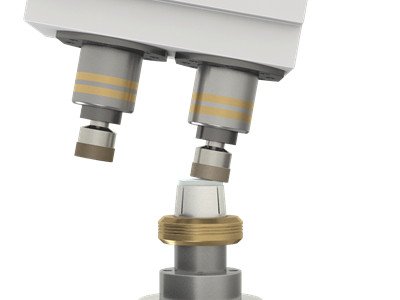
milling grinding optical galss

Cooling System Design

Cooling is one of the most critical factors in optical glass grinding.

  • Coolant: DI water or synthetic grinding fluid
  • Flow rate: 5–15 L/min
  • Pressure: 5–20 bar
  • Filtration: ≤5 μm

Proper cooling prevents thermal damage, improves chip evacuation, and stabilizes the grinding process.

Dressing and Maintenance

Maintaining wheel sharpness ensures consistent performance.

  • Diamond roller dressing for high-volume production
  • SiC dressing sticks for flexibility
  • Spark-out passes after dressing

Monitoring spindle load and surface quality helps determine the correct dressing interval.

Typical Application Results

With optimized solutions, manufacturers can achieve significant improvements:

  • Chipping ≤0.03 mm for smartphone glass
  • Surface roughness Ra ≤0.05 μm
  • Subsurface damage ≤3–8 μm
  • Higher yield and longer tool life

How to Choose the Right Grinding Solution

Selecting the right supplier is essential for success. A qualified partner should provide:

  • Custom grinding wheel design
  • Process parameter optimization
  • Application-specific solutions
  • Technical support and testing

Conclusion

Optical glass grinding is a complex and highly sensitive process. By combining advanced diamond grinding wheels with optimized process parameters and cooling systems, manufacturers can achieve both high efficiency and superior surface quality.

Need a Custom Optical Glass Grinding Solution?

Contact our engineering team today for tailored diamond grinding wheel solutions, process optimization, and technical support.
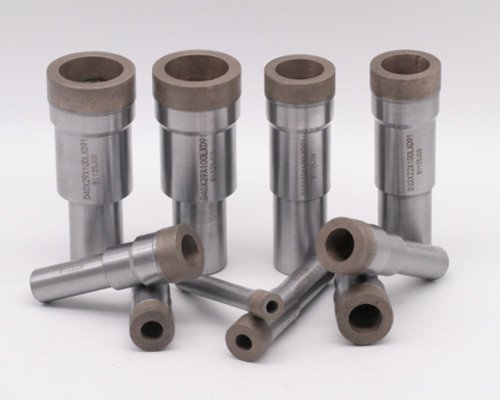
diamond milling grinding wheel

Frequently Asked Questions (FAQ)

What grinding wheel is best for optical glass?

Resin bond diamond grinding wheels are generally the best choice for achieving high surface quality and low damage.

How can chipping be reduced during grinding?

Use fine grit wheels, reduce depth of cut, apply proper cooling, and maintain regular dressing.

What surface finish can be achieved?

Typical fine grinding achieves Ra 0.05–0.08 μm, while ultra-finishing can achieve even lower values.
También podría ser de su interés
back grinding wheels

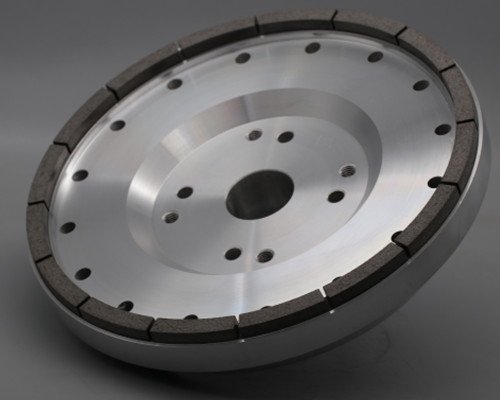
Diamond Back Grinding/Polishing Wheel for Optical Glass

Diamond back grinding wheel for machining optical glass with high efficiency and precision.Moresuperhard provide all kinds of diamond back grinding wheel for glass like metal diamond wheel,resin diamond wheel and vitrified diamond wheel.
metal diamond drill bit

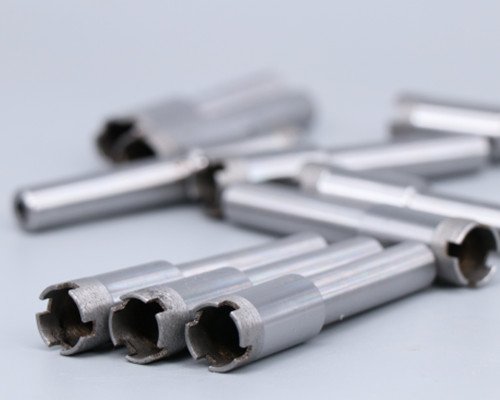
Diamond Drilling Tools for Optical Glass

Metal diamond drill bits are used for glass drilling, mainly for vertical and horizontal drilling machines. They are sharp and durable, and are produced according to international standards. They are widely praised by customers. They are widely used for drilling holes in high-grade optical glass and flat glass. They have the characteristics of high drilling accuracy, high speed and ultra-long service life.
diamond milling grinding wheel

Diamond Milling Grinding Wheel for Optical Glass

Diamond milling wheel is used in the front stage of optical glass processing for rough grinding.Diamond milling grinding wheel is divided into flat and spherical diamond milling grinding wheel.The design of diamond grinding wheels enables them to adapt to various optical glass processing requirements. They usually use a high-hardness steel matrix to ensure sufficient strength and durability.
Grinding optical glass lens

Diamond Pellets For Optical Glass

Diamond pellets are used for rough and fine grinding of optical spherical lenses and prisms.
tech@moresuperhard.com
008617700605088