30
Oct
When hardened steel must be cut accurately, the abrasive wheel affects more than cutting speed. It also influences heat generation, burr formation, edge chipping, dimensional accuracy, and the amount of finishing work required afterward.
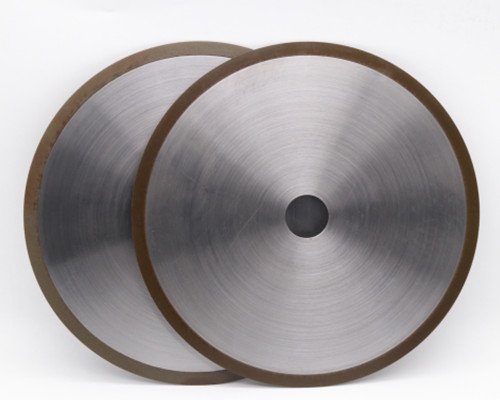
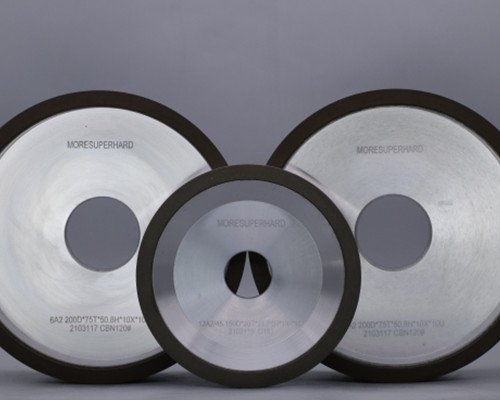
Resin bond CBN cutting wheels for hardened steel are often preferred because they combine the hardness of cubic boron nitride with a comparatively sharp and responsive resin bond. The result is a cutting process that can remove hardened ferrous material while controlling heat and cutting force.
This article explains why resin bond CBN is suitable for precision hardened-steel cutting, how it compares with other wheel types, and how to specify a wheel that matches your workpiece and machine.
Hardened steel is strong, wear resistant, and often difficult to machine after heat treatment. Its hardness may range from approximately 45 to more than 65 HRC, depending on the alloy and treatment. High-speed steels, bearing steels, tool steels, die steels, and nitrided components can all present different cutting behavior.
A hardened workpiece resists penetration by abrasive grains. The wheel therefore needs an abrasive that remains sharp and hard under pressure. If the abrasive dulls too quickly, the operator must apply more force, which increases heat and vibration.
The cutting zone is small, but the contact pressure and local temperature can be high. Poor heat control may cause:
The risk is higher when cutting hardened parts whose performance depends on maintaining the heat-treated layer.

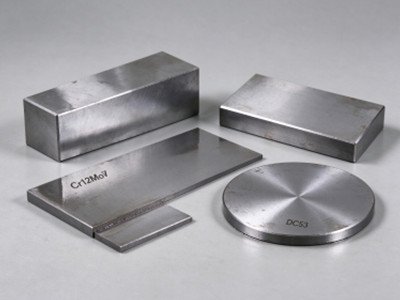
Aluminum oxide and silicon carbide wheels remain useful for many general-purpose applications. However, they may lose sharpness faster when cutting very hard steel. A dull wheel rubs instead of cutting cleanly, increasing burrs, vibration, and operator pressure.
For a precision application, the cost of secondary deburring and rework can exceed the price difference between a conventional wheel and a superabrasive wheel.
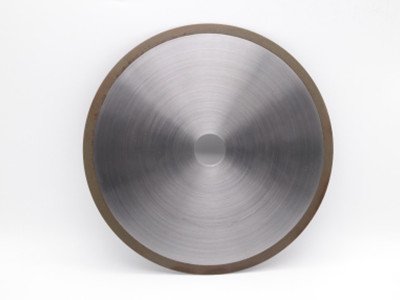
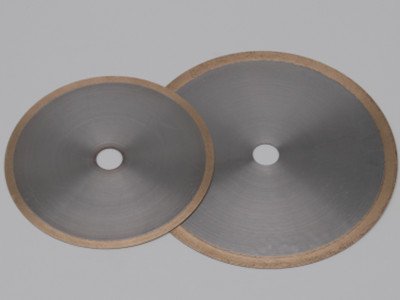
A resin bond CBN cutting wheel is a thin abrasive wheel containing cubic boron nitride grains held in a thermoset resin bond. CBN is a superabrasive whose hardness is second only to diamond among commonly used industrial abrasives.
The wheel works through a controlled combination of:
Diamond is extremely hard, but it can react unfavorably with iron at elevated temperatures. CBN is chemically more suitable for hardened ferrous alloys, which is why it is widely used for hardened steel grinding and precision cutting.
The resin bond gives the wheel a relatively sharp cutting action. As individual grains become dull, the bond can release them and expose fresh cutting points. This controlled self-sharpening helps reduce rubbing and keeps cutting forces manageable.
A resin bond is generally more forgiving than a very rigid bond when the application requires low cutting force, good surface quality, or reduced thermal damage.
A sharp CBN grain removes material through cutting rather than prolonged rubbing. The resin bond supports this action by allowing worn grains to release at a controlled rate.
Lower heat input can help protect:
Cool cutting does not mean that coolant is always required or that the wheel cannot overheat. Machine rigidity, feed rate, wheel condition, and coolant delivery still determine actual results.
A sharp wheel normally requires less normal force than a dull wheel. Lower force reduces the chance of:
This is especially useful when cutting small parts, thin walls, narrow slots, or components that are difficult to clamp.
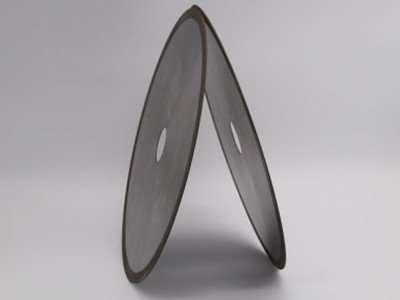
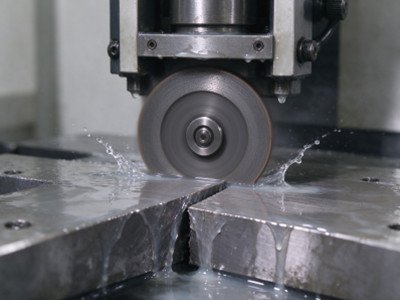
A thin, stable CBN cutting wheel can produce a narrow kerf and predictable material removal. Better control of wheel runout and side deflection helps maintain cut location and part dimensions.
Dimensional accuracy depends on the complete system, including:
The wheel alone cannot compensate for a flexible machine or unstable fixture.
The combination of hard CBN grains and a sharp resin bond can reduce tearing at the cut exit. This is valuable when the part will receive minimal deburring or when a damaged edge could affect assembly.
Edge quality still varies with material condition. A workpiece with interrupted geometry, inclusions, residual stress, or an unsupported exit edge may require special fixturing and a controlled feed.
Typical applications include:
The correct grade, hardness, and heat-treatment condition should be confirmed before selecting the wheel. “Hardened steel” is not a complete specification.

| Wheel type | Main strength | Typical limitation | Suitable use |
|---|---|---|---|
| Resin bond CBN | Sharp cutting, lower force, good heat control | Bond can wear faster in aggressive conditions | Precision cutting and finishing of hardened ferrous materials |
| Metal bond CBN | Strong support and high shape retention | Often requires more dressing effort; may cut less freely | Long production runs, high rigidity, formed profiles |
| Vitrified CBN | Porous structure, strong coolant access, good dressing response | More brittle and usually less suitable for thin cut-off formats | High-performance grinding and controlled production processes |
| Conventional abrasive | Low initial cost and broad availability | Faster dulling and higher heat on very hard steel | General-purpose cutting and less demanding work |
| Diamond | Excellent hardness on nonferrous and abrasive materials | Chemical limitation with hot ferrous cutting | Carbide, ceramics, glass, stone, and other nonferrous applications |
The best choice depends on the operation. Resin bond CBN is often the practical starting point when the priority is a clean, low-force cut in hardened steel.
Document the following before requesting a quotation:
A supplier cannot reliably recommend a wheel from the description “cut hardened steel” alone.
Wheel diameter, thickness, and bore must match the machine. The maximum operating speed marked on the wheel must meet or exceed the machine spindle speed.
A thinner wheel may reduce kerf width and material loss, but it also requires better machine rigidity, alignment, and workholding. A thicker wheel may provide more stability but can increase cutting force and material loss.
A simplified guide is:
The correct grit depends on the workpiece hardness, section thickness, machine power, coolant, and required finish. A finer grit is not automatically better for every precision cut.
Higher CBN concentration can improve cutting performance and wheel life in some conditions, but it may also increase wheel cost and alter cutting force.
Bond hardness controls how strongly the abrasive grains are retained. A harder bond may improve life in certain applications, while a softer bond can expose fresh grains more readily and reduce loading. The supplier should match bond hardness to workpiece hardness, contact area, and cutting severity.
| Application condition | Recommended direction | Main reason |
|---|---|---|
| Thin hardened section with strict edge requirements | Thin resin bond CBN, controlled feed, rigid fixturing | Limits kerf and reduces edge force |
| Thick section requiring stable straight cutting | Slightly thicker wheel with adequate machine power | Improves stability and reduces deflection |
| High-volume production | Evaluate concentration, dressing interval, and coolant system | Total cost depends on cycle time and wheel life |
| Heat-sensitive heat-treated component | Sharp CBN, conservative feed, effective coolant | Reduces risk of tempering and discoloration |
| Interrupted cut or irregular geometry | Reinforced setup and controlled entry and exit | Reduces impact loading and chipping |
| Occasional workshop cutting | Select a compatible general-purpose specification | Avoids unnecessary over-specification |
This matrix is a starting point. Trial cuts should confirm actual wheel wear, cut time, heat, burrs, and dimensional results.
Suppose the application is:
A useful purchase description could include:
Resin bond CBN cut-off wheel for 58–62 HRC tool steel, sized for the specified spindle and guard, medium CBN grit, medium-to-high concentration, precision-balanced body, suitable for wet cutting, with maximum operating speed clearly marked.
This description is more useful than simply ordering a “CBN wheel.” It tells the supplier which variables matter and creates a basis for comparing quotations.
Before production release, verify:
Check spindle runout, flange condition, guard clearance, and workholding. Even a high-quality wheel can produce vibration if the flange is dirty or the workpiece is poorly supported.
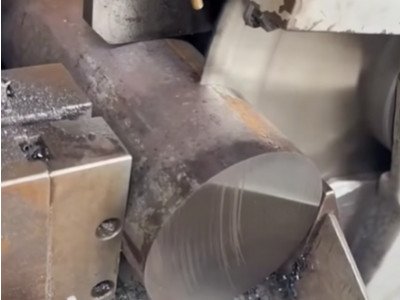
Do not force the wheel through the material. Excessive pressure can cause deflection, overheating, wheel damage, and premature bond failure.
Use a steady feed and allow the abrasive to cut. Avoid sudden plunging, twisting, or side loading.
Side pressure is particularly dangerous with thin cut-off wheels. The wheel should enter and leave the workpiece in a controlled direction, with the part positioned to prevent pinching.
Coolant should reach the cutting zone rather than merely wet the outer surface of the wheel. Insufficient flow may leave the wheel and workpiece hot even when the system appears to be running.
For dry cutting, use a conservative process and monitor discoloration, odor, vibration, and cut time. Dry cutting may be acceptable for some short cuts, but it should not be assumed suitable for every hardened component.
Check the wheel for damage, contamination, and correct marking. Confirm that the wheel is suitable for the machine and that it has not exceeded its shelf-life or storage requirements.
Follow the wheel manufacturer’s mounting and safety instructions. Do not use a wheel with cracks, impact damage, or unclear identification.
| Symptom | Possible causes | Verification and correction |
|---|---|---|
| Blue or brown discoloration | Excessive feed, dull wheel, poor coolant delivery, insufficient chip clearance | Reduce feed, inspect wheel condition, improve coolant flow, check machine speed |
| Large burr at the exit | Unsupported workpiece, excessive force, dull or unsuitable grit | Improve support, reduce exit pressure, review grit and bond selection |
| Wheel loads with steel | Bond too hard, inadequate chip space, low coolant flow, contaminated coolant | Review bond hardness, improve flushing, inspect coolant condition |
| Rapid wheel wear | Excessive pressure, wrong concentration, poor machine alignment, abrasive workpiece condition | Check runout and feed, review concentration, confirm material hardness |
| Chatter or vibration | Flexible setup, damaged flange, excessive wheel overhang, interrupted cut | Improve clamping, clean flanges, reduce overhang, control entry and exit |
| Cut wanders from the target line | Wheel deflection, side pressure, poor workholding, excessive feed | Use a more rigid setup, reduce side load, review wheel thickness |
| Edge chipping | Impact loading, brittle material zone, aggressive entry or exit | Slow the entry, support the part, reduce interrupted impact |
| Cutting time increases gradually | Wheel glazing, loading, dull grains, coolant deterioration | Inspect the wheel, dress or replace it according to the approved process |
A symptom should be measured before changing several variables at once. Record cut time, wheel wear, workpiece temperature or discoloration, burr size, and dimensional deviation. This turns trial-and-error into a controlled improvement process.
Q: Can a resin bond CBN cutting wheel cut hardened steel dry?
It can be suitable for some short or low-volume dry-cutting operations, but the process must be validated. Feed rate, wheel specification, section thickness, and heat sensitivity determine whether dry cutting is acceptable. For heat-treated precision parts, coolant usually provides a wider process margin.
Q: Is CBN better than diamond for hardened steel?
CBN is generally more suitable for hardened ferrous materials because it has better chemical compatibility with iron-based alloys at cutting temperatures. Diamond is commonly preferred for carbide, ceramics, glass, stone, and other nonferrous or highly abrasive materials.
Q: Does a thinner wheel always provide a more accurate cut?
No. A thinner wheel can reduce kerf width, but it is more sensitive to runout, side pressure, vibration, and poor workholding. Accuracy depends on the complete machine, wheel, fixture, and operating setup.
Q: When should a metal-bond CBN wheel be considered?
A metal-bond wheel may be appropriate when long wheel life, high shape retention, or a formed profile is more important than free-cutting behavior. It usually requires a process designed for its dressing and cutting characteristics.
Q: How should CBN grit size be selected?
Choose grit size according to the required edge quality, section thickness, cutting rate, machine rigidity, and chip evacuation. Coarser grit often supports faster cutting, while finer grit can improve finish and edge control. Supplier trials are recommended for critical applications.