29
Jul
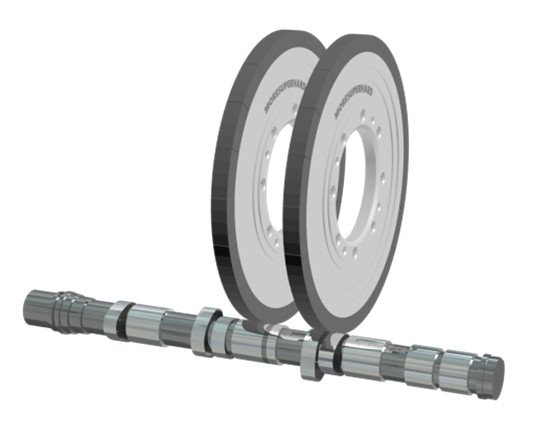
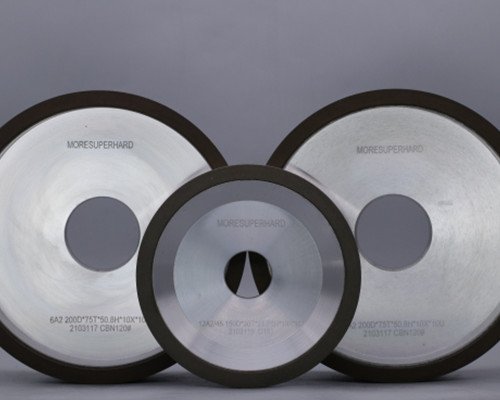
Resin bond CBN and vitrified CBN grinding wheels can both be used for precision grinding of hardened ferrous materials, but they behave differently during grinding. The better choice depends on the workpiece, grinding operation, production volume, machine condition, dressing method and required process stability.
For this reason, changing from a resin CBN wheel to a vitrified CBN wheel should not be treated as a simple wheel replacement. It is a process change that should be evaluated against the complete grinding system.
This guide explains the main differences between resin and vitrified CBN wheels and the conditions under which a vitrified CBN wheel may be a practical choice.
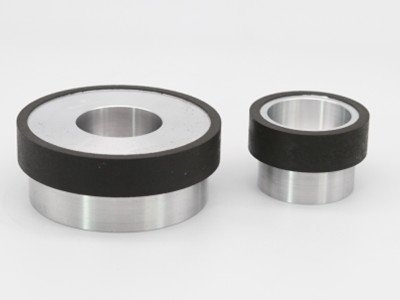

A vitrified CBN grinding wheel is worth evaluating when several of the following conditions apply:
If the process involves frequent model changes, heavy impact, very thin or fragile parts, or a machine with limited rigidity, resin bond CBN may remain a more practical option.
| Factor | Resin Bond CBN | Vitrified CBN |
|---|---|---|
| Bond characteristics | More elastic and compliant | More rigid and porous |
| Self-sharpening | Generally good | Depends strongly on bond design and dressing |
| Profile retention | Good for many conventional applications | Generally strong for precision form grinding |
| Grinding force | Often lower because of bond elasticity | Can be higher if the wheel is not correctly dressed |
| Shock resistance | Better suited to vibration and intermittent contact | More sensitive to impact and incorrect handling |
| Dressing | Usually relatively simple | Requires controlled dressing conditions |
| High-volume production | Suitable for many applications | Particularly attractive when long-term process stability is required |
| Typical application focus | Flexible precision grinding and applications requiring bond compliance | Precision, form retention and stable production of hardened materials |
Neither bond type is universally better. The correct choice depends on the complete grinding process.
The economic reason for changing from resin CBN to vitrified CBN becomes more relevant when the same parts are ground repeatedly over a long production period.
In high-volume production, small differences in wheel wear, dressing frequency, dimensional compensation and machine downtime can accumulate into significant process costs.
Typical applications include:
For small batches with frequent product changes, the flexibility of a resin bond wheel may be more important than maximizing long-term wheel life.
Wheel wear is not only a consumable-cost issue. It can also change the effective wheel geometry and influence the dimensional accuracy of the workpiece.
This becomes particularly important when grinding:
Vitrified CBN wheels can provide strong form retention when the bond formulation, abrasive specification and dressing process are correctly matched to the application.
However, a vitrified wheel does not automatically provide better accuracy. Incorrect dressing, insufficient machine rigidity or inappropriate grinding parameters can still cause profile errors and surface defects.
CBN is primarily used for grinding ferrous materials where diamond is not the preferred abrasive. Hardened steels, bearing steels, tool steels and high-speed steels are common CBN applications.
The decision between resin and vitrified bond should then be based on the grinding operation rather than hardness alone.
For example, a vitrified CBN wheel can be considered for continuous precision grinding where stable geometry, controlled material removal and long production runs are important.
Resin bond CBN may be preferable when the workpiece is thin or fragile, when the process is sensitive to grinding force, or when the operation contains significant vibration or intermittent contact.
A vitrified CBN wheel is more sensitive to machine condition than a flexible resin bond wheel. Before changing the wheel, check the complete machine system.
The spindle, bearings, machine structure and workholding system should be sufficiently rigid for the intended grinding conditions. Excessive vibration can lead to chatter, poor surface finish and premature wheel wear.
Do not select a vitrified CBN wheel based on a universal speed number. The allowable operating speed depends on the specific wheel construction, diameter, bond system and manufacturer’s safety rating.
The grinding machine must be capable of operating the selected wheel within its specified speed range. The wheel’s marked maximum operating speed should always be respected.
For precision and high-speed grinding, accurate wheel balancing and correct mounting are essential. Poor balancing can introduce vibration and reduce the potential benefits of a vitrified CBN wheel.
Grinding heat is influenced by wheel specification, workpiece material, grinding depth, feed rate, wheel speed and coolant delivery.
Vitrified CBN wheels have an open porous structure that can support coolant access to the grinding zone, but the wheel itself cannot compensate for an inadequate coolant system.
Before changing the wheel, check:
Actual coolant requirements should be determined according to the machine, wheel specification and grinding process rather than using one fixed flow-rate value for every application.
Dressing is one of the most important areas to reconsider when changing from resin CBN to vitrified CBN.
The dressing method should not simply be copied from the existing resin wheel. Vitrified CBN wheels require a dressing strategy that matches the bond hardness, wheel structure, abrasive concentration and required cutting behavior.
Possible dressing systems include:
The objective is to restore the required wheel geometry while exposing sufficiently sharp abrasive grains for stable cutting.
Dressing depth, dressing feed, dressing direction and dressing frequency should be established during application testing. Excessive dressing can increase wheel consumption, while insufficient dressing can lead to glazing, higher grinding forces and surface deterioration.

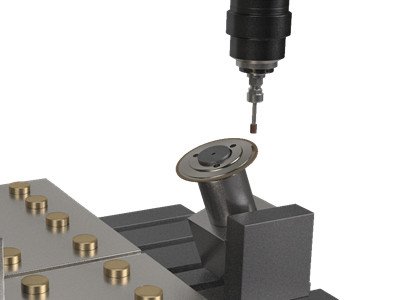
A common mistake during a bond change is to install a vitrified CBN wheel and keep exactly the same grinding parameters used for the resin wheel.
This approach can result in:
When testing a vitrified CBN wheel, the following parameters should be reviewed together:
The final parameters should be established from controlled grinding trials rather than transferred directly from the resin wheel.
Changing to vitrified CBN is not always necessary.
Resin bond CBN may remain a better choice when:
The purpose of changing the bond should be to solve a specific production problem, not simply to use a more expensive wheel.
A controlled comparison is more useful than comparing wheel purchase prices alone.
| Parameter | Record Before the Change | Evaluate After the Change |
|---|---|---|
| Workpiece material | Grade and hardness | Same material and hardness |
| Grinding cycle | Cycle time | Cycle time |
| Wheel consumption | Wheel usage per batch | Wheel usage per batch |
| Dressing | Frequency and amount | Frequency and amount |
| Surface finish | Ra / Rz | Ra / Rz |
| Dimensional accuracy | Actual tolerance | Actual tolerance |
| Grinding burn | Visual / metallurgical inspection | Visual / metallurgical inspection |
| Machine downtime | Wheel changes and dressing | Wheel changes and dressing |
| Total grinding cost | Wheel + dressing + downtime + labor | Same calculation method |
This approach makes it possible to determine whether the change provides a real production benefit for a specific process.
Vitrified CBN is commonly used for precision grinding of hardened tool steels and other high-hardness ferrous materials.
For example, one vitrified CBN application for HSS, SKD11 and SKH51 components used workpiece hardness in the HRC 61–67 range, an ANCA TX7+ grinding machine, a 0.2 mm grinding allowance and a surface roughness requirement of Ra 0.2 μm. The wheel specification and dressing cycle were selected according to the machine and workpiece requirements.
This type of application illustrates an important point: wheel selection should be based on the combination of material, hardness, machine, allowance, surface-finish requirement and dressing strategy rather than abrasive bond alone.
There is no universal rule that resin CBN grinding wheels should be replaced by vitrified CBN wheels.
Vitrified CBN is worth considering when a grinding process requires stable long-term production, strong form retention, controlled dressing and consistent dimensional performance. Resin CBN remains useful when flexibility, bond compliance and resistance to vibration or interrupted grinding are more important.
The most reliable way to make the decision is to compare both wheel systems under controlled production conditions and evaluate wheel consumption, dressing, cycle time, surface quality, dimensional accuracy and total grinding cost.
Moresuperhard manufactures both resin bond and vitrified CBN grinding wheels for hardened steel, bearing steel, tool steel, HSS and other ferrous-material grinding applications. Wheel diameter, grit size, concentration, bond formulation and wheel geometry can be customized according to the grinding machine and process.
For a technical recommendation, provide the workpiece material and hardness, grinding machine, wheel specification, grinding operation, allowance and required surface finish.